
Key Takeaways
- Bigeleisen founded her Brooklyn-based functional design practice in 2020.
- She taught full time in New York City public schools to fund her practice and business.
- As of September 2025, she left teaching to build her studio — and triple her income.
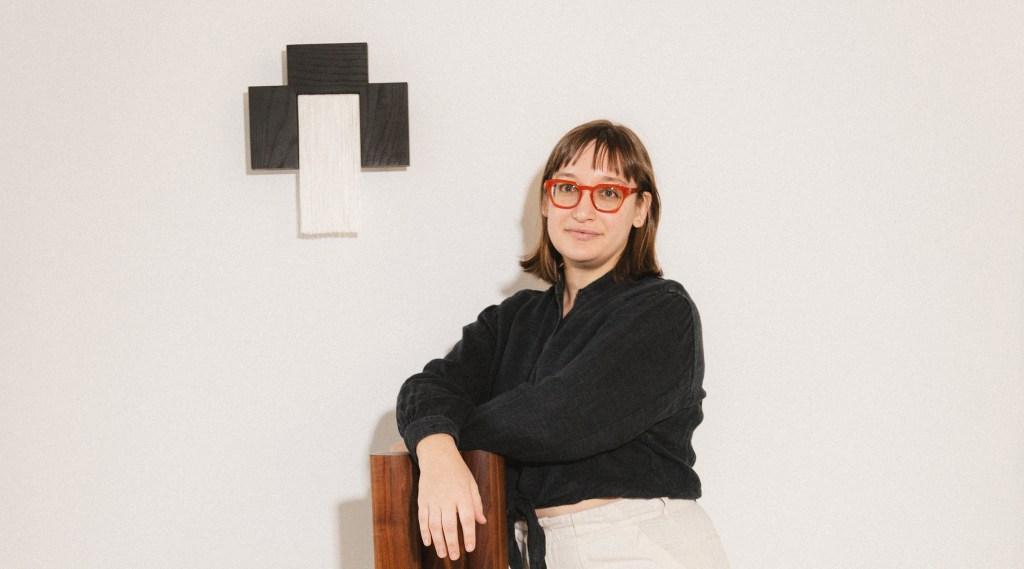
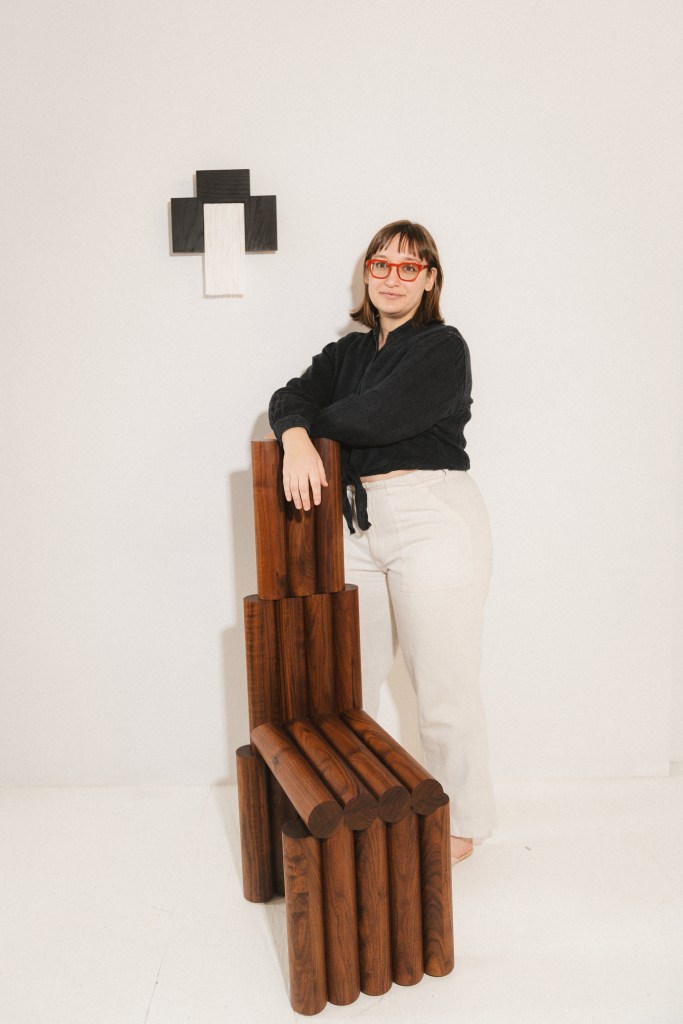
This as-told-to story is based on a conversation with Hannah Bigeleisen, a New York City-based sculptural furniture and lighting designer. Bigeleisen founded her Brooklyn-based design practice in 2020 after debuting her first lighting collection at Brooklyn Designs. She has an MFA from the Rhode Island School of Design (RISD) and taught high school full time before leaving teaching in September 2025 to focus on her studio business — and triple her income. She averages $10,000 to $15,000 a month. Her involvement with 3pts, a creative business consultancy and co-op founded by Kim Robinson Jr. to help independent artists and makers build sustainable practices, helped her learn the business fundamentals. The piece has been edited for length and clarity.
Pursuing art and teaching in New York City
After graduating from the Cleveland Institute of Art, where I studied sculpture and drawing with an emphasis on printmaking, I moved to New York City in 2010. I began working as an artist assistant. I worked for Katrin Sigurdardóttir to help fabricate her piece for the Venice Biennale, and Orly Genger to help fabricate her piece in Madison Square Park. That was really inspiring to me as a young woman who was new to the city. I was like, Okay. I can see them doing this. This is an attainable thing for me.
At that point, I also started to teach. I wanted a job that was a little bit more sustainable and would allow me to afford a studio space in the city as I prepared for my graduate school portfolio. So I started teaching at an arts preschool, which was a really low stakes but exciting way for me to dip my toe into the field of education because these little kids were so free with their movements and their approach to making and mark-making.
Teaching as an opportunity for impact
Then I went to RISD in 2014. I got my MFA in printmaking, and I also taught there. I had a series of really challenging experiences that also really pushed me to think, Okay. Teaching is something that I want to make an impact in, because I had professors there that I didn’t necessarily align with. I thought, We need educators who have a more diversified background and who have student goals in mind instead of their own agendas.
So when I graduated, I applied to the New York City Teaching Fellows Program, which is a subsidized program to get a higher education degree while teaching full time in public schools. It was also that first year that in 2016 that my husband was moving away from a partnership in his previous business to a solo venture in his studio practice. I knew that we needed some type of stability, so I decided to invest my time and effort into teaching.
Shifting from sculptural to functional work
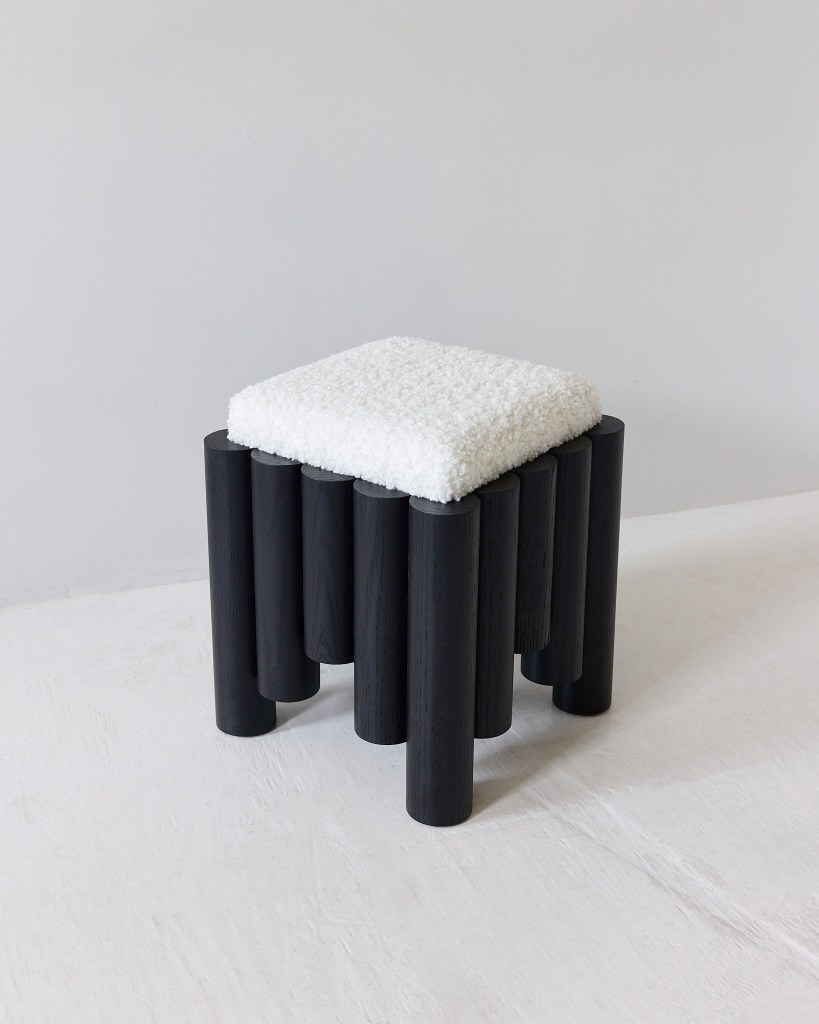
I taught history and English in the public schools for three years full-time. As an artist, it felt important to be teaching students history. And it was tremendously fulfilling for me. It was a lot of work: teaching full-time, developing new curricula, being in graduate school full-time and continuing my studio practice. Teaching was a way for me to engage in the things that I was interested in and also support my studio practice at the same time. That last year of teaching full time was also when I shifted from just sculptural work to more functional work.
It was an organic evolution of the pieces that I had been making. My husband is a designer, and we’ve known each other since we were 17. We went to art school together. We’ve had a studio practice together, and he was always really encouraging me, like, This piece could be a shelf, or, You should make this into a pattern. I was always really resistant to it because I felt like functionality compromised what I was looking at. In reality, functionality just adds to it. But it was a journey I had to go on myself. Ultimately, I had conversations with curators about incorporating light in a more direct way, and that led me to start working on illuminated sculptures.
Designing a lamp and making sales
So I set about designing my first lamp, which is the Ellsworth Lamp. It’s very heavily inspired by the painter Ellsworth Kelly and also my material studies in aggregate and cement. I applied very last minute for a show during Design Week in 2019 at a fair that some of my friends had done before called Brooklyn Designs, which I don’t think exists anymore.
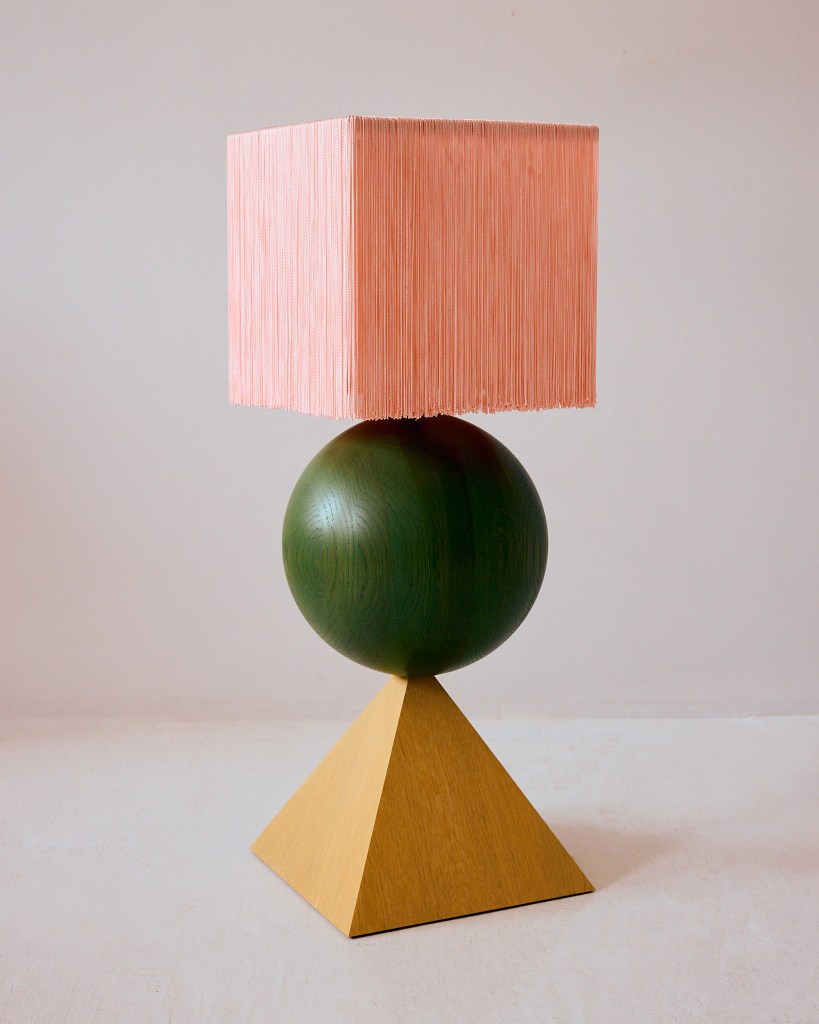
It was a very low entry-level type of show, and I felt confident being able to do it even though I only had about two weeks to prepare. I got into the show, and it was my first time really operating in the world of design. Then I got a call from the person who ran the show, and she was like, ‘Hey, this guy really wants to buy these pieces.’ I sold the work to him and thought, If I can do this once, I can do it again.
I already knew I didn’t want to teach full time forever. With a roster of 300 students, it was tremendously taxing in terms of dividing my time and energy. Fulfilling, really fulfilling, but really tiring. My students knew that I was an artist; I would invite them to shows, and they would come and get extra credit. One day, I was talking with one of my students who was graduating, and he was really nervous about it. I was like, “It’s okay to not know what you want to do, but you have to work towards something. You have to follow your dreams. Whatever they are, you have to follow them in whatever capacity that takes you.” And he looked at me and he was like, “Okay, well, are you following your dreams?”
Embracing risk and a full-time studio business
I remember walking home that day, and that was just really resonant with me. I was thinking about it and I was like, I’ve had these opportunities. I’ve had proven success in the field. I need to take a risk on myself that I haven’t done before. At that moment, I knew that I would eventually be putting in my two weeks’ notice and pursuing my practice more full-time.
I continued to teach part-time, on and off as an adjunct for five years in the design department at LaGuardia Community College. So that was nice to have a more aligned teaching job. Also, I taught at the Summer Institute for Sotheby’s Institute of Art. I taught their painting and drawing and also their art history classes. I loved it because I was back with my high schoolers, and it’s a great age to work with. At that point, I was able to start dedicating the majority of my time to prototyping and fabricating.
Learning business fundamentals as an artist
In the early days, I didn’t really understand the business part of my practice. People would approach me on Instagram or on my website, which was super rudimentary, and I would just be like, Amazing, a sale. But I wasn’t doing any outreach. I didn’t understand marketing or how to structure a business untilI took a class called Plan for Growth in 2023. There, I met Kim Robinson, who founded 3pts, a creative business consultancy and co-op helping independent artists and makers build sustainable practices.
We had guest speakers come in every week for that class, and that’s like our kind of a, a pillar class for independent design in New York City. It’s run through SBDC, which is like a subsidized creative entity that helps small businesses and manufacturers. So a lot of my peers encouraged me to take the class. It really gave me the business, from marketing to email lists, putting it all together. “Business” was no longer a scary word. Because before, as an artist, business to me was intimidating. Kim broke it down for me. I joined his creative agency, and that’s been one of my biggest points of growth, having them covering the back end of things, brainstorming, strategizing.
Growing from $40,000 to $200,000 in annual income
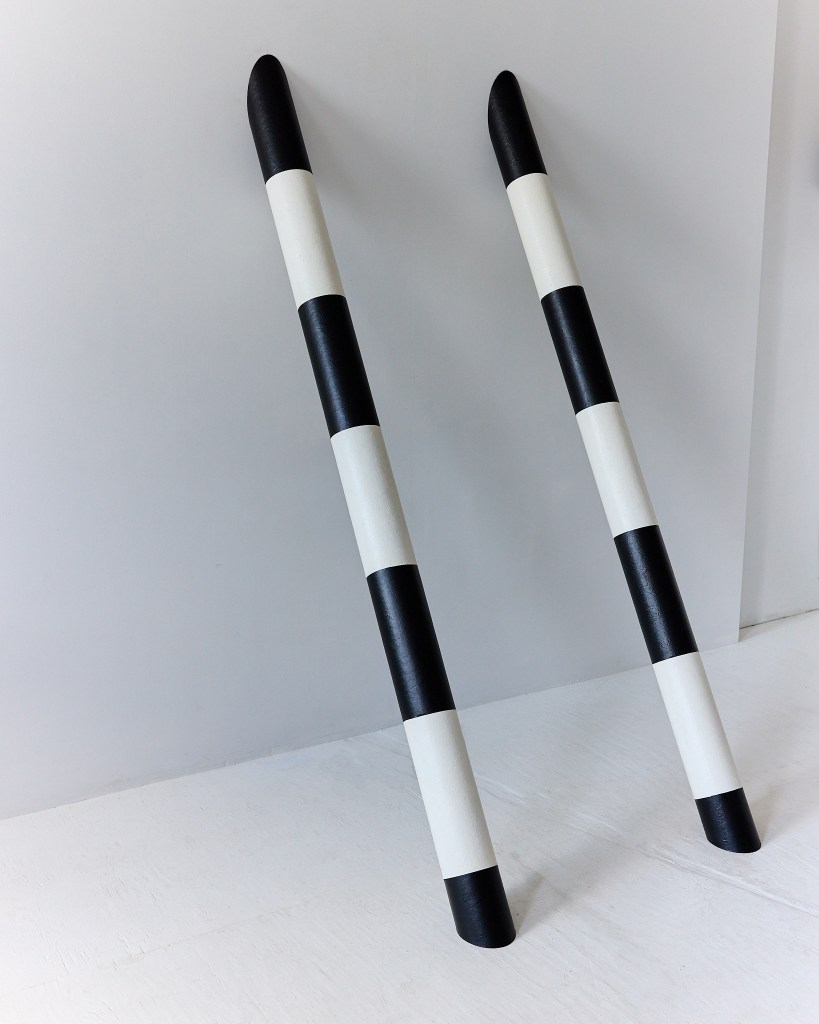
For the first couple of years in business, teaching was still my main form of income. Initially, I made about $40,000 a year from my studio sales. So not enough to do that full-time. But for the past two years, the majority of my income has come from my studio practice. Last year was challenging; I only grossed about $86,000. This year, I’m on track to gross closer to $200,000. The monthly averages can vary a lot depending on what I’m working on. Sometimes I work on something that has a longer lead time, and sometimes things are in stock and they sell, which is always lovely. But my goal is between $10,000 to $15,000 a month in sales. So far, for the past year and a half, I’ve been able to achieve that.
My current studio space, which I share with my husband, is subsidized by the city through GMDC, Greenpoint Manufacturing and Development Corporation. Their mission is to support manufacturing spaces for small businesses in New York, which is really unheard of. So our studio space is, by cost per square foot, much lower than the surrounding area. They give us a five-year lease, which is also really unheard of. So it offers a lot of stability; we’re going on our fourth year here, and we love it.
Developing a strong network is key to business growth
Over the course of this business journey, I’ve really learned the importance of developing a strong network of people. It’s not always about selling the work, but about maintaining those relationships. The creative community and the small business world are very closely intertwined, and it’s always nice to be able to have people to empathize with and ask for advice. Leaning into the community also has been very important to me. Also — contracts are super important.
Sales come from a combination of channels: word of mouth, being at in-person events, having an internet presence and email list. And the PR that we garnish along the way from shows. Also, creating different forms or streams of income is key. I do some licensing work for different companies, and that’s been really helpful for me as a designer, allowing me to grow in a different way, because you create the piece and then someone else produces and sells it.
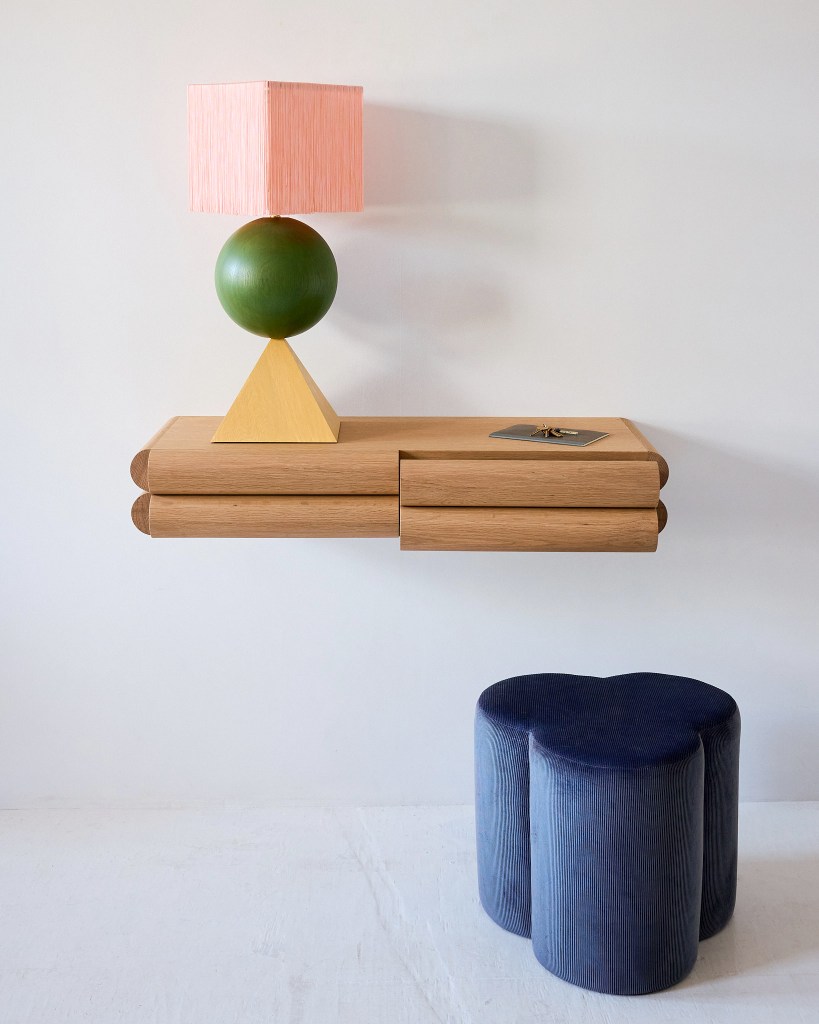
I started my first piece with my friend Robert Sukrachand, who runs Pern Baan. His work is beautiful and his mission is just phenomenal. We created a really lovely marble sconce together, and to be able to see that placed in interiors where my other work previously wouldn’t have been considered, was really eye-opening. Through this, I’m able to reach a wider audience, not only through price point, but also through material translation.
There’s no big aha moment — just don’t give up
This is the first summer that I will not be teaching, so it’s kind of unfathomable to me what that freedom looks like — to be able to really focus on prototyping and developing new bodies of work. This Design Week, I’m showing a lot of new works on paper, which really goes back to my printmaking roots, and I’m really excited to be able to combine this more ethereal form of drawing with furniture, whether that’s inset panels into a case piece or more illumination work with a sconce.
If you’re considering following your passion into business, just don’t stop. People are under the assumption that there’s this big aha moment where you can either stop doing something or you gain this amazing sense of clarity. But you just can’t stop. You have to support yourself in every way, however that looks: part-time job, full-time job, multiple jobs, whatever it is. And you have to just continue to make things. You cannot stop making things. You can’t ever give up.
Key Takeaways
- Bigeleisen founded her Brooklyn-based functional design practice in 2020.
- She taught full time in New York City public schools to fund her practice and business.
- As of September 2025, she left teaching to build her studio — and triple her income.
This as-told-to story is based on a conversation with Hannah Bigeleisen, a New York City-based sculptural furniture and lighting designer. Bigeleisen founded her Brooklyn-based design practice in 2020 after debuting her first lighting collection at Brooklyn Designs. She has an MFA from the Rhode Island School of Design (RISD) and taught high school full time before leaving teaching in September 2025 to focus on her studio business — and triple her income. She averages $10,000 to $15,000 a month. Her involvement with 3pts, a creative business consultancy and co-op founded by Kim Robinson Jr. to help independent artists and makers build sustainable practices, helped her learn the business fundamentals. The piece has been edited for length and clarity.
Pursuing art and teaching in New York City
After graduating from the Cleveland Institute of Art, where I studied sculpture and drawing with an emphasis on printmaking, I moved to New York City in 2010. I began working as an artist assistant. I worked for Katrin Sigurdardóttir to help fabricate her piece for the Venice Biennale, and Orly Genger to help fabricate her piece in Madison Square Park. That was really inspiring to me as a young woman who was new to the city. I was like, Okay. I can see them doing this. This is an attainable thing for me.
At that point, I also started to teach. I wanted a job that was a little bit more sustainable and would allow me to afford a studio space in the city as I prepared for my graduate school portfolio. So I started teaching at an arts preschool, which was a really low stakes but exciting way for me to dip my toe into the field of education because these little kids were so free with their movements and their approach to making and mark-making.