Close Menu
    Facebook X (Twitter) Instagram
    TRENDING :
    • Dollar General closed hundreds of locations after evaluating its store footprint. But there’s an upside
    • Bumble stock is up today. Whitney Wolfe Herd’s solution to ‘swipe fatigue’ might be part of the reason why
    • This new foldable phone may have upstaged Apple in the ‘zero-crease’ wars
    • The X algorithm really is trying to radicalize you—researchers just proved it
    • How silicone wristbands can help scientists monitor ‘forever chemicals’
    • The Pentagon–Anthropic clash is a warning for every enterprise AI buyer
    • Trump, London, Netanyahu, & Neocons
    • Are you part of the ‘distraction economy’?
    Compatriot Chronicle
    • Home
    • US Politics
    • World Politics
    • Economy
    • Business
    • Headline News
    Compatriot Chronicle
    Home»Economy»Iceland Considers Joining The EU
    Economy

    Iceland Considers Joining The EU

    February 24, 20263 Mins Read
    Share Facebook Twitter Pinterest LinkedIn Tumblr Telegram Email Copy Link
    Follow Us
    Google News Flipboard
    Share
    Facebook Twitter LinkedIn Pinterest Email


    They are now talking about fast-tracking a referendum on reopening EU accession talks in Iceland, possibly as early as this year, accelerating a timeline that was originally expected closer to 2027. The shift is being driven by geopolitical tensions, economic pressures, and a growing debate about adopting the euro versus keeping the krona.

    What people constantly fail to understand is that the euro was never created as an economic project first. It was a political project. I have stated countless times that the euro was designed to bind Europe together politically after centuries of war, not because it made economic sense for diverse economies to share a single currency. You cannot unify Germany, Italy, Greece, and Spain under one monetary policy and expect stability. That violates the very foundation of capital flow dynamics and economic cycles. The euro removed national monetary sovereignty and handed it to a central bureaucracy in Brussels and Frankfurt that cannot respond to local economic conditions.

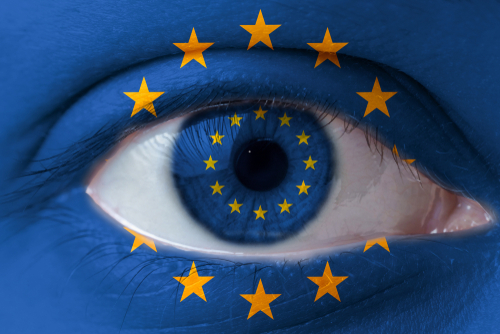
    Euro Currency Flag

    Now we see Iceland, a country of roughly 390,000 people, being pulled back into this same discussion. This is highly ironic when you look at the actual history. Iceland applied to join the EU in 2009 in the aftermath of the banking crisis but halted negotiations in 2013 after public opposition and concerns over sovereignty, fisheries, and monetary independence. It was a direct reflection of the fact that smaller, independent economies understand the danger of surrendering policy control to a centralized authority.

    Iceland has one of the highest GDP per capita levels in the world, runs on abundant geothermal and renewable energy, and maintains its own currency precisely so it can adjust during crises. During the 2008 financial crisis, Iceland allowed its banking system to collapse, imposed capital controls, and let the krona devalue. Had Iceland been on the euro, it would have faced the same fate as Greece: austerity with no monetary escape.

    Countries with independent currencies can devalue and recover. Countries inside the euro cannot. They are trapped in a fixed monetary regime regardless of domestic conditions. That is why southern Europe suffered prolonged stagnation while northern Europe dominated capital flows after the euro’s creation.

    Iceland already participates in the EU single market through the EEA and Schengen without surrendering full sovereignty. In other words, they get trade access without monetary submission. Joining the EU and potentially adopting the euro would alter that balance. Reports suggest the timeline is being accelerated due to rising geopolitical tensions and closer EU engagement, which confirms my long-standing view that the EU expands more aggressively during periods of global uncertainty.

    Now the EU faces declining industrial competitiveness, energy crises, and regulatory overreach. The idea that joining such a structure would somehow “stabilize” Iceland ignores the broader macro trend of capital flight away from highly regulated regions and into independent jurisdictions.

    If Iceland joins the EU and eventually adopts the euro, it will be surrendering the very tool that allowed it to survive its worst crisis. That is the real economic issue. Small nations historically do better at retaining monetary sovereignty during global instability. The euro is rigid by design, and rigidity in a cyclical global economy is always dangerous. Sacrificing sovereignty for a political currency created for European unification rather than economic efficiency would be a profound long-term structural shift, not a simple trade decision.


    Source link

    Share. Facebook Twitter Pinterest LinkedIn Tumblr Email

    Related Posts

    Trump, London, Netanyahu, & Neocons

    March 12, 2026

    US Inflation Looks Tame For Now — But That May Not Last

    March 12, 2026

    Harris For Peace? Neocons Exist On BOTH Sides

    March 12, 2026
    Top News

    Lawmakers Push for Franchise Independence With New Bill

    By Staff WriterSeptember 12, 2025

    A bipartisan group of lawmakers has introduced the American Franchise Act, legislation aimed at ending…

    AI in education requires national strategy

    March 5, 2026

    Yeti just did the unthinkable: Hire an ad agency

    November 15, 2025

    Nike ACG’s latest innovation is a fully portable soccer field

    March 4, 2026
    Top Trending

    Dollar General closed hundreds of locations after evaluating its store footprint. But there’s an upside

    By Staff WriterMarch 12, 2026

    Dollar General’s fourth-quarter and full-year 2026 earnings report shows some successes—though you…

    Bumble stock is up today. Whitney Wolfe Herd’s solution to ‘swipe fatigue’ might be part of the reason why

    By Staff WriterMarch 12, 2026

    Shares in Bumble Inc. (Nasdaq: BMBL), maker of the Bumble dating app,…

    This new foldable phone may have upstaged Apple in the ‘zero-crease’ wars

    By Staff WriterMarch 12, 2026

    For some time now, reporting around Apple’s folding phone has coalesced around…

    Categories
    • Business
    • Economy
    • Headline News
    • Top News
    • US Politics
    • World Politics
    About us

    The Populist Bulletin serves as a beacon for the populist movement, which champions the interests of ordinary citizens over the agendas of the powerful and entrenched elitists. Rooted in the belief that the voices of everyday workers, families, and communities are often drowned out by powerful people and institutions, it delivers straightforward, unfiltered, compelling, relatable stories that resonate with the values of the American public.

    The Populist Bulletin was founded with a fervent commitment to inform, inspire, empower and spark meaningful conversations about the economy, business, politics, inequality, government accountability and overreach, globalization, and the preservation of American cultural heritage.

    The site offers a dynamic mix of investigative journalism, opinion editorials, and viral content that amplify populist sentiments and deliver stories that echo the concerns of everyday Americans while boldly challenging mainstream narratives that serve the privileged few.

    Top Picks

    Dollar General closed hundreds of locations after evaluating its store footprint. But there’s an upside

    March 12, 2026

    Bumble stock is up today. Whitney Wolfe Herd’s solution to ‘swipe fatigue’ might be part of the reason why

    March 12, 2026

    This new foldable phone may have upstaged Apple in the ‘zero-crease’ wars

    March 12, 2026
    Categories
    • Business
    • Economy
    • Headline News
    • Top News
    • US Politics
    • World Politics
    Copyright © 2025 Populist Bulletin. All Rights Reserved.

    Type above and press Enter to search. Press Esc to cancel.