

Paris Hilton’s been an entrepreneur, a reality TV star, a DJ, an author, a model, a singer, and an activist. But she says school felt like torture.
“Sitting still under fluorescent lights surrounded by beige walls made me feel trapped instead of inspired,” she tells Fast Company via email. “Traditional environments were too flat, too uniform, and too quiet to support the way I think.”
It wasn’t until after being diagnosed with ADHD in her late 20s that Hilton began to understand how to hone her energy and creativity — and how the physical spaces where she worked impacted her ability to focus.
“Over the years, I’ve learned that when a space feels alive, so do I,” she says.
Data from 2024 shows that almost a fifth of Americans are neurodivergent. According to 2023 research from Deloitte, over half of Gen Z workers identify as such. Yet even as awareness of neurodivergence in the workplace grows, most employers still struggle with fully accommodating these communities: 93% of workers in these groups say they burn out because of it. Over a third even hide their status altogether, out of fear of being stigmatized.
And with ADHD specifically, recent surveys show that one in four Americans suspect they have it, but are undiagnosed (and diagnoses are rising). Studies also suggest people with ADHD are more creative, and that they also thrive as entrepreneurs.
But because of their challenges with executive functions like attention, time management and emotional regulation — which can cause heightened sensitivity to stimuli like noise and light, and can be exacerbated when they feel physically constrained — most workplaces still unintentionally work against them.
Hilton and her partner, the neurodivergence nonprofit Understood.org, offer valuable insights into:
- The big companies already reimagining their offices to be more inclusive
- What psychologists and design experts advise to best create offices for these groups
- How inexpensive and low-barrier making these changes can be
As neurodivergence awareness has increased in recent years, businesspeople besides Hilton have opened up about their neurodiversity. Bill Gates opened up earlier this year about having ADHD, and Richard Branson, who is autistic, champions causes for the autism community.
But the discussion around how most workspaces aren’t designed to best accommodate neurodivergent workers has only gained traction relatively recently.
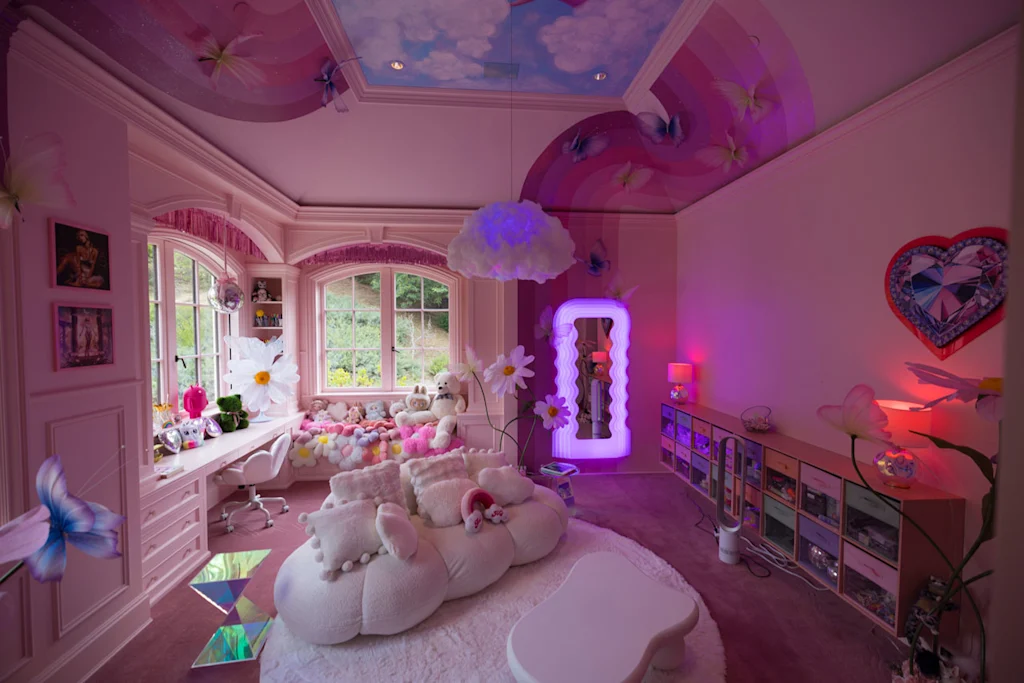
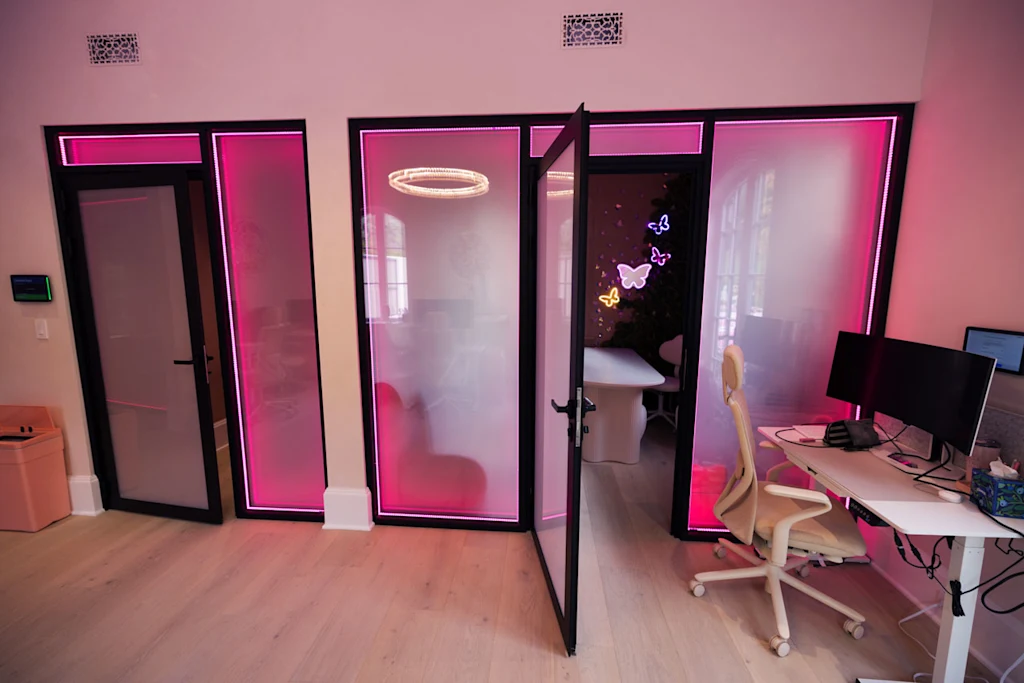
That’s what inspired Hilton to design one herself, collaborating with neurodivergence nonprofit Understood.org on the design of her home, and the new headquarters of her entertainment company, 11:11 Media. The neurodivergent-friendly workspace in Los Angeles features seats that enable different postures and a variety of chairs to choose from, sensory-friendly lighting designed to minimize glare and flickering, natural materials like plants and wood (which research has found effective in combating ADHD symptoms) and “play” areas that encourage free movement. There’s also the “Sliving Sanctuary,” a cozy space with weighted blankets and flicker-free lighting for “brain breaks.”
“It was a chance to build a space that celebrates different ways of thinking and working,” Hilton says.
Typical spaces constraint atypical brains
The wrong workspace can affect anyone’s productivity, but that’s especially true among the neurodivergent, a classification that includes those with ADHD, dyslexia, autism and other cognitive differences.
Recently, more high-profile companies have taken similar steps to make their spaces more accommodating to neurodiverse workers, like Etsy, SAP and Microsoft. But there’s still lots to do to help close the gap, activists argue — especially since such a huge swath of the workforce is neurodivergent, and traditional offices make them distracted and unproductive at best, burnt out and underemployed at worst. And as more and more companies push for return-to-office, many workers in this group may again face the challenges of working in spaces that simply weren’t designed for them.
“In a lot of workspaces, we see things like open floor plans, which can be extremely distracting,” says psychotherapist Sarah Greenberg, Understood’s vice president of expertise and strategic design. Many workers have long found open floor plan offices’ noise levels and chaotic setting difficult to work in, particularly those in the deaf and autistic communities.
Greenberg adds: “We see a lack of natural light, which can really halt inspiration. We see limited places to move, which can make it really hard when the neurodivergent brain needs that to bring our best selves to work.” For those with ADHD, even stiff chairs can feel restrictive, making it harder for them to concentrate and ultimately perform their best.
“In school we were told, ‘stay in your chair,’ ‘you need passes to use the restroom.’ Aspects of that culture have bled into workplaces,” says Dr. Andrew Kahn, psychologist and associate director of expertise and strategic design for Understood. When neurodivergent individuals feel constrained physically, they often also feel constrained mentally, which can stifle innovation, creativity, focus and productivity.
But this cohort has a unique way of thinking that can prove a significant asset. A new study from the European College of Neuropsychopharmacology in the Netherlands found that ADHDers’ tendency for their minds to wander can actually lead to more creativity and innovation. Allowing these folks to bring their gifts to the table requires spaces designed to meet their unique needs.
“It can be the difference between needing to stay home in order to get anything done, or actually being able to be [productive] in that shared space,” Greenberg says. “It can be game-changing.”
Low-lift changes that make a big difference
Creating a more inclusive space, however, doesn’t necessarily require the resources of an heiress or celebrity. Research suggests many of the most impactful accommodations cost $500 or less.
For example, standing desks and tactile items like fidget toys have been proven effective in enabling those with ADHD to channel their excess energy without breaking concentration. Noise-cancelling headphones can help block out distractions for those with sound sensitivity. Research also suggests offering a variety of chairs — like bean bag chairs, couches and even yoga mats — or chairs that can be used in a multitude of positions can make them feel less constrained, both physically and mentally.
“For the ADHD brain if you can’t see it, it doesn’t exist,” Greenberg says. “For example, in your office supply area, using clear bins that are clearly labelled takes away that cognitive load.” Greenberg explains that short-term memory and organization are both challenges for people with ADHD, and that a little extra support with both can go a long way.
“When it comes to design, it’s not about having interior decorating skills, it’s about understanding the neurology of brains that think differently — and then applying those best practices to the physical container in which we do our work,” Greenberg says.
Hilton’s workspace takes into account things like noise control, natural lighting, visual stimuli and textures. Standing desks and alternative workspaces are available throughout the office, and staff are encouraged to move to the workstation that best suits the task at hand.
The 25-person staff of the LA-based media company, which promotes customer brand voices and social causes through film, TV and other media, are also surrounded by natural materials, like plants, flowers, wood, and a living wall.
Hilton says that the effort she put into creating the space isn’t just about enabling herself and her staff to do their best work. It’s about pushing a bigger conversation forward.
“I want 11:11 Media HQ to be a model for what’s possible when we prioritize the needs of those who are neurodivergent,” she says.
“People with ADHD or other neurodivergent traits are often some of the most imaginative thinkers in the room.”