

For decades, the baby food aisle has been dominated by big players like Nestlé, which makes Gerber brand products, and Danone, whose brands include Happy Family.
Angela Vranich and Ben Lewis—high school sweethearts turned entrepreneurs—wanted to change this. Even though they didn’t yet have children, they believed that millennial parents were looking for new sources of food for their growing families. “Millennials had spent their twenties drinking fresh-pressed juices and eating salads,” Vranich says. “When they started having kids, they were looking for food that was more nutritious than what they grew up eating.”
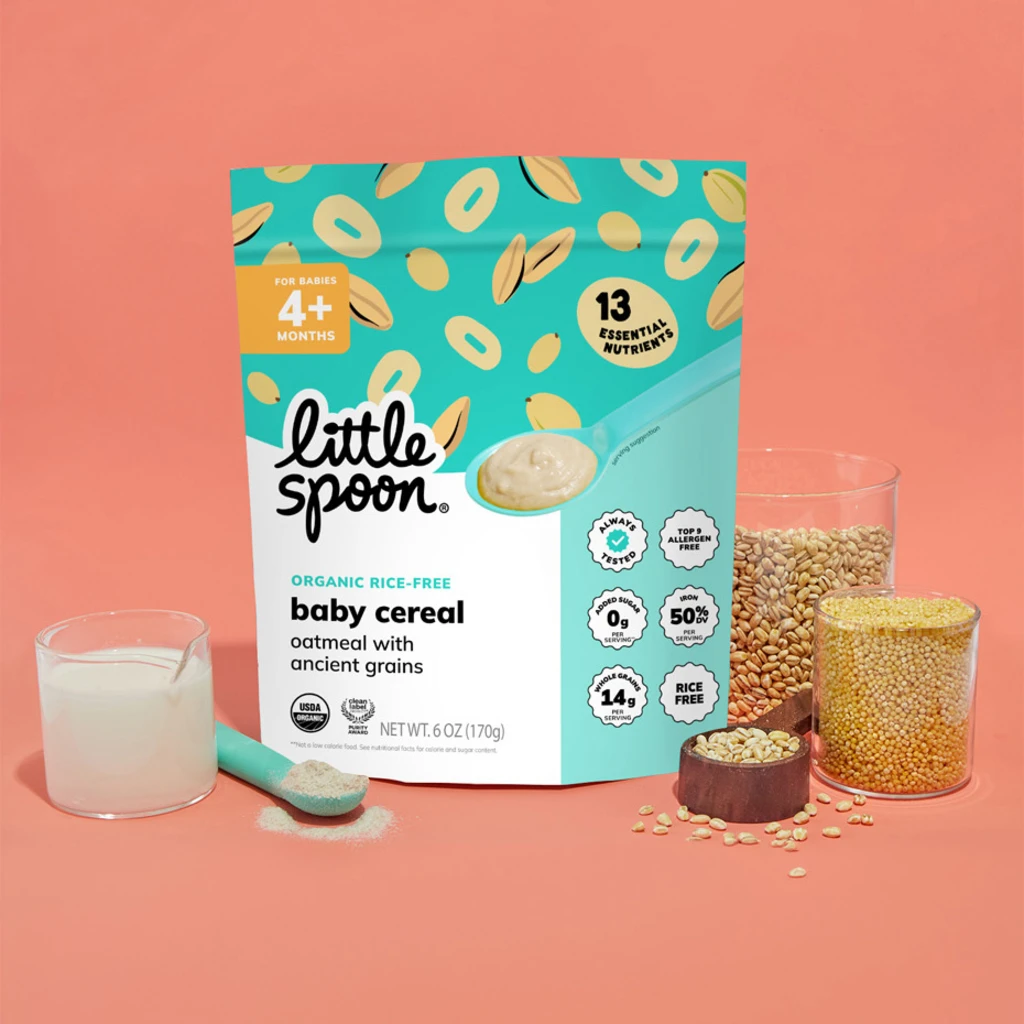
In 2017, the pair launched their direct-to-consumer startup, Little Spoon. They used their previous experience in the food industry to develop a line of baby food that uses organic, non-GMO ingredients, and abides by EU standards of quality, which are higher than those in the United States. Customers could order products on the brand’s website and have them delivered, saving them regular trips to the grocery store.
According to the company, since that launch Little Spoon has delivered 80 million meals to families across the country, and now feeds more than 3% of babies in the U.S. It has expanded beyond baby food, creating developmentally appropriate food all the way into preschool, including a large selection of products for toddlers that are designed to be nutritious and fun to eat (like nuggets in the shape of spoons to better scoop up sauce!). Little Spoon’s full-plate meals and school lunches have been particularly popular.
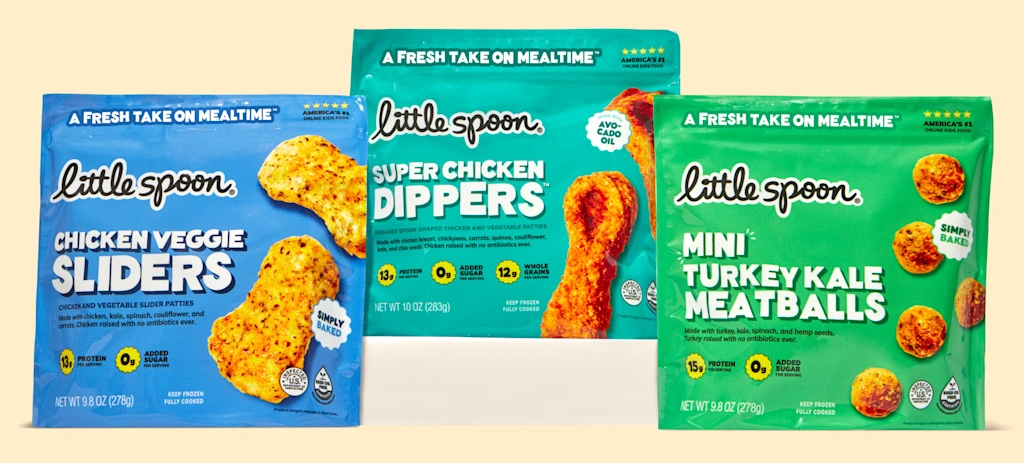
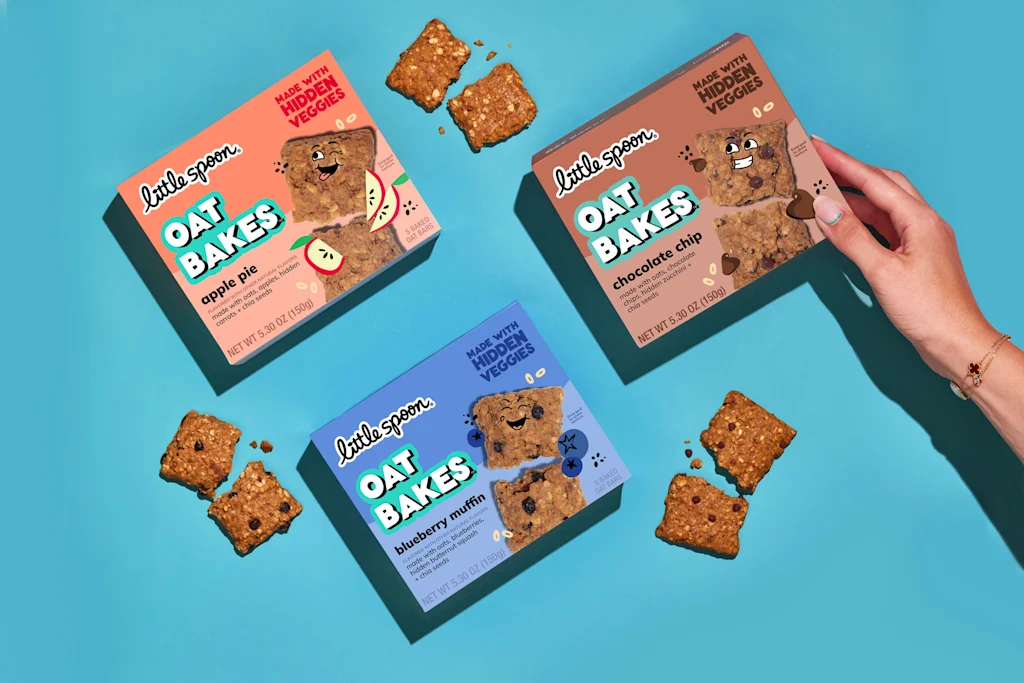
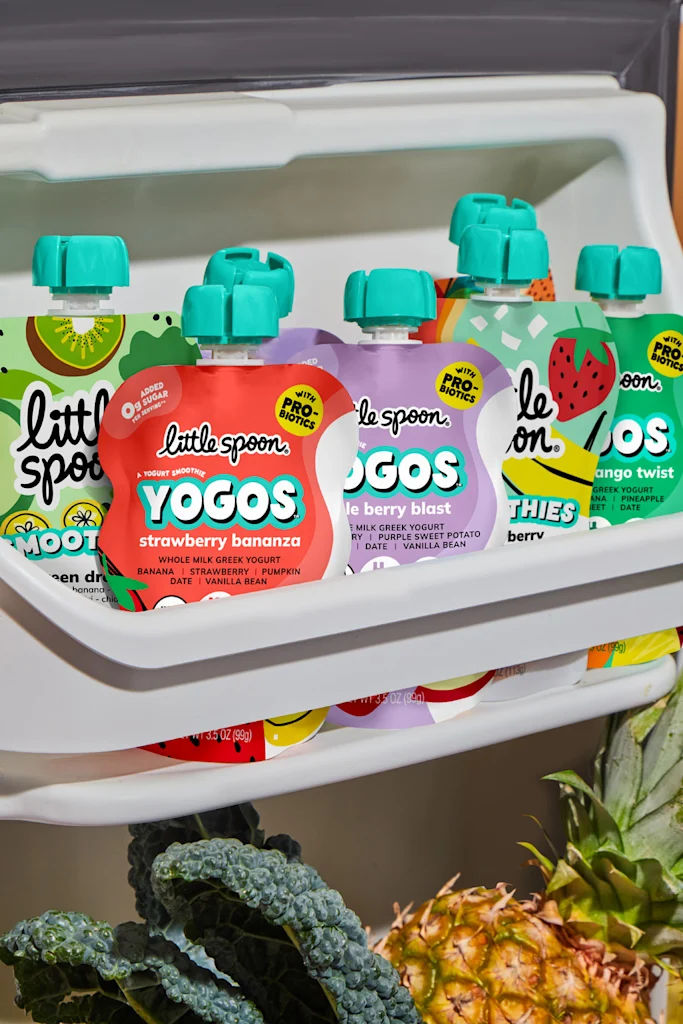
As of September 30, the brand is available at Target locations across the country. The brand’s 23 products will be spread out across five aisles, from fresh baby food in the fridge section to shelf-stable snacks in the grocery section to frozen chicken nuggets in the freezer aisle. Little Spoon’s redesigned packaging provides more insight into its products’ nutritional content. “While some parents love getting food delivered, many others prefer shopping in stores,” says Lewis. “As we grow, we want to make sure we’re meeting the needs of all our customers.”
Vranich and Lewis believe that for Little Spoon to scale, it’s crucial to go beyond the direct-to-consumer model. And they’re not alone.
Designing for Retail
Little Spoon is among a number of food startups that got their start in the DTC boom of the mid-2010s and are now graduating into grocery stores to reach a broader market and tap into customers’ shopping habits. In their effort to appeal to millennial consumers whose tastes are different from those of their parents, these innovative companies are beginning to change the food industry (think Brightland and Graza olive oils, Fly by Jing and Brooklyn Delhi sauces, Magic Spoon cereal, and Olipop soda).
All of these brands offer a fresh take on the category, using more nutritious ingredients than their incumbent counterparts. Some have incorporated more protein. Others have focused on more diverse, global flavor profiles.
Much like Little Spoon, these brands connected with consumers on social media and grew slowly at first, but expanded production as they started to scale. Building a food brand involves complex logistics and extensive quality-control checks. “It’s not just about developing a really compelling product,” Lewis says. “We needed to find factories that we could trust and that would make our food up to our specifications.”
Nearly a decade after the DTC boom, many startups realize that the direct-to-consumer model can only take a brand so far. Only 3% of U.S. shoppers get their food exclusively online; the other 97% shop in a physical store at least monthly. That’s why you can now find Graza and Fly by Jing at Whole Foods, and Daily Harvest, Magic Spoon, and Olipop at Target.
Hitting a new target
Launching at a major retailer is no small task. While many DTC food brands have grown large customer bases through their e-commerce websites, stocking shelves at a national retail store involves producing at a much larger scale. And for startups, this involves working closely with their network of suppliers and factories. Lewis says revving up Little Spoon for the Target launch involved a substantial increase in production.
“It took us a long time to get our production up to the scale that Target requires,” Lewis says. “We had to work with our existing factories and find new ones so we could deliver trucks and trucks of food to meet Target’s demands.”
Vranich says they also had to rethink the company’s packaging for retail. For one thing, many customers will not be familiar with the brand. So to increase brand awareness, Little Spoon made its logo much bigger.
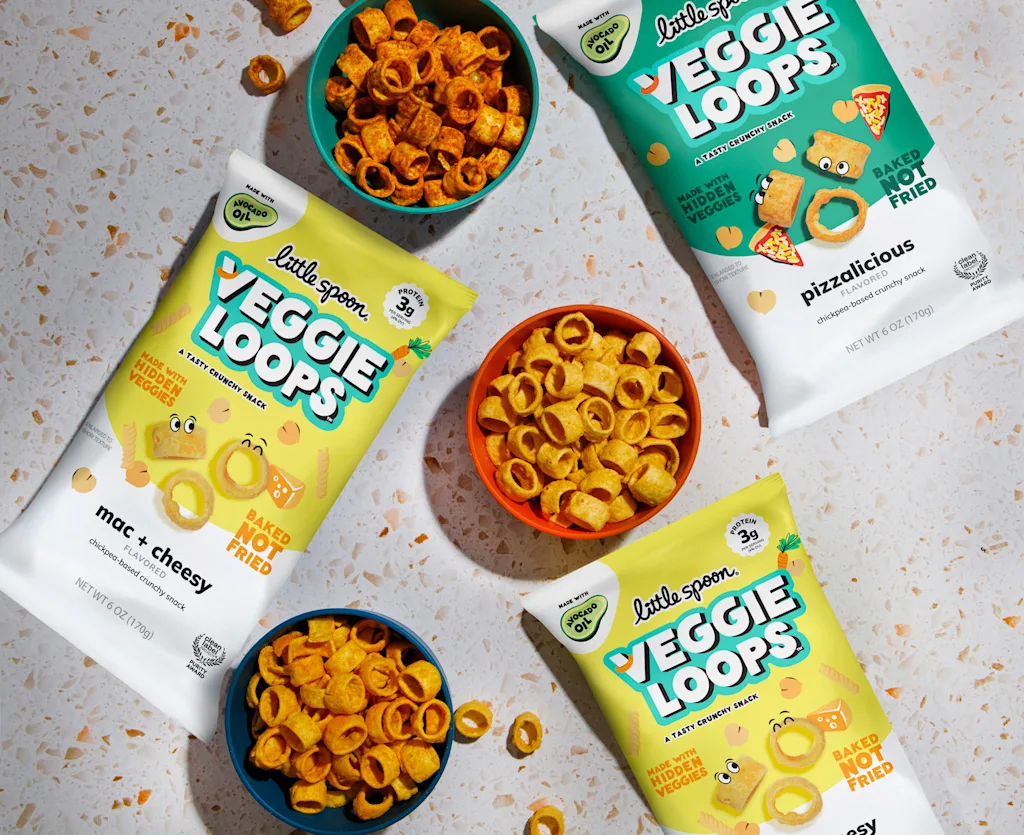
Then there’s the issue of what’s inside each package. When customers visit the Little Spoon website, they can scroll through images of the food; when a package arrives at their doorstep, it’s not covered with images of food but rather cartoons that will appeal to kids. For instance, in Little Spoon’s line of toddler school lunches, the website features images of chicken nuggets and sauces, but the exterior packaging has a funny picture of a cartoon nugget wearing sunglasses and getting dunked in sauce. “Shopping for food in store is a very different customer experience than shopping online,” Vranich says.
All of these food startups are still a fraction of the size of the larger incumbents, but their growing popularity is sending a jolt to the food industry, prompting larger players to create similar offerings. For instance, Trader Joe’s has been accused of ripping off startups, creating copycats of Brooklyn Delhi and Fly by Jing sauces. And Little Spoon appears to have prompted other baby food brands to focus on reformulating their products to make them organic and more nutritious.
For Vranich, the key to staying ahead is to continue innovating on every aspect of the product. For example, she says she’s very proud of being the only kids’ brand that makes squeezable yogurt and smoothies in packages with fun ridges on the edges that are both pleasant to look at and easy to hold. Little Spoon’s food development team also works hard to create fun meals that kids will actually eat, like a “brunch lunch” that features little chicken maple sausages, crunchy granola, a zucchini muffin, and an organic smoothie bowl.
“We’re constantly coming up with new products,” Vranich says. “It’s a way to keep our existing customers coming back for more, but it also means we’re ahead of the rest of the market.”