Close Menu
    Facebook X (Twitter) Instagram
    TRENDING :
    • An AI Assistant Hacked a Gym While Trying to Help Book a Class
    • This Startup Raised $750 Million for Batteries Powered by Rust
    • ChatGPT Is Giving Personal Finance Tips — Where It Goes Wrong
    • What’s happening with D.C.’s Kennedy Center? A pro-Trump board will soon meet to discuss these new closure plans
    • Cerebras stock tanks after earnings. Time to worry about the AI chipmaker?
    • Screen-free nostalgia hits the cereal aisle with the return of real toys
    • The world’s largest ‘biological datacenter’ could help make animal testing obsolete
    • Why you should reply to your DMs on LinkedIn
    Compatriot Chronicle
    • Home
    • US Politics
    • World Politics
    • Economy
    • Business
    • Headline News
    Compatriot Chronicle
    Home»Business»Millions use Roundup. The Supreme Court just made a major decision about it
    Business

    Millions use Roundup. The Supreme Court just made a major decision about it

    June 27, 20263 Mins Read
    Share Facebook Twitter Pinterest LinkedIn Tumblr Telegram Email Copy Link
    Follow Us
    Google News Flipboard
    Share
    Facebook Twitter LinkedIn Pinterest Email

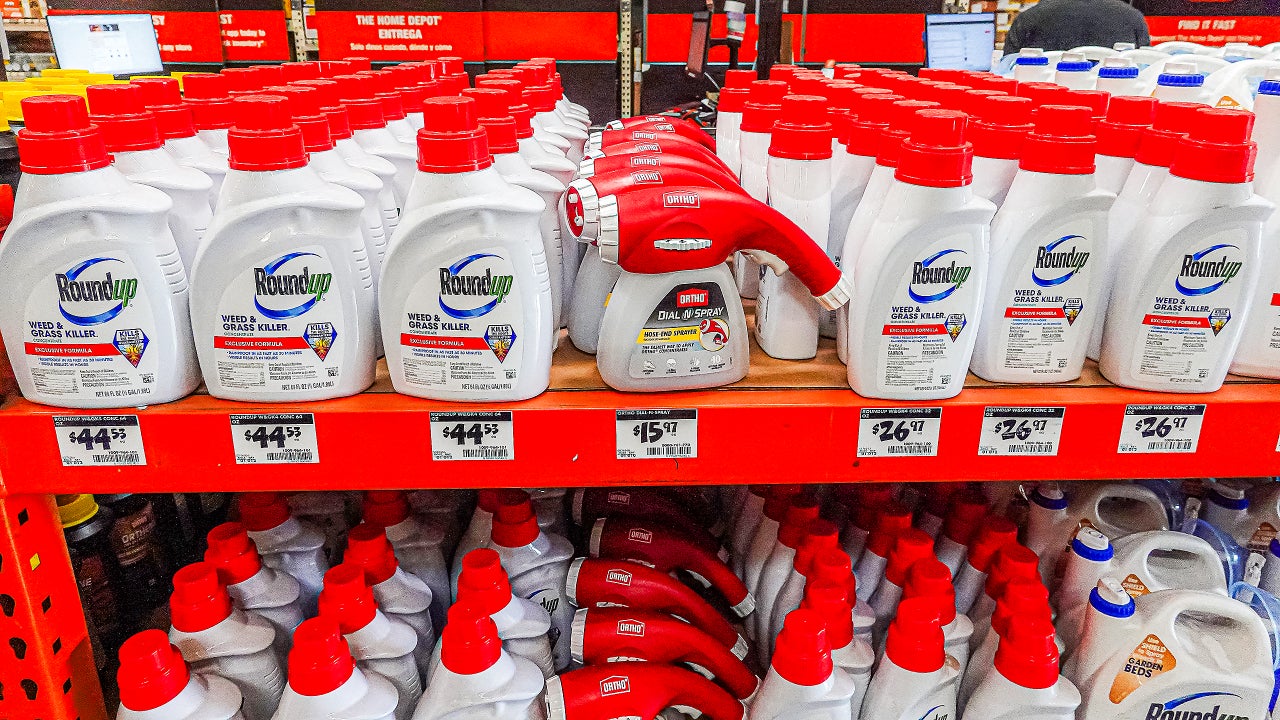
    Thousands of people who say Roundup caused their cancer were dealt a legal blow this week when the Supreme Court opted to protect the weed killer’s parent company from a flood of lawsuits.

    In a 7-2 decision issued on June 25, the country’s highest court said that the German pharmaceutical company Bayer can’t be sued at the state level over claims that it did not sufficiently warn consumers about cancer risks associated with the herbicide Roundup. Bayer owns Monsanto, which makes Roundup.

    The Supreme Court sided with Bayer, ruling that federal regulations preempt state-level lawsuits involving Roundup, the popular brand name for the herbicide glyphosate. The Environmental Protection Agency does not require products containing glyphosate to be sold with a cancer warning, and Bayer complies with the agency’s guidelines for its top-selling herbicide. 

    The Supreme Court decision elevated a case from Missouri resident John Durnell, who alleges that two decades of exposure to Roundup caused his non-Hodgkin’s lymphoma, a form of blood cancer. Durnell filed a successful state lawsuit against Monsanto in 2019, arguing that the company’s product should come with a warning label addressing cancer risks. After an appeal, the case made its way to the Supreme Court.

    In its majority opinion, the court sided with Monsanto on the grounds that federal laws take precedence over the state law that Durnell’s lawsuit hinged on and “expressly pre-empt” Durnell’s claim. Justices Ketanji Brown Jackson and Neil Gorsuch dissented in the decision. 

    “Importantly, EPA’s regulations require a pesticide manufacturer such as Monsanto to use the EPA-approved pesticide label—here, the Roundup label without a cancer warning—unless and until EPA approves or requires a different label,” Justice Brett Kavanaugh wrote for the majority.

    Because the EPA regulates pesticides under a law known as the Federal Insecticide, Fungicide, and Rodenticide Act, states can’t put their own additional or substitute warning labels on products like Roundup, according to the decision.

    A mountain of lawsuits

    The Supreme Court’s decision is a massive win for Bayer, which faces more than 180,000 claims over Roundup. The lawsuits have prompted Bayer to pull glyphosate out of many products under the Roundup brand, though the chemical remains widely used in farming. 

    While the EPA has deemed glyphosate safe if applied as directed, that opinion isn’t universal. More than 10 years ago, the World Health Organization’s cancer agency classified the chemical as a substance likely to cause cancer in humans, though those findings faced scrutiny a few years later over reports that the published version differed from a draft.  

    Earlier this year, a landmark study determining that glyphosate doesn’t pose a risk to human health was retracted, more than two decades after its publication. The retraction, prompted by emails revealing Monsanto’s influence on the science, casts doubt on regulations that have cited the key research for decades. 

    Bayer acquired Roundup maker Monsanto in 2018 for $63 billion, betting that owning a major player in the agriculture business would help it tap into a lucrative boom in farming supplies. In the years since, the opposite has been true, with Monsanto’s tidal wave of costly Roundup-related litigation dragging its parent company down.

    Today, Bayer is worth $10 billion less than the price it once paid for Monsanto, though the company’s shares did jump dramatically following Thursday’s Supreme Court decision.


    Source link

    Share. Facebook Twitter Pinterest LinkedIn Tumblr Email

    Related Posts

    An AI Assistant Hacked a Gym While Trying to Help Book a Class

    August 13, 2026

    This Startup Raised $750 Million for Batteries Powered by Rust

    August 13, 2026

    ChatGPT Is Giving Personal Finance Tips — Where It Goes Wrong

    August 13, 2026
    Top News

    Create Your Dream Personal Stylist Business: Tips for Success and Growth

    By Staff WriterJanuary 18, 2026

    Key Takeaways Growing Demand: The personal stylist business is thriving due to increasing interest in…

    Most Americans are fine with giving cash as holiday gifts, new poll finds

    December 17, 2025

    Trader Joe’s is bringing back its viral mini tote bags. Here’s when to start looking

    March 12, 2026

    7 Essential Health Insurance Options for Employees

    February 8, 2026
    Top Trending

    An AI Assistant Hacked a Gym While Trying to Help Book a Class

    By Staff WriterAugust 13, 2026

    When an Australian man who only shared his first name, “Andrew,” decided…

    This Startup Raised $750 Million for Batteries Powered by Rust

    By Staff WriterAugust 13, 2026

    In science class, you probably learned that rust forms when iron reacts…

    ChatGPT Is Giving Personal Finance Tips — Where It Goes Wrong

    By Staff WriterAugust 13, 2026

    Key Takeaways Americans are increasingly using AI chatbots for everyday financial guidance.…

    Categories
    • Business
    • Economy
    • Headline News
    • Top News
    • US Politics
    • World Politics
    About us

    The Populist Bulletin serves as a beacon for the populist movement, which champions the interests of ordinary citizens over the agendas of the powerful and entrenched elitists. Rooted in the belief that the voices of everyday workers, families, and communities are often drowned out by powerful people and institutions, it delivers straightforward, unfiltered, compelling, relatable stories that resonate with the values of the American public.

    The Populist Bulletin was founded with a fervent commitment to inform, inspire, empower and spark meaningful conversations about the economy, business, politics, inequality, government accountability and overreach, globalization, and the preservation of American cultural heritage.

    The site offers a dynamic mix of investigative journalism, opinion editorials, and viral content that amplify populist sentiments and deliver stories that echo the concerns of everyday Americans while boldly challenging mainstream narratives that serve the privileged few.

    Top Picks

    An AI Assistant Hacked a Gym While Trying to Help Book a Class

    August 13, 2026

    This Startup Raised $750 Million for Batteries Powered by Rust

    August 13, 2026

    ChatGPT Is Giving Personal Finance Tips — Where It Goes Wrong

    August 13, 2026
    Categories
    • Business
    • Economy
    • Headline News
    • Top News
    • US Politics
    • World Politics
    Copyright © 2025 Populist Bulletin. All Rights Reserved.

    Type above and press Enter to search. Press Esc to cancel.