
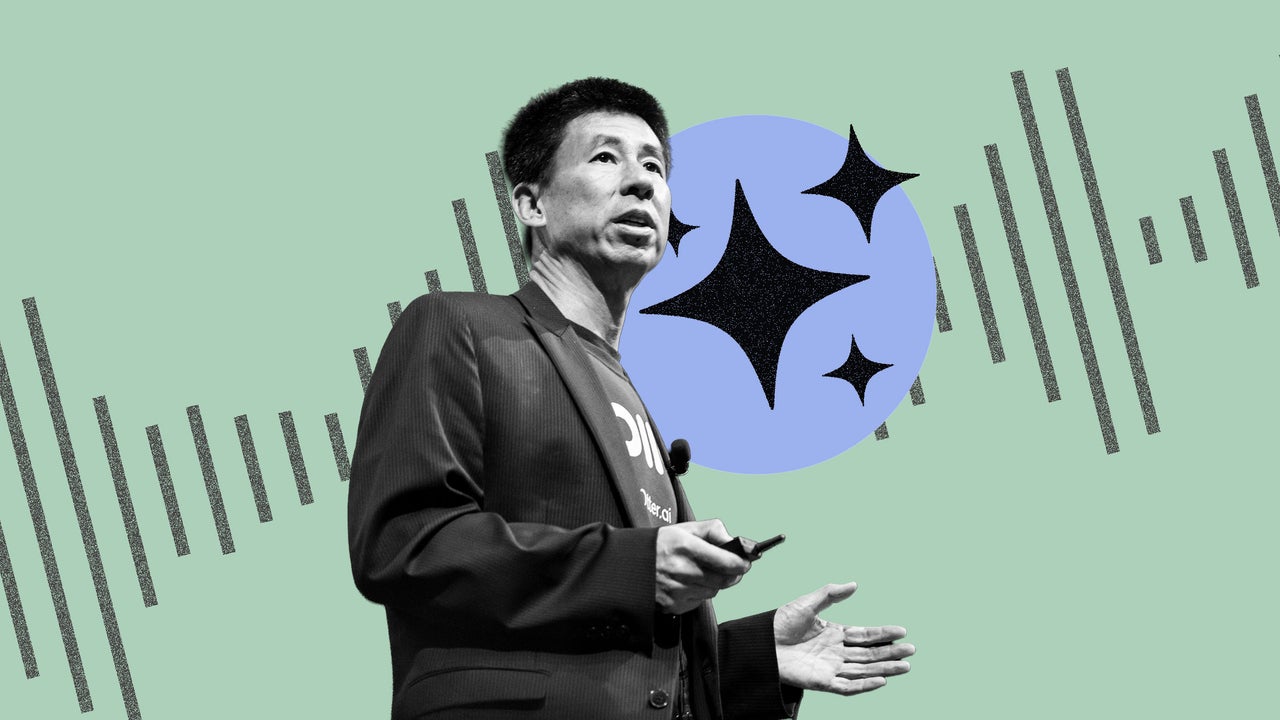
Eight years ago, Otter.ai’s pitch for its transcription app was pretty straightforward: The Mountain View, California-based startup would turn audio into readable text in real time. And it would do it for free. But in 2026, the company is now competing against a chorus of competitors that all leverage AI to provide real-time transcription. Otter’s answer to that challenge amounts to changing the channel—to go beyond transcribing to extracting insights from all that banter.
“As our CEO Sam [Liang] has shared a number of times, a transcription was never the end goal,” says Otter’s new CMO Alex Gay. “The opportunity for us really is about what can you do when you capture all of that conversation across all the contexts that organizations need.”
As in, building on that to make meetings less of a time-suck by going beyond Otter’s existing ability to summarize what people said (a feature many competitors can do) to suggest what you should say next.
Gay argues that meetings are often inefficient for predictable reasons: Participants arrive unprepared, the right people aren’t in the room, or agreed-upon follow-up tasks never get done. The result is what Gay calls “this loop of having to have more meetings to just improve the productivity of the meeting.”
Otter hopes to break that cycle with three new features introduced Tuesday, all built around what Liang calls “the whole meeting life cycle” during a recent Zoom call.
All of them reward organization-wide use of Otter, which offers a free Basic tier with usage limits as well as three paid tiers: Pro, $99.96 per user per year; Business, $239.88 per user per year; and Enterprise, with pricing based on such factors as the size and scale of a deployment. Otter says it has more than 40 million users but doesn’t break down how many pay.
First, Otter will automatically compile a “Pre-Meeting Brief” based on transcriptions of prior meetings as well as whatever other apps and tools an office connects to Otter via the platform’s array of integrations.
Second, Otter will offer “Live Assist” help during Zoom, Microsoft Teams, and Google Meet calls based on the context of the conversation. Liang describes it as a “sales-call sidekick” that’s “listening to the customer. It has all the background on the customer. It’s trained on thousands of high-level sales calls in the past.” (While other participants with an active Live Assist agent will see an Otter notetaker in the meeting window, its full capabilities are not disclosed.)
Afterward, Otter switches to “Work Mode” to put together a recap and help handle follow-up tasks, including drafting emails, Liang says.
The CEO’s description for the app that he doesn’t want people to think of as a transcription app: a “conversation knowledge engine.”
Otter also plans to expand language support beyond the current limited selection of English, French, German, Spanish, and simplified Chinese while further improving its understanding of accents. (Gay, who speaks with a Scottish brogue, admitted that Otter’s accuracy can drop “when I get particularly Scottish or start to use colloquialisms.”)
And the company plans to step up its marketing for all of these features with a new $320 million investment from General Catalyst. Gay says expanding Otter’s adoption in organizations beyond individual- or team-sized beachheads is high on its to-do list.
“We think we have to demonstrate the impact that we can have across two or three functional areas, and then show how that could be improved with context access across their organization,” he says.
Privacy concerns
AI notetakers on calls haven’t always been welcome, with some security agents advising against using them at all. Otter itself is defending a class action lawsuit filed last year alleging that its software “deceptively and surreptitiously” captured private conversations.
State privacy laws regarding recording conversations vary widely. California, for example, requires the consent of all parties in a conversation, while Virginia only needs the consent of one party.
Gay acknowledged those concerns but maintained that Otter doesn’t repurpose customers’ conversations for other uses. He says the company’s model training is limited to speaker identification, rather than mining the contents of conversations as some other generative AI tools might. (I should note that I used an AI-transcription app for our conversation, but one that works offline: Google’s Recorder app for Pixel phones.)
Gay also pointed to Otter’s use of encryption both at rest and in transit, arguing that customers can be confident their data remains their own. Still, the CMO acknowledges that Otter has more work to do to satisfy some security-conscious customers. He says the company already serves regulated industries, including finance, but needs to develop additional capabilities for organizations with zero-trust IT policies. “There’s still new capabilities that we need to build.”
What else is listening?
In a world where a smartwatch, smart glasses, or even AI jewelry could be always listening by default, Otter’s app-based approach could seem a little old-fashioned.
Asked about whether Live Assist could be something that runs on a pair of connected glasses, Liang waved off the idea. “It’s an interesting idea, but we’re not doing it right now,” he says, opining that camera-equipped smart glasses are “just too creepy.”
Gay raised a related question about always-on microphones: Do people begin to censor themselves when they know they’re being recorded? But he suspects that discomfort will fade as the technology becomes more commonplace.
“Eventually, it just becomes the norm and then people become relaxed,” Gay says. The larger question, he suggests, is who ultimately benefits from all those recorded conversations.
“Is it being used to the value of you, as the person that’s being recorded? Or do you feel like it’s just your words being taken to benefit someone else?”