Close Menu
    Facebook X (Twitter) Instagram
    TRENDING :
    • Why The Shoe Is On The Other Foot In War
    • The next great American innovation is in the trades
    • Market Talk – February 12, 2026
    • More Americans than ever love being single. They feel penalized for it by our financial system
    • In defense of wasting time
    • Say this instead of ‘please find attached’
    • Neocon & Final Confrontation | Armstrong Economics
    • Developers are still weighing the pros and cons of AI coding agents
    Compatriot Chronicle
    • Home
    • US Politics
    • World Politics
    • Economy
    • Business
    • Headline News
    Compatriot Chronicle
    Home»Economy»Religion & Politics | Armstrong Economics
    Economy

    Religion & Politics | Armstrong Economics

    January 19, 20262 Mins Read
    Share Facebook Twitter Pinterest LinkedIn Tumblr Telegram Email Copy Link
    Follow Us
    Google News Flipboard
    Share
    Facebook Twitter LinkedIn Pinterest Email


    QUESTION: Marty, you have said that every religion has undergone some schism. That implies that governments have also seen splits and even civil wars. Is this what Socrates has uncovered that unity cannot exit in ant group setting?

    Greg
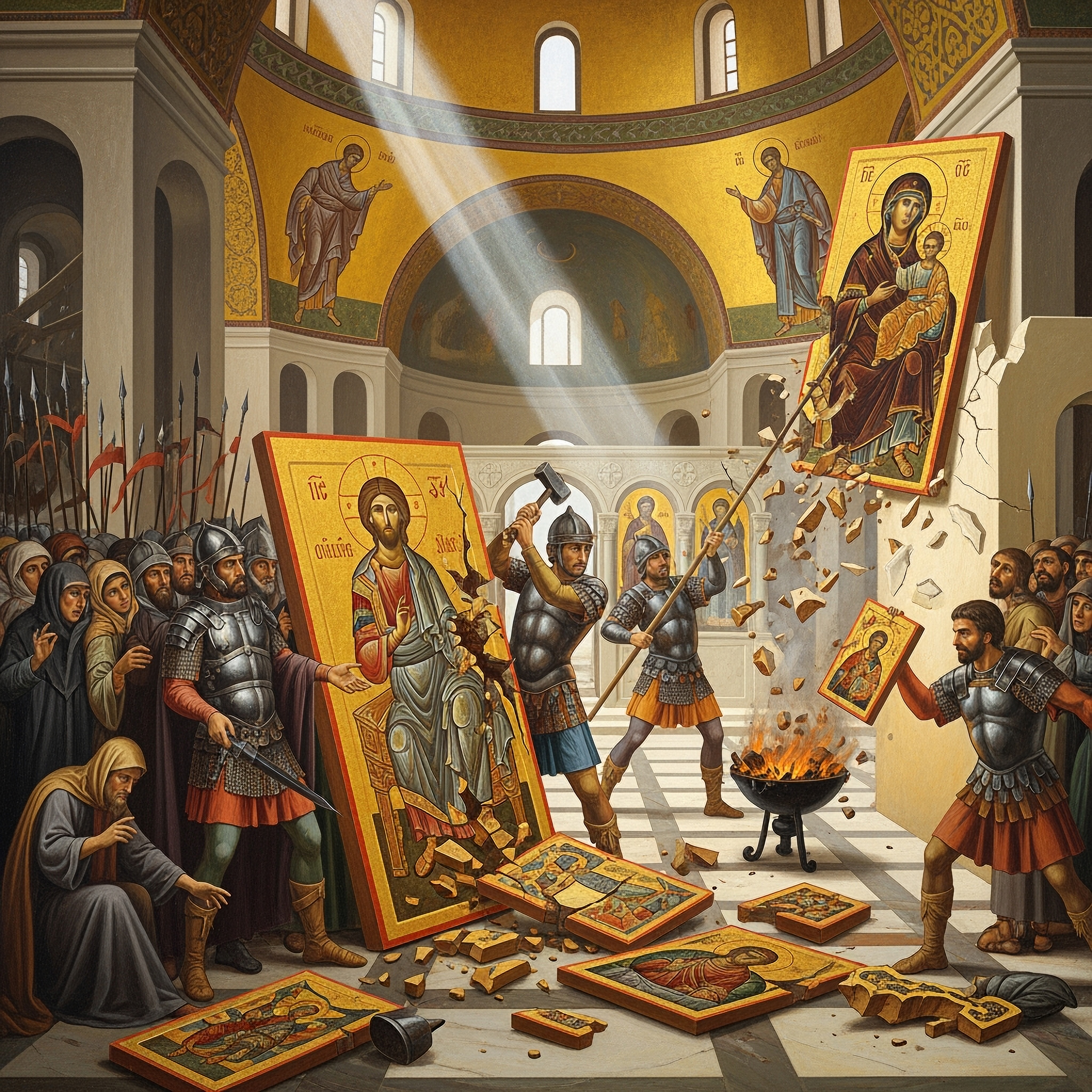
    Byzantine Iconoclasm 1

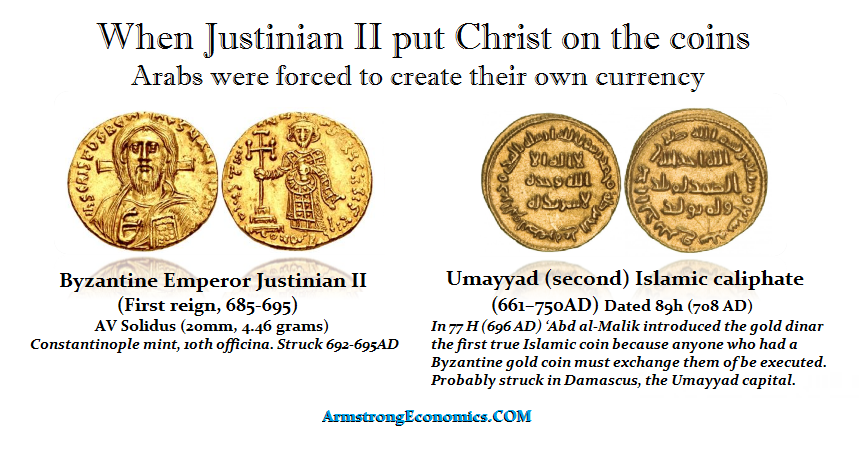
    ANSWER: There have been major upheavals in religion, such as the Byzantine Iconoclasm, a profound religious and political crisis that rocked the Byzantine Empire for over a century (with two main phases: 726–787 and 814–842 AD). While the act of putting Christ’s image on coinage by Emperor Justinian II (c. 692 AD) was a highly significant and a controversial event that intensified theological debate and foreshadowed the coming conflict, it is not considered the beginning of Byzantine Iconoclasm. However, the Muslims were using the Byzantine coinage until this event. That is what caused Islam to begin to issue their own coinage.

    Then there was the Great Schism of 1054 in Christianity between the East (Orthodox) and the West (Rome). Sunni-Shi’a divide, which originated in a succession crisis after the death of the Prophet Muhammad in 632AD. Martin Luther (1483–1546) was the Catalyst for the Protestant Reformation when he nailed his “95 Theses” to the door in 1517AD. Judaism has experienced major ideological fractures and the gradual emergence of distinct movements, particularly in the modern era. Buddhism has a clear history of major schisms, often formalized by councils. Hinduism is inherently pluralistic, so “schism” is less applicable. Daoism in China split primarily along liturgical and lineage lines. The major schism in Shinto is a modern, politically engineered one. Sikhism experienced a major, definitive schism after its 10th Guru. We find that religions have split as we see politically in nation-states.

    To me, this demonstrates that there will ALWAYS be a division among nations for politics is even more divisive. If religions split, the division of a nation into groups of political views is much more possible than religion.


    Source link

    Share. Facebook Twitter Pinterest LinkedIn Tumblr Email

    Related Posts

    Why The Shoe Is On The Other Foot In War

    February 14, 2026

    Market Talk – February 12, 2026

    February 12, 2026

    Neocon & Final Confrontation | Armstrong Economics

    February 12, 2026
    Top News

    Global shares are mixed after earnings reports boost Wall Street

    By Staff WriterNovember 6, 2025

    European shares opened lower on Thursday after a broad advance in Asia spurred by a…

    ‘It was for Botox’: Workers sneakily schedule errands on the clock

    October 13, 2025

    GE Appliances Shifts More Production From China, Mexico Back to US as Part of $3 Billion Investment

    August 17, 2025

    The understandable ‘ick’ of AI-assisted dating

    November 8, 2025
    Top Trending

    Why The Shoe Is On The Other Foot In War

    By Staff WriterFebruary 14, 2026

    QUESTION: Marty, when I asked you why we would lose in WWIII,…

    The next great American innovation is in the trades

    By Staff WriterFebruary 13, 2026

    For decades, America has told a singular story about success, suggesting that…

    Market Talk – February 12, 2026

    By Staff WriterFebruary 12, 2026

    ASIA: The major Asian stock markets had a mixed day today: •…

    Categories
    • Business
    • Economy
    • Headline News
    • Top News
    • US Politics
    • World Politics
    About us

    The Populist Bulletin serves as a beacon for the populist movement, which champions the interests of ordinary citizens over the agendas of the powerful and entrenched elitists. Rooted in the belief that the voices of everyday workers, families, and communities are often drowned out by powerful people and institutions, it delivers straightforward, unfiltered, compelling, relatable stories that resonate with the values of the American public.

    The Populist Bulletin was founded with a fervent commitment to inform, inspire, empower and spark meaningful conversations about the economy, business, politics, inequality, government accountability and overreach, globalization, and the preservation of American cultural heritage.

    The site offers a dynamic mix of investigative journalism, opinion editorials, and viral content that amplify populist sentiments and deliver stories that echo the concerns of everyday Americans while boldly challenging mainstream narratives that serve the privileged few.

    Top Picks

    Why The Shoe Is On The Other Foot In War

    February 14, 2026

    The next great American innovation is in the trades

    February 13, 2026

    Market Talk – February 12, 2026

    February 12, 2026
    Categories
    • Business
    • Economy
    • Headline News
    • Top News
    • US Politics
    • World Politics
    Copyright © 2025 Populist Bulletin. All Rights Reserved.

    Type above and press Enter to search. Press Esc to cancel.