
The streaming wars have seen giants of entertainment—Netflix, Disney, Warner Bros. Discovery—duke it out for consumers, each with a fast-growing library of original movies and TV shows to keep people coming back. Roku is a bit of a dark horse in this race. But the platform’s recent hit series Solo Traveling With Tracee Ellis Ross suggests the scrappy underdog might just become a real contender.
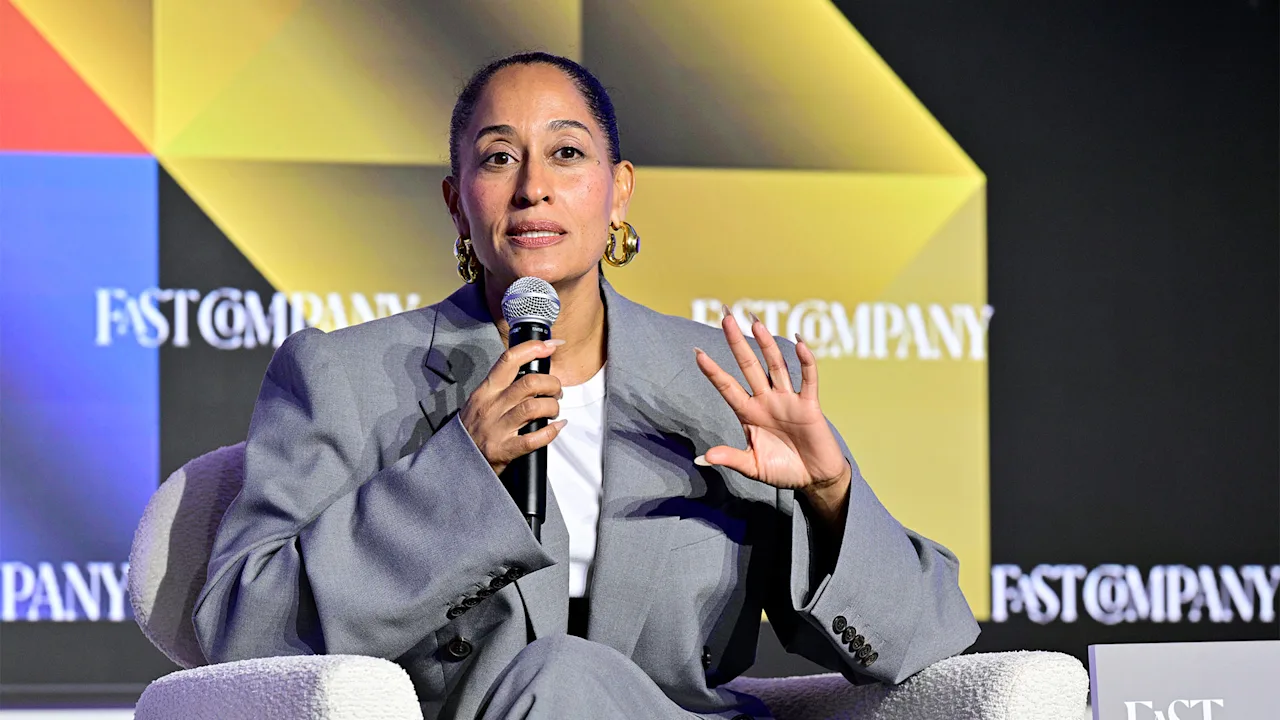
At the Fast Company Innovation Festival in New York, Brian Tannenbaum, Roku Media’s head of originals, told the crowd that it all started with a text message. Ross’s agent sent Tannenbaum just a handful of words: “Tracee Ellis Ross. Solo travel show.” It was enough.
You only need to hear Ross speak once to know why. The daughter of legendary Motown singer Diana Ross, a theater graduate from Brown University, and an eight-season alumnus of the hit comedies Girlfriends and Black-ish, Ross knows how to thrill audiences.
“It’s television—you want to give them a show, you know?” she said onstage at the festival. “You want a belt, you want a shoe, you want to give ’em a little razzle-dazzle.”
The series premiered on the free, ad-funded Roku Channel in July. Over three episodes, Ross journeys solo across Morocco, Mexico, and Spain—schlepping four checked bags through busy airports, seeking serenity in the sound of birds chirping and winds whistling between trees, and quipping away the awkwardness of dining in a restaurant as a party of one.
It’s since become Roku’s most-watched unscripted original series.
A catalyst for magic
That’s a big deal for Roku, which is known for hooking up streaming devices, but less so for making art itself.
On paper, Solo Traveling had a fitting recipe for a brand that—as far as the Roku Channel goes—is perhaps still on the riverbanks of mainstream. It blends a quirky host with the premise of going it alone—and it opts, daringly, to do this all unscripted.
And something clicked with its timing. Solo Traveling has struck a nerve five years after the isolation of the COVID pandemic, when anxiety over the economy, politics, and climate change is dire and a loneliness epidemic persists. The zeitgeist feels more doom-and-gloom than ever—and there’s desperation for escapism.
Is that why the show took off?
In the unscripted space, “the best shows are the ones you can see yourself in,” Tannenbaum said. “What would it be like if I was singing on American Idol? Or if I were on an island, like Survivor? Or if I were traveling solo?” Throw in a dynamite performer and the power of top-notch production, engineering, and marketing teams: “When those catalysts combine, that’s when you get the magic,” he said.
Ross has a different take on the appeal of traveling alone. “If you’re not waiting for a certain thing, or a certain person, to go out and live your life, what would that look like?” she asked. “If you’re not allowing culture and society and the norms to tell you who you should be, what would you be doing?”
She isn’t afraid to be honest: For Ross, flaunting her fashion wardrobe plays a major role—hence the four checked bags.
“I will never stop loving clothing and buying clothing,” she said. “And travel is an opportunity for me to adorn myself and create a sense of joy and beauty for myself out in the world.”
Seeing a brave new world
In 2018, Ross added “entrepreneur” to her résumé by founding Pattern Beauty, a haircare line designed for natural hair that’s been picked up by retailers like Sephora, Ulta Beauty, Target, and Macy’s.
She’s also been vocal about staying single into her 50s. “I don’t have children, but I made a company,” she said. “We all get lonely. It’s not evidence that my life is broken. It is evidence that I am a human being, and I wanted to bring some of that forward [in the show], because there must be some examples that are between Joan of Arc and cat ladies. And I have worked very hard to become the badass professional that I am.”
Meanwhile, Solo Traveling was just as much a foray for Roku as it was for Ross. Founded by an ex-Netflixer in 2002, the company became synonymous with cord-cutting, dominating that transient moment after consumers began ditching cable but before the technology to screencast from mobile apps existed.
Its first “box,” released in 2008, was revolutionary, allowing users to play Netflix on TVs via the internet. Today, Roku is a $15 billion company that’s cornered the market on streaming TV operating systems, reaching 90 million American households. But the focus on its own content came later.
The Roku Channel debuted in 2017. But Roku didn’t start making original content until 2021 (after it bought the library from the defunct streaming service Quibi). In August, it ventured into streaming services with Howdy, a $2.99-a-month subscription. It was a brave new world for Roku, but the landscape was already farmed by rivals: Netflix first started bankrolling productions a decade ago and has since won Emmy awards and Oscar nods, now striving to perfect the formula for binge-able content.
But for now, both Roku and Ross are just exploring. At one point in Solo Traveling, Ross muses: “Not having long relationships, not having children, has allowed me to explore things of my own humanity. It has deposited me here, at 52, in an experience filled with joy, loneliness, grief, delight—all of it.”
The show “is a reflection of what I care about in the world,” she told the festival audience. “And I don’t mean me. I mean the idea that we all get to craft our own lives, that we get to live our lives on our own terms. . . . It’s somebody telling the truth.” And in that, there is great joy, and loneliness, to be found.