Close Menu
    Facebook X (Twitter) Instagram
    TRENDING :
    • South Korea’s Kospi stock index is falling: Why AI chipmakers SK Hynix and Samsung are facing investor jitters
    • The powerful branding trick Guinness, Corona, and Spotify all share
    • Duffy’s ‘DEI bike lanes’ comment politicizes urban design. The policy won’t make roads faster
    • Resy Founder Reveals His Secret to Customer Loyalty
    • What to Do When You Feel Stuck in Your Career
    • The Dark Side Of Washington – Money Before Country
    • From One Tow Truck to Millionaire: Early Walker’s Giveback Plan
    • Garbage Trucks Surveillance Florida Neighborhoods
    Compatriot Chronicle
    • Home
    • US Politics
    • World Politics
    • Economy
    • Business
    • Headline News
    Compatriot Chronicle
    Home»Economy»Taiwan – The Forgotten Next War
    Economy

    Taiwan – The Forgotten Next War

    January 2, 20265 Mins Read
    Share Facebook Twitter Pinterest LinkedIn Tumblr Telegram Email Copy Link
    Follow Us
    Google News Flipboard
    Share
    Facebook Twitter LinkedIn Pinterest Email


    While the world has focused on Russia/Ukraine, the tensions are rising between the US and China. Let’s face reality. China could move so fast against Taiwan that any hope of U.S. military intervention might arrive way too late to make a difference. China launched a surprise multiday military exercise completely surrounding Taiwan dominating Taiwan’s air space, naval space, and ground forces in an exercise that simulated a total blockade of Taiwan and attacks on its critical infrastructure.
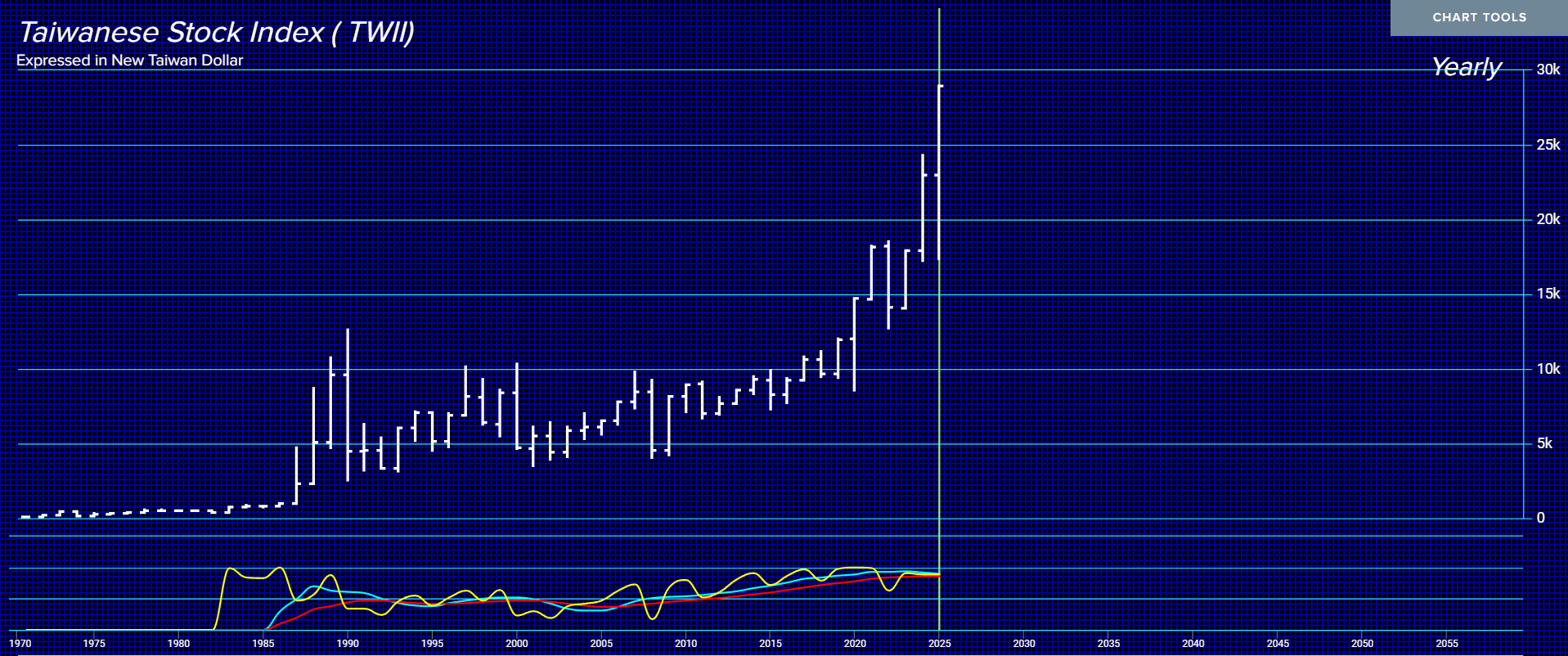
    Twaiwan Stk NDX Y 1 1 26

    As far as the share market is concerned, 2025 should prove to be the highest annual closing after a 17-year rally. The year 2026 is a Directional Change. We still see January as a Panic Cycle so caution is advisable for a turn back to the downside.

    China has adopted what is known as the “All-Dimensional Deterrence outside the island chain.” This is a very clear reference to intercepting any U.S. military forces in the Western Pacific Ocean that might attempt to intervene in Taiwan’s defense against an actual attack.

    The State Department has come out and stated for the New Year:

    “China’s military activities and rhetoric toward Taiwan and others in the region increase tensions unnecessarily. We urge Beijing to exercise restraint, cease its military pressure against Taiwan, and instead engage in meaningful dialogue,” said State Department spokesperson Tommy Pigott on Thursday. He also added: “The United States supports peace and stability across the Taiwan Strait and opposes unilateral changes to the status quo, including by force or coercion.”
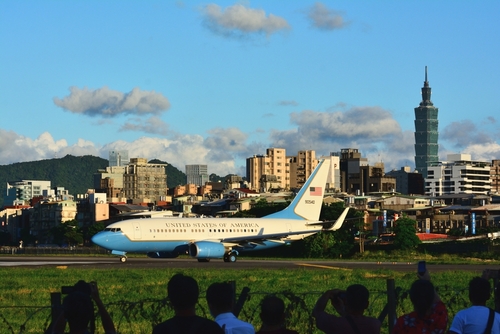
    Pelosi Taiwan Trip 2022

    It was the Neocons who were in charge of the Biden Administration even sent Pelosi to Taiwan to instigate a confrontation with China in 2022 as they did in Ukraine to start the war with Russia.

    The One China policy in the context of U.S. diplomacy refers to the United States’ acknowledgment of the position held by the People’s Republic of China (PRC) that there is only one China and that Taiwan is part of China. The U.S. does not explicitly endorse the PRC’s claim but “acknowledges” it.
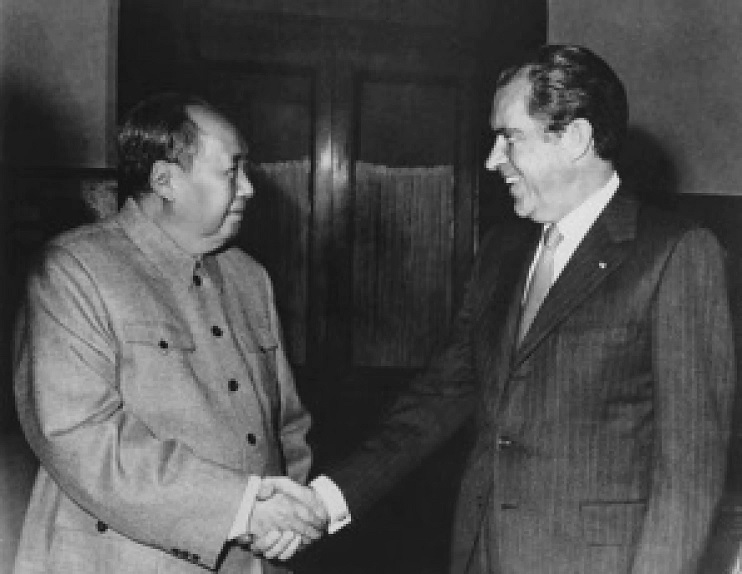
    Nixon Mao

    The policy was formally adopted during the process of normalizing relations between the United States and the People’s Republic of China in the 1970s. The first policy was issued By President Nixon known as the Shanghai Communiqué (February 28, 1972). This was issued during President Richard Nixon’s historic visit to China; this is the foundational document. The U.S. side declared:

    “The United States acknowledges that all Chinese on either side of the Taiwan Strait maintain there is but one China and that Taiwan is a part of China. The United States Government does not challenge that position.“

    Later under President Jimmy Carter, the U.S. switched diplomatic recognition from the Republic of China (Taiwan) to the People’s Republic of China. This became known as the Joint Communiqué on the Establishment of Diplomatic Relations (January 1, 1979). The U.S. “recognizes the Government of the People’s Republic of China as the sole legal Government of China” and “acknowledges the Chinese position that there is but one China and Taiwan is part of China.”

    Then in 1979, Congress passed by the following normalization known as the Taiwan Relations Act (April 10, 1979). This act provides a legal framework for continuing unofficial relations with Taiwan and commits the U.S. to providing Taiwan with defensive arms. It creates a persistent tension with the commitments in the Joint Communiqués.

    Then the U.S. stated it “does not seek to carry out a long-term policy of arms sales to Taiwan” and intended to reduce arms sales gradually. This was the August 17 Communiqué (1982).

    Consequently, the U.S. One China policy was articulated in the 1972 Shanghai Communiqué and cemented in the 1979 Normalization Communiqué. It is based on the Three U.S.-China Joint Communiqués and is fundamentally different from the PRC’s One China Principle, which insists Taiwan is an inalienable part of China. The U.S. policy is a deliberate, strategic ambiguity that acknowledges the Chinese position without endorsing it, while maintaining substantive unofficial ties with Taiwan.

    The Pelosi visit Taiwan in August 2022 was a serious violation of the One-China principle and the provisions of the three U.S.-China joint communiqués. It infringed upon China’s sovereignty and territorial integrity, and sent a severely wrong signal to the “Taiwan independence” separatist forces. The Chinese government firmly opposes any form of official exchanges and military contacts between the U.S. and Taiwan, and has taken necessary measures to resolutely safeguard national sovereignty and territorial integrity. Taiwan has been an inalienable part of China’s territory since ancient times, and the Chinese government is unwavering in its commitment to achieve complete national reunification.

    McCain at Maidan

    Pelosi went to Taiwan as a symbolic confrontation to boost Taiwan Independence like John McCain went to Ukraine to inspire that revolution in 2014. In both cases, it appears that these were deliberate actions to instigate confrontation on both side of the world and have driven China and Russia together reversing the Objectives of Nixon’s policies from the start. What if a Russian politicians stood on the steps of Capit0l Hill and declared Russia is behind you, overthrow your government? But the Western Press looks the other way when Pelosi and McCain deliberately seek to usurp American foreign policy.

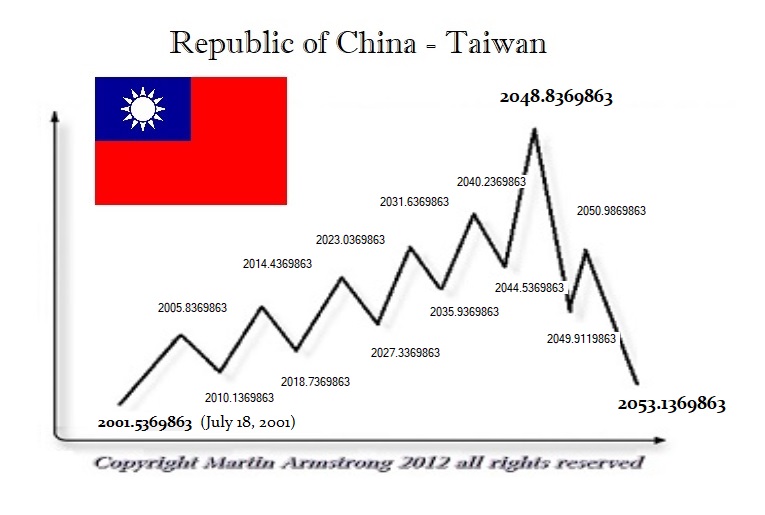
    Pelosi’s trip on 2022 has definitely set in motion rising tensions in 2023 which will escalate into 2027.


    Source link

    Share. Facebook Twitter Pinterest LinkedIn Tumblr Email

    Related Posts

    The Dark Side Of Washington – Money Before Country

    July 29, 2026

    Garbage Trucks Surveillance Florida Neighborhoods

    July 29, 2026

    The Student Loan Crisis Is Exploding

    July 29, 2026
    Top News

    DC Business Owners Weigh In on Trump’s Crime Crackdown

    By Staff WriterAugust 30, 2025

    This article was originally published  by The Epoch Times: DC Business Owners Weigh In on…

    The future of work isn’t man versus machine. It’s man plus machine

    December 18, 2025

    2026 FIFA World Cup: Here’s how the biggest brands are spending millions

    February 11, 2026

    This CEO Looks for 3 Traits From New Hires

    July 14, 2026
    Top Trending

    South Korea’s Kospi stock index is falling: Why AI chipmakers SK Hynix and Samsung are facing investor jitters

    By Staff WriterJuly 29, 2026

    It’s no secret that investors are getting nervous about AI, leaving chipmakers’…

    The powerful branding trick Guinness, Corona, and Spotify all share

    By Staff WriterJuly 29, 2026

    When Guinness drinkers talk about “Splitting the G,” they mean taking the…

    Duffy’s ‘DEI bike lanes’ comment politicizes urban design. The policy won’t make roads faster

    By Staff WriterJuly 29, 2026

    The Trump administration could soon reduce public transportation choices in the U.S.…

    Categories
    • Business
    • Economy
    • Headline News
    • Top News
    • US Politics
    • World Politics
    About us

    The Populist Bulletin serves as a beacon for the populist movement, which champions the interests of ordinary citizens over the agendas of the powerful and entrenched elitists. Rooted in the belief that the voices of everyday workers, families, and communities are often drowned out by powerful people and institutions, it delivers straightforward, unfiltered, compelling, relatable stories that resonate with the values of the American public.

    The Populist Bulletin was founded with a fervent commitment to inform, inspire, empower and spark meaningful conversations about the economy, business, politics, inequality, government accountability and overreach, globalization, and the preservation of American cultural heritage.

    The site offers a dynamic mix of investigative journalism, opinion editorials, and viral content that amplify populist sentiments and deliver stories that echo the concerns of everyday Americans while boldly challenging mainstream narratives that serve the privileged few.

    Top Picks

    South Korea’s Kospi stock index is falling: Why AI chipmakers SK Hynix and Samsung are facing investor jitters

    July 29, 2026

    The powerful branding trick Guinness, Corona, and Spotify all share

    July 29, 2026

    Duffy’s ‘DEI bike lanes’ comment politicizes urban design. The policy won’t make roads faster

    July 29, 2026
    Categories
    • Business
    • Economy
    • Headline News
    • Top News
    • US Politics
    • World Politics
    Copyright © 2025 Populist Bulletin. All Rights Reserved.

    Type above and press Enter to search. Press Esc to cancel.