
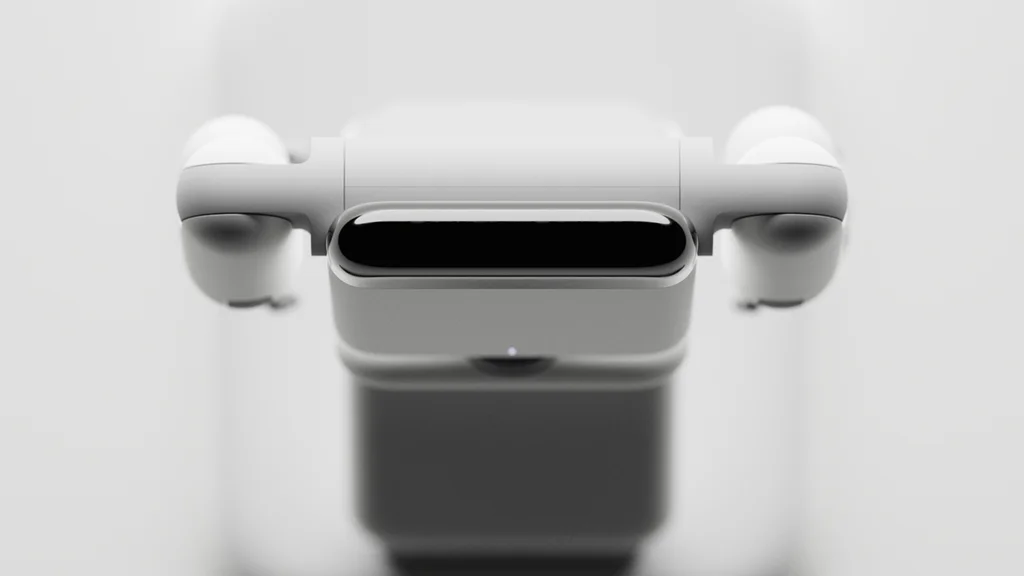
Genesis AI is betting against the tech industry’s obsession with bipedal, human-mimicking robots. Their first general-purpose machine, Eno, pairs millimeter-precise dexterous, human-like hands with a minimalist, wheeled base that can dynamically fold away out of sight. It’s a general purpose robot, designed to do anything you can imagine, from factory jobs to household chores, but its first deployment will be in labs.
Genesis AI just fixed one of the biggest design flaws in modern robotics: Human ego. Instead of building another uncanny-valley humanoid that may intimidate and make people uncomfortable, the company’s CEO and founder Zhou Xian and head of design Daniel Hundt decided they needed to create a gentle, ‘invisible’, use-case agnostic physical agent that gets out of the way by folding down, origami style.
Called Eno, the wheeled robot has a design that intentionally avoids looking like a human but operates with human-level dexterity. The robot sleeps folded, waiting for you to need it. Then, whenever you call it, it wakes up, rising up as it unfolds its collapsible frame that follows a design principle they call “calm intelligence.”
“A good test that we ask ourselves is, if you wake up at two o’clock in the morning, and you’ve come to the bathroom, and you see a robot in your home, what would you feel comfortable with having in your home?” Hundt tells me in a video interview. “I think a robot should feel like it is subservient to you, it should be an object that helps you, it shouldn’t feel like it can dominate you, and I think there’s so many humanoids out there that just feel like they’re more capable than you as a human, and I think that automatically makes you put a little bit at ease.”
Like Hundt, Xian believes that everyday consumers reject the idea of a synthetic person walking through their living spaces. “I think generally, people think very human-like humanoids are cool tech, but most of the people we talk to, they’re like, no, I can’t see having one of these in my home,” the founder notes.
Calm intelligence
The entire physical presence of Eno revolves around the concept of folding away. Instead of standing idle in the corner of a room like a freaky mannequin, the machine utilizes a central column made of articulated panels. When inactive, this segmented tower collapses through a series of physical motions, reducing the entire unit to the volume of a checked suitcase.
Hundt notes the team’s calm intelligence guiding principle prioritizes capability without the baggage of human form. He points at Tars—the blocky, utilitarian robot in the movie Interstellar—as an opportunity to step back and rethink our collective idea of robots, influenced by decades of humanoids in sci-fi film and literature. For Hundt and the Genesis AI’s design team, the question was “how do we approach this with the technical requirements that we wanted [focusing on dexterous manipulation first] and create a canvas for that; really design it around these capabilities. And also this one simple idea of it folds away,” Hundt explains.
Following the same calm intelligence principle, the team’s goal was to design an object that aesthetically felt like high-end furniture and not a human clone. “[Eno] is a beautiful tool, it will have a soul, probably more like a beautiful piece of furniture like an Eames chair rather than something that has a facial expression that is cute, that screams attention,” he tells me.
Finding that exact balance took over 50 design iterations, Hundt points out. Xian actually wasn’t even sold on the initial concept of the simple, non-humanoid robot. Eno’s initial geometric design featured a green color scheme that really didn’t sell it for him. But the project finally clicked during a breakthrough moment when they stripped the color away entirely and added a cognitive interface screen, which is an optional feature in the actual production robots they are making in China.
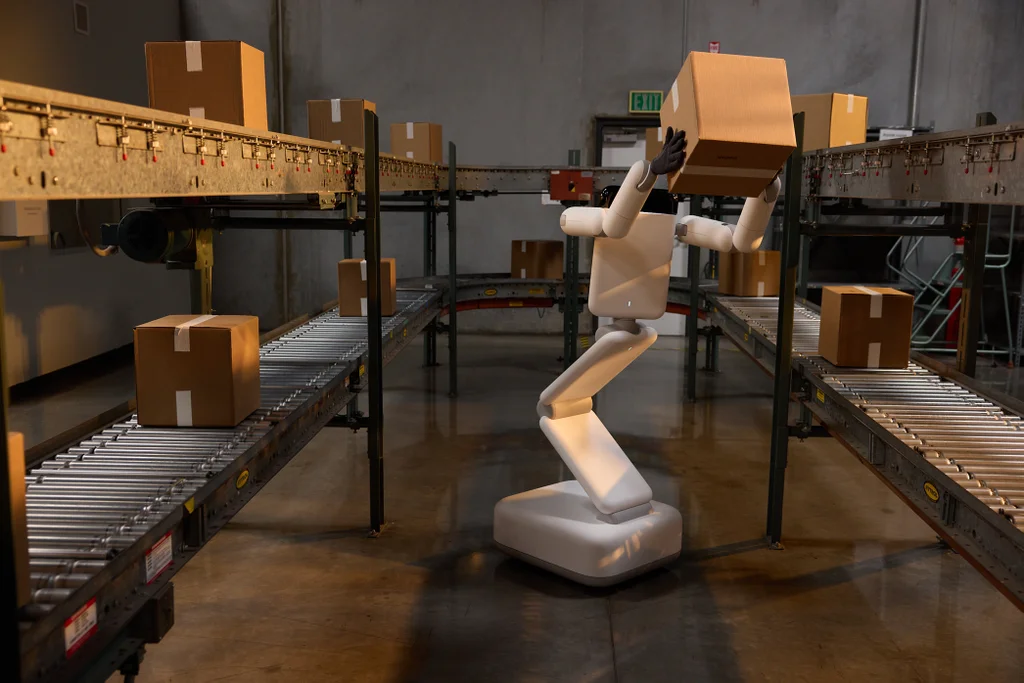
“When I looked at it again, I started to imagine this white version that’s pure, and not trying to grab your attention,” Xian recalls. “And then we had this idea of developing a screen version, to put a giant screen on the top part. All of a sudden, it all came together.” He says that it made sense to have a large screen on Eno because they didn’t want to limit the communication to just talking, which “has very low information density.”
This practicality explains why the physical design deliberately omits a face. The upper body of the robot has to follow human structure to enable the dexterity of the Eno’s arms and hands, its core functional requirement, Xian tells me. But they didn’t want to force the appearance of something that looks human. “Robots do not necessarily need a head,” he says. “There’s no brain there. The brain lives on the chip.”
Wheels, tendons, and brains
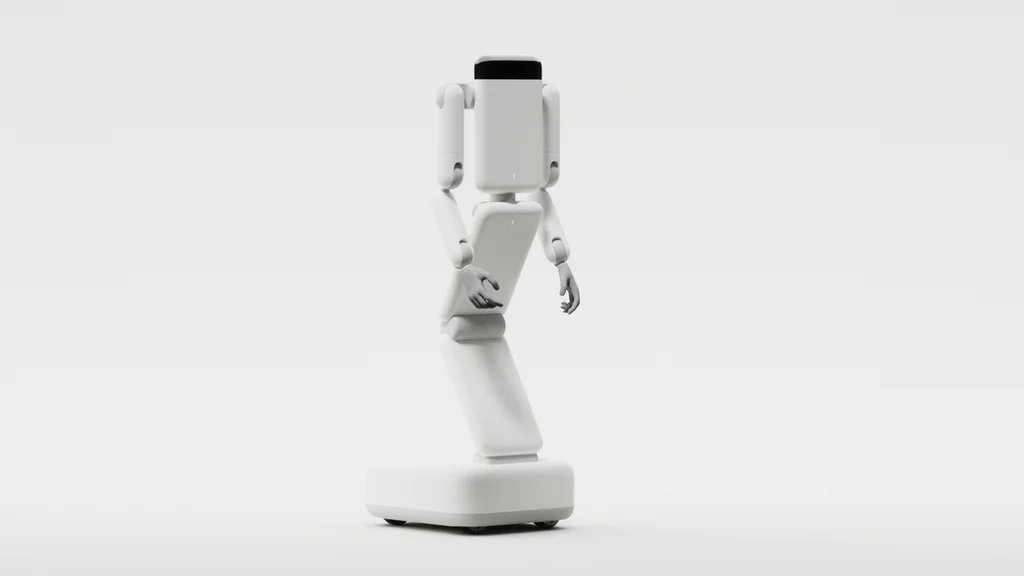
That same logic dictated the base of the machine. The founders initially debated building a legged humanoid first, acknowledging that mechanical legs are useful for climbing stairs. Xian even considered designing a legged version before applying its design philosophy to a wheeled model later on. However, industrial demands forced a pivot.

“The lower body is mostly because when we talk to potential customers, a lot of them want it to be [wheeled], because it’s more energy efficient,” Xian points out. Wheels maximize energy efficiency and operational stability compared to mechanical legs, which have to constantly adjust posture to keep the robot standing and steady.
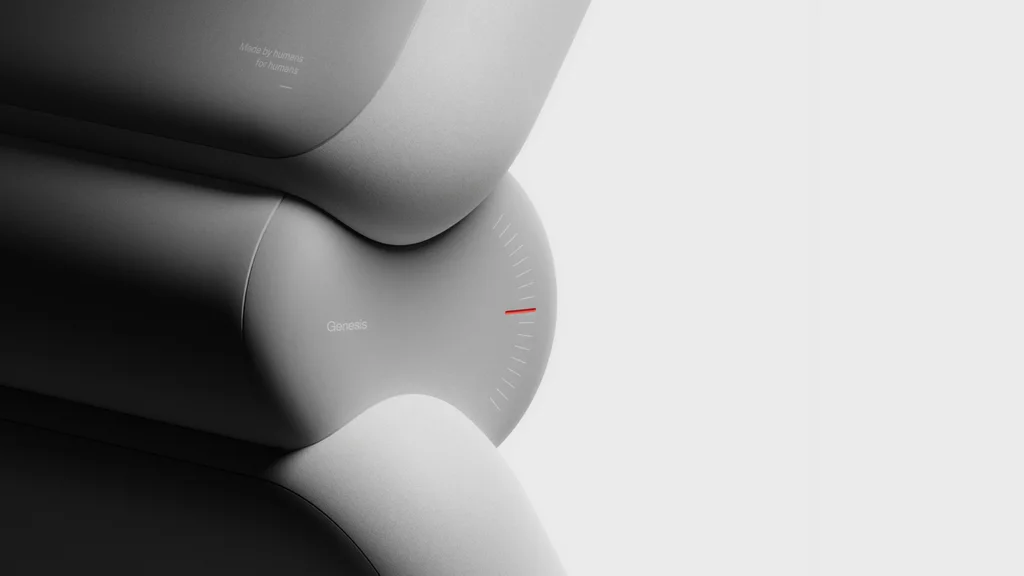
While the lower half rolls, the upper torso mirrors our own anatomy to manipulate tools already built for humans. The machine features two arms equipped with proprietary robotic hands engineered to match human hands in shape and function. These extremities incorporate 20 active, back-drivable degrees of freedom. Imagine the mechanics of your own muscles and tendons. When you hold a glass, your grip is firm but compliant. If someone bumps your arm, your joints yield smoothly instead of locking up rigidly and shattering the glass. That organic flexibility, the company says, gives the machine the ability to manipulate items with an accuracy measured in fractions of an inch.
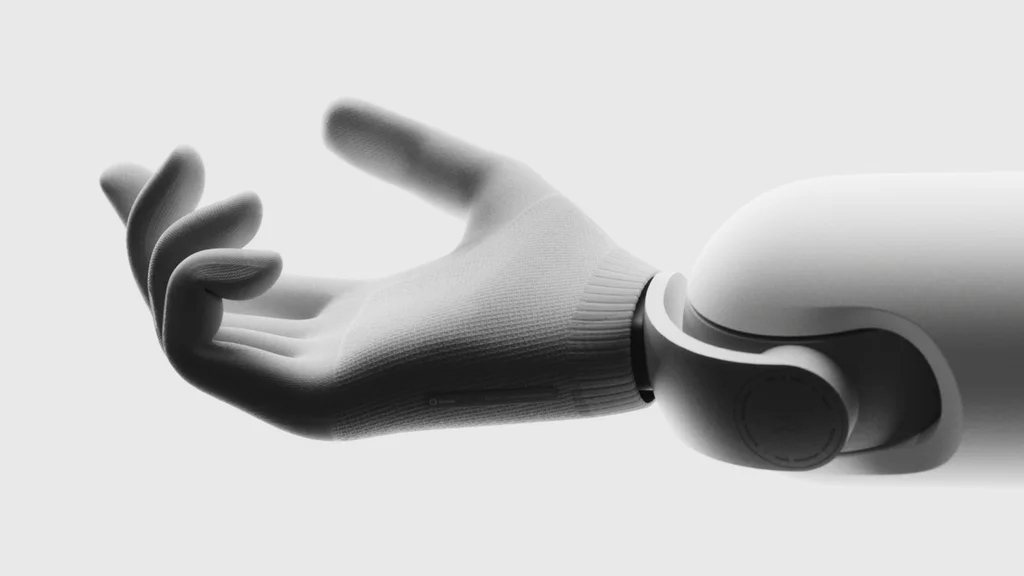
The silicon intellect driving this hardware is called GENE. The company recently unveiled this foundation model, which acts as the system’s core brain. Think of a foundation model as a digital library of human experience. Instead of writing rigid lines of code that tell the machine exactly how to turn a wrench, scientists feed the computer hundreds of thousands of hours of data showing humans performing everyday jobs. The machine absorbs these patterns, essentially teaching itself the fundamental laws of motion before it ever attempts a specific task.
Because the model digests human data in training, the machine moves with a natural fluidity. The engineering team did not artificially exaggerate humanoid gestures, however, like robots like the Xpeng’s Iron or Tesla’s Optimus do. “Human-like motion is a natural byproduct of that. But we do not want to push it beyond that,” Xian explains.
Escaping the lab
But Genesis AI, like many of its competitors in the U.S., faces the same challenges of scalability. The first production batch consisted of roughly ten units built in China, Xian tells me. The company plans to shift the assembly process out of Chinese facilities later in 2026. While Xian believes setting up an American assembly line is doable in the short term, moving the supply chain will take longer, as China dominates it.
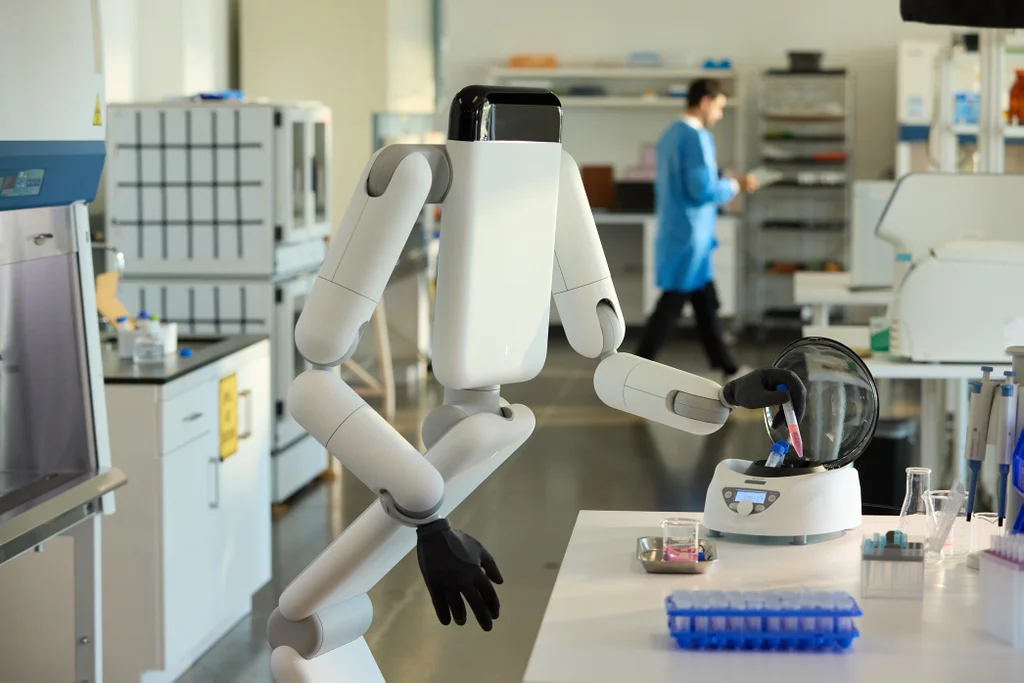
Later this year, Genesis AI claims that they will initiate targeted customer deployments. The immediate targets are industrial: logistics companies, laboratories, and automotive manufacturing lines dealing with complex wire harnessing. Phase two will introduce the machine to service sectors requiring human interaction, like hotels and hospitals. Consumer home applications and outdoor tasks represent the final step.
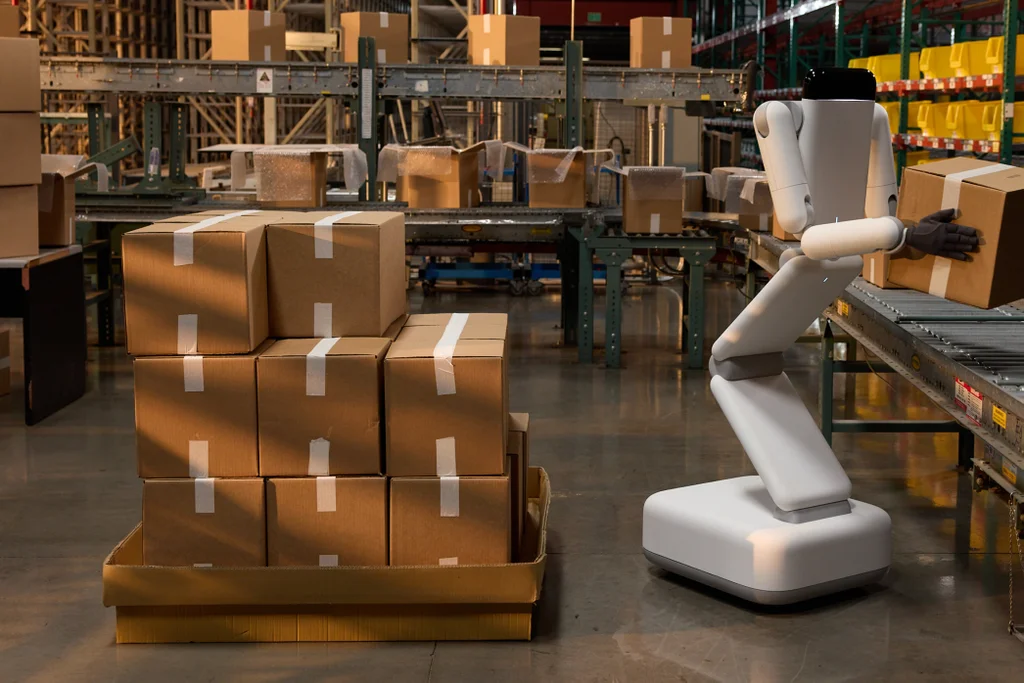
Xian claims that they are not in a hurry to ramp it up to super big numbers. “We are trying to gather our learnings and push up the reliability of the system via the initial phase of deployment,” he says. “We expect maybe like one and a half years of development before we can actually start serious large-scale deployment.”
It’s the same story we are seeing in other U.S. companies. Everyone here seems to be advancing slowly, while Chinese robotics companies are scaling up production quickly, helped by government support and Beijing’s dire need to inject a new workforce to replace a working population that is aging and retiring quickly.
When the scaling up happens, Genesis AI will face a very competitive global market. Tesla is refining its Optimus platform, while the AI robotics company Figure has already deployed its bipedal machines into real-world automotive plants, albeit in a very limited way. Meanwhile, multiple Chinese startups like Unitree Robotics, Ubtech, EngineAI, Xpeng, and Agibot are deploying thousands of units. And they keep increasing their deployment numbers at a speed that the U.S. can’t match right now.
But we are in the initial stage of this new technological revolution. There’s still margin for innovation, until something truly clicks. Genesis AI is betting on a new form factor that physically folds away, and employing the idea of calm intelligence against an army of imposing synthetic people that demand attention. We will see if that’s enough to mark the difference once all these robots escape the labs and factories and start getting into our everyday lives.