Close Menu
    Facebook X (Twitter) Instagram
    TRENDING :
    • Indiana Hoosiers’ college football championship by the numbers
    • How anti-doomscrolling influencers are combating social media addiction
    • Millionaires are sounding the alarm about democracy — and blaming people like themselves
    • 5 ways to finish what you started, according to a productivity expert
    • 5 reasons why you should laugh more and not take yourself so seriously
    • Market Talk – January 20, 2026
    • How to build your deep reading and critical thinking skills to better resist misinformation
    • The new ‘Be The People’ campaign wants to turn hundreds of millions of Americans into problem-solvers
    Compatriot Chronicle
    • Home
    • US Politics
    • World Politics
    • Economy
    • Business
    • Headline News
    Compatriot Chronicle
    Home»Economy»The Federal Reserve Was Brilliant Until Politics Destroyed It
    Economy

    The Federal Reserve Was Brilliant Until Politics Destroyed It

    December 1, 20253 Mins Read
    Share Facebook Twitter Pinterest LinkedIn Tumblr Telegram Email Copy Link
    Follow Us
    Google News Flipboard
    Share
    Facebook Twitter LinkedIn Pinterest Email


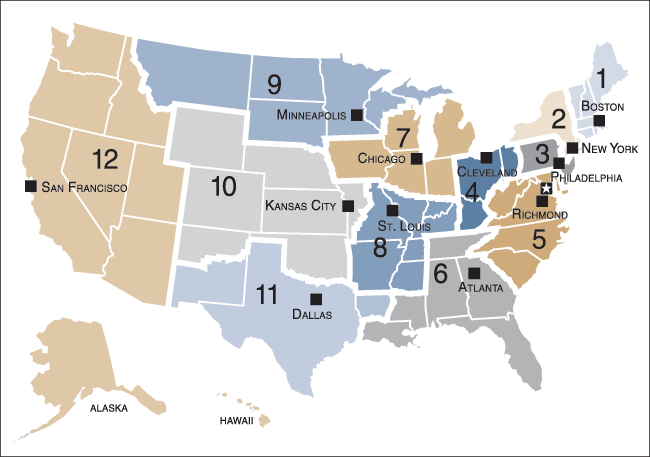
    People love to blame the Federal Reserve for everything under the sun because it is easier than admitting the real problem: government. The tragic part of this entire monetary experiment is that the Fed, as originally designed in 1913, was brilliant. Each regional branch operated independently, responding to local capital flows instead of political agendas in Washington.

    Money moved with the seasons. When crops were planted, capital flowed one way; when the harvest came in, it flowed another. The system was designed to absorb these fluctuations smoothly. It was never supposed to be a political arm of the federal government. In fact, the Fed was owned by the member banks and functioned as a true lender of last resort — buying corporate paper, not government debt. That allowed elastic money that expanded and contracted with economic activity. Corporate paper matures. Government debt does not.

    Then came World War I, and with it, the beginning of the end.

    Washington needed to borrow staggering amounts of money, so the government told the Fed: stop buying corporate paper and buy our debt instead. From that moment forward, the independence of the branches was eroded. The original structure was discarded in favor of centralized political control. Roosevelt finished the job during the New Deal by usurping the authority of all the regional banks and concentrating everything in Washington under a single chairman. What should have remained a decentralized system responding to capital flows became a one-size-fits-all political tool.
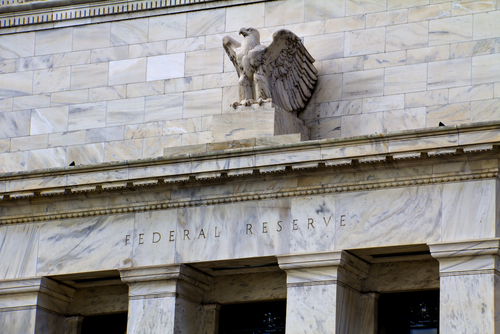
    Federal Reserve Eagle

    This is why I say the central bank does not need reform, but the government does.

    The Fed does not create inflation; the fiscal side of the ledger does. Once Washington discovered that it was less inflationary to borrow than to print outright, the entire system became debt-driven. And because government debt never expires, the money supply never contracts. If the Fed does absolutely nothing, the money supply still expands because the government continually rolls the debt and pays interest on interest. That is why we are in a perpetual cycle of rising obligations.

    The Fed has been politically gutted. Every time Washington meddles with the structure, nothing is ever restored afterward. There is no long-term planning, no institutional memory. When I go down to Washington and speak with people, I feel as though I’m explaining basic arithmetic to a grade-school classroom. The political class does not understand markets, capital flows, or historical monetary structure.

    The Fed was designed to stabilize regional capital flows. Today, it is blamed for inflation it does not create, forced to manage debt it does not issue, and expected to solve political failures it did not cause. The lender-of-last-resort function only made sense when the Fed bought corporate paper that rolled off the books. Government debt has destroyed that mechanism. Once money becomes tied to sovereign debt, it never contracts, rather it becomes perpetual.

    This is why our monetary system is collapsing into the Sovereign Debt Crisis. Not because of the Fed, but because government destroyed the very architecture that once allowed the economy to breathe.


    Source link

    Share. Facebook Twitter Pinterest LinkedIn Tumblr Email

    Related Posts

    Market Talk – January 20, 2026

    January 20, 2026

    Neocons Working Hard To Manipulate Congress

    January 20, 2026

    Poland Bans Chinese Cars In Military Facilities

    January 20, 2026
    Top News

    Washington, DC Mayor Muriel Bowser Acknowledges Success of Trump’s Law Enforcement Surge in the City (VIDEO) | The Gateway Pundit

    By Staff WriterAugust 28, 2025

    Screencap of Twitter/X video. Washington, DC Mayor Muriel Bowser had some constructive issues to say…

    Muhammad Ali to be honored with a commemorative U.S. postage stamp

    January 12, 2026

    The CEO of Chief on how the business world can better support women executives

    December 5, 2025

    RFK Jr. Defends CDC Shakeup as Fired Director Issues New Claim

    September 6, 2025
    Top Trending

    Indiana Hoosiers’ college football championship by the numbers

    By Staff WriterJanuary 21, 2026

    The state of Indiana is no stranger to underdog stories. Hoosiers and Rudy,…

    How anti-doomscrolling influencers are combating social media addiction

    By Staff WriterJanuary 21, 2026

    It’s simple to accidentally become entranced by an endless loop of videos…

    Millionaires are sounding the alarm about democracy — and blaming people like themselves

    By Staff WriterJanuary 21, 2026

    As wealth inequality widens and billionaires become increasingly enmeshed with politics, the…

    Categories
    • Business
    • Economy
    • Headline News
    • Top News
    • US Politics
    • World Politics
    About us

    The Populist Bulletin serves as a beacon for the populist movement, which champions the interests of ordinary citizens over the agendas of the powerful and entrenched elitists. Rooted in the belief that the voices of everyday workers, families, and communities are often drowned out by powerful people and institutions, it delivers straightforward, unfiltered, compelling, relatable stories that resonate with the values of the American public.

    The Populist Bulletin was founded with a fervent commitment to inform, inspire, empower and spark meaningful conversations about the economy, business, politics, inequality, government accountability and overreach, globalization, and the preservation of American cultural heritage.

    The site offers a dynamic mix of investigative journalism, opinion editorials, and viral content that amplify populist sentiments and deliver stories that echo the concerns of everyday Americans while boldly challenging mainstream narratives that serve the privileged few.

    Top Picks

    Indiana Hoosiers’ college football championship by the numbers

    January 21, 2026

    How anti-doomscrolling influencers are combating social media addiction

    January 21, 2026

    Millionaires are sounding the alarm about democracy — and blaming people like themselves

    January 21, 2026
    Categories
    • Business
    • Economy
    • Headline News
    • Top News
    • US Politics
    • World Politics
    Copyright © 2025 Populist Bulletin. All Rights Reserved.

    Type above and press Enter to search. Press Esc to cancel.