
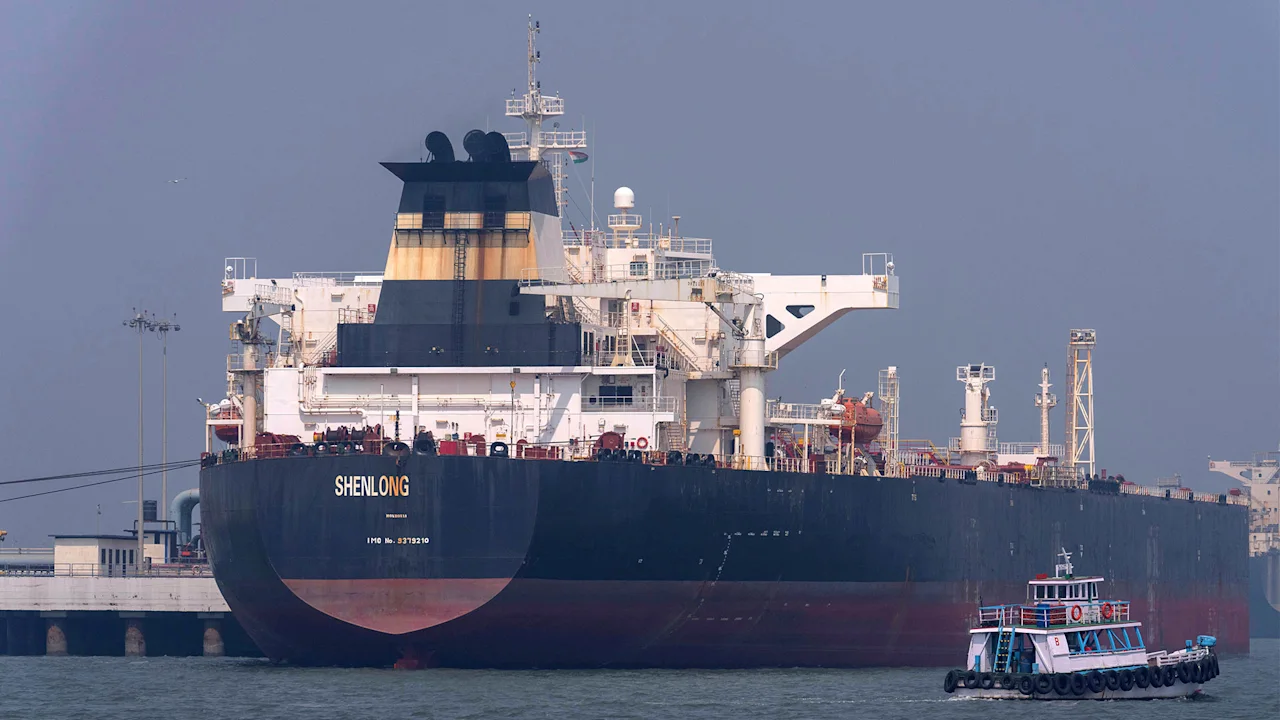
The U.S. and Israel’s war with Iran has thrust the Strait of Hormuz once again into the crosshairs of a geopolitical conflict.
Iran has ground to a halt nearly all traffic in the waterway that connects the Persian Gulf to the rest of the globe’s oceans, shutting down a critical path for the world’s flow of oil. Attacks on commercial ships and threats of further strikes have stopped nearly all tankers from carrying oil, gas and other goods through the passage. That’s also led to cuts from some of the world’s largest producers, because their crude has nowhere to go.
This is hardly the first time the Strait of Hormuz has been weaponized. Ship seizures and past fighting in the region have raised alarm for commercial ships, at times severely disrupting their ability to sail through. Iran has also repeatedly threatened to close the strait in response to sanctions and other tensions over the years, but stopped short of cutting off traffic entirely. Even with the bulk of traffic halted amid the current war, dozens of vessels have still managed to cross the waterway, according to maritime and trade data platforms.
While Iran and Oman both have territory in the Strait of Hormuz, its narrow shipping channels are viewed as international waters through which all ships can travel. Still, Tehran holds significant influence over the passage through its nearby military presence and control of key islands in the area.
The latest clash, now in its third week after the U.S. and Israel launched strikes on Iran and killed its supreme leader, has resulted in major consequences for energy markets: Roughly a fifth of the world’s oil traveled through the Strait of Hormuz before the war, and strains on supply have sent fuel prices soaring.
Here are some others instances when traffic in the Strait of Hormuz has been disrupted or threatened.
1980s: Iran-Iraq ‘Tanker War’
During a deadly, 8-year-long war between Iran and Iraq in the 1980s, both sides attacked tankers and other vessels in and nearby the Strait of Hormuz, using naval mines to shut down traffic at points. The U.S. also got involved in the so-called Tanker War — with the Navy even fighting a one-day battle against Iran in 1988, and later shooting down an Iranian commercial airliner that it mistook for a fighter jet, killing 290 people.
The strait didn’t close completely. And during the war, U.S. ships also escorted Kuwaiti oil tankers to protect them against Iranian attacks. Still, the passageway became incredibly dangerous and shipping was disrupted.
2011–2012: Iran threatens closure during nuclear sanctions
At the end of 2011 and into 2012, Iran threatened to close the Strait of Hormuz in response to new sanctions from the West over its nuclear development program. The European Union began enforcing a ban on purchases of Iranian oil — and the U.S. similarly targeted the country’s energy sector while also barring transactions with Iran’s central bank. That later prompted other countries to buy less Iranian oil.
But Iran walked back some of those threats, and its government did not end up closing the Strait of Hormuz. Still, the turbulence and shifts in supply brought swings in oil prices. Brent crude — the international standard — was trading above $100 in December 2011 and for much 2012, peaking at more than $126 per barrel in March 2012, before cooling some later in the year.
2018: More closure threats after US withdraws from nuclear accord
In May 2018, during his first term in office, U.S. President Donald Trump withdrew from an Obama-era nuclear accord with Iran and began to restore sanctions. Despite some waivers, Trump vowed to eventually cut off all Iranian oil exports. In response, then-Iranian President Hassan Rouhani repeated threats to close the Strait of Hormuz.
But again, Iran did not end up closing the strait. And despite some volatility throughout the year, with particular production pressure on OPEC producers, Brent ended the year trading at nearly $54 a barrel, down from about $75 a barrel when Trump declared the U.S. would be withdrawing in May 2018.
2019-2025: Ship seizures and attacks
The U.S. Navy blamed Iran for a series of limpet mine attacks on vessels near the strait that damaged tankers in 2019, as well as for a fatal drone attack on an Israeli-linked oil tanker in 2021. Tehran denied involvement at the time.
Regardless, such hostilities strained insurance rates and raised fears for shipping companies.
Meanwhile, Iran seized a handful of vessels in the waterway, including several foreign oil tankers it alleged were carrying smuggled fuel at the end of just last year, per state media. The country also captured a Portuguese-flagged cargo ship in 2024 and took two Greek tankers and held them for months in 2022, among other seizures. The strait nonetheless remained open throughout.
June 2025: 12-day war between Israel and Iran
Fears about a possible Strait of Hormuz closure also piled up during last year’s 12-day war between Israel and Iran, particularly after the U.S. entered the conflict with bombings on three Iranian nuclear and military sites.
But Iran did not close the strait, and oil didn’t see lasting price surges. Despite prices jumping some in the early days of the conflict, oil actually saw a notable sell-off as traders doubted the likelihood of attacks on crude shipments. By the war’s end, Brent was trading below $67 a barrel, a few dollars less than it was beforehand.
—Wyatte Grantham-Philips, AP Business Writer