
Ginny Wright, CEO of beauty conglomerate Orveon Global—owner of BareMinerals and Laura Mercier—is no stranger to the beauty business. She spent much of her career rising through the ranks of L’Oreal, eventually becoming president of legacy skincare brand Kiehl’s.
Then, in 2021, she pivoted to work in luxury as one of the few female CEOs in the luxury watch business when she took the helm of Audemars Piguet Americas. During her tenure, she prioritized marketing to women, raising the percentage of women purchasing watches for themselves from 14% to more than 30% in just over four years.
Now back in the beauty industry, Wright is using her knowledge of the luxury consumer to find new areas of growth for Orveon’s premium brands. In particular, the company is moving quickly in India with prestige brand Laura Mercier.
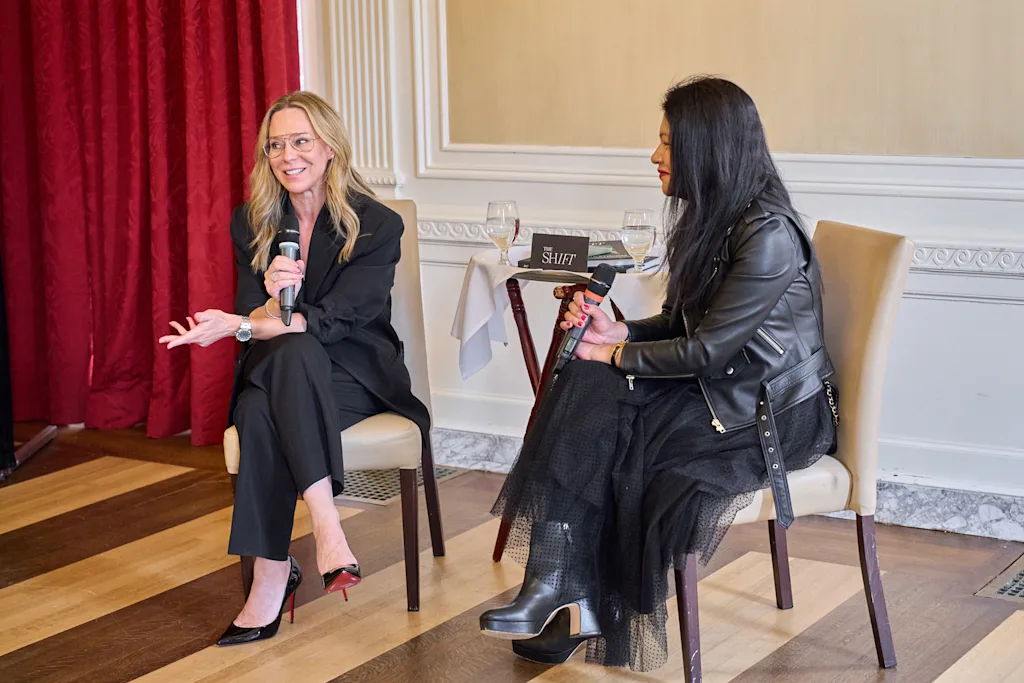
At a recent summit at Harvard University’s Loeb House—organized by The Shift, a media platform devoted to women shifting culture—Wright spoke to Fast Company senior staff writer Elizabeth Segran about discussed what she learned from the male-dominated luxury watch industry, how young people should think about their careers and what beauty consumers are looking for now.
This interview has been edited and condensed.
You spent a long time at L’Oreal—what was your trajectory to the beauty industry, and what led you to shift to luxury watches?
I thought I was going to go into politics or become a lawyer. I started down that path for about a year, and then I wanted to be a press secretary. I’ve always been the kind of person who hears something interesting and thinks, “I’ll try that road.”
I moved to Atlanta and worked in PR for a while. One of my clients was [consumer product conglomerate] Georgia-Pacific, and I remember pitching Walmart to the Today Show and thinking, “There has to be more to life than this.” That’s when I realized what I was really passionate about: luxury and beauty.
So I found an MBA program in Paris sponsored by L’Oréal and LVMH. I told my husband, who I had just married, “We’re moving to Paris.” He said, “Cool. I don’t speak French, but we’ll figure it out.” So we did.
After that, I was fortunate to get hired by L’Oréal. Eventually I moved to New York, rose through the ranks, and after COVID I was serving as president of Kiehl’s, which is such an amazing brand.
Then I got a call from an executive recruiter about a high-end luxury firm looking for a CEO. It turned out to be Audemars Piguet. I literally made the decision to take that job while on a SoulCycle bike during COVID, wearing a mask and listening to Eminem’s “Lose Yourself.” During the line about “you only get one shot,” I decided to do it and leave the beauty industry for watches.
The watch industry has traditionally been very male-dominated. A big part of your work there was appealing to women—how did you make women less of an afterthought in that industry?
It’s interesting, because many of the great innovations in watchmaking trace back to women, including figures like Queen Victoria. Women wore pendant watches, and early watchmaking involved extraordinary craftsmanship.
Over time, watches became associated with men as they became status symbols. In more recent years, men really got deeply into watches. Women, on the other hand, were never really marketed to in the right way.
The messaging was often something like: “Here’s the real watch culture for men—and women can join too.” [The marketing message] was never truly built for women from the start.
I wanted to change that. I knew that brands like Audemars Piguet and Rolex watches often retain or increase in value, and I didn’t think women fully understood that. At the same time, the economic shift toward women is massive. Women now make up the majority of undergraduates and a huge share of postgraduates. Wealth is shifting, and brands need to be ready for that.
So I focused on women entrepreneurs, founders, and executives. We also worked more intentionally with Serena Williams. Men didn’t always understand her value after retirement, but I did. She’s not just an athlete; she’s a mother, philanthropist, investor, and entrepreneur. She represented the full modern identity of a powerful woman.
By the time I left, we had increased self-purchasing women from 14% to over 30%.
What was it like being a woman in such a male-dominated industry? Were you treated differently?
It was brutal. [Luxury is] one of the most brutal industries outside of tech in terms of gossip and scrutiny. The watch world treated executive moves like a soap opera, and it was mostly men driving that culture. More women did come into senior leadership while I was there, which helped. But yes, it was harder. If you’re a Swiss or French man in that world, it’s much easier.
People questioned whether I could do the job, especially because I came from beauty. They didn’t understand that beauty is actually an incredibly complex industry. But I had a strong retail background, and the brand was shifting from wholesale to direct retail, which was exactly where my strengths were.
Watches aren’t just about the product. They’re about access, experience, and emotion. There are only so many watches in the world, and many more people want them than can have them. So we built extraordinary experiences around the brand—private dinners, intimate events, unique access. That became a powerful new kind of luxury.
Then beauty came calling again. What led you back?
I was at a Baby2Baby event in Los Angeles and ran into Artemis Patrick from Sephora North America. I’ve known her for years, and her whole team was there saying, “We miss you. You need to come back to beauty.”
I don’t know whether that was manifestation or coincidence, but after that I started thinking: I’ve been here four and a half years, I’ve done what I came to do, the strategy is in place, and I’m ready for something new.
I knew I wanted to do private equity, and I knew I wanted to do beauty. Then several opportunities came up at once, and Orveon really stood out. It had three heritage brands, all founded about 30 years ago and all created by women: Laura Mercier, bareMinerals, and Buxom. I felt these were beloved brands that had lost some attention, and I love reviving love brands and helping them grow again. Laura Mercier especially felt personal to me. It was one of the first prestige beauty brands I ever spent my own money on. I felt like this was my calling.
You’ve worked in ultra-luxury and in beauty brands aimed at a broader market. What do those experiences tell you about the economy right now?
There’s clearly a huge wealth divide right now. At Audemars Piget, our clients were recession-resistant. No matter what happened, they were willing to spend tens of thousands of dollars on a watch. That’s very different from asking someone to spend $68 on foundation or loose powder. What I’ve learned is that people will still spend—but they’ll spend on brands they trust and products they believe in. That matters even more in uncertain times.
At BareMinerals, for example, there’s a very strong repeat customer base. The challenge is bringing in new customers while continuing to serve the loyal ones. We’re deliberately targeting women in their 30s, 40s, and 50s—professionals who have their own money and some level of disposable income. That aligns with the brand and gives us some resilience.
I think it would be much harder right now to build a brand that relies heavily on Gen Z consumers who are just coming out of school and dealing with financial uncertainty.
It sounds like today’s shopper is very focused on value. Does that favor established brands?
Yes, absolutely. For years, the direct-to-consumer movement was great at grabbing attention. Now, in a tougher environment, people don’t want to waste money on something untested.
That gives established brands an advantage because people know what they’re getting. They know the products work. If they’re going to spend, they want confidence in the purchase. We haven’t grown consistently in recent years, so I want to be honest about that. But now we are growing again, and that’s exciting. We’re positive in March, which is fantastic. I’m really proud of the team.
You made a major pivot in your 20s and early 30s. What advice do you have for people who realize the path they chose may not be the right one?
If your heart isn’t in it, get out. That doesn’t mean your earlier work was wasted. I started in PR, and I still use those skills every day. I learned how to communicate, influence, manage clients, and evaluate messaging. Those abilities carried forward into everything I’ve done since.
No experience is wasted if you learn from it. But you can absolutely tell the difference between waking up excited to do your work and waking up dreading it. If you feel that difference, pay attention to it.