
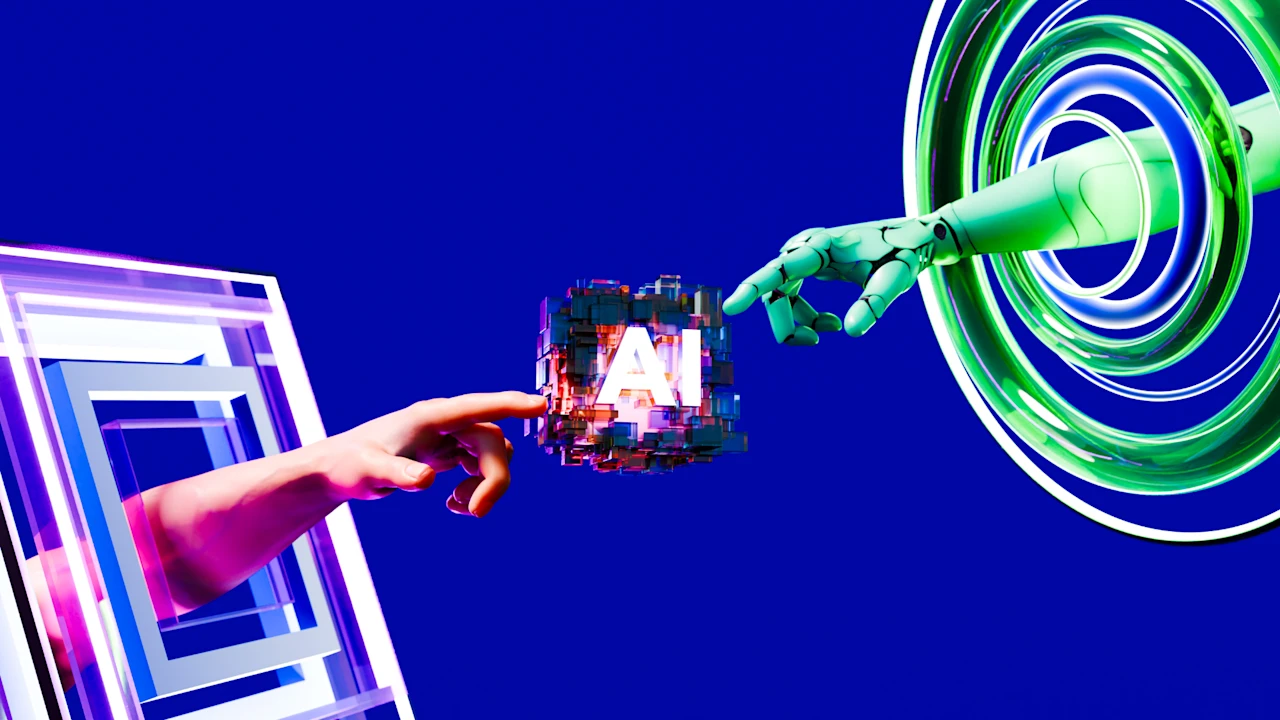
If 2024 was the Year of AI, 2025 became the Year of AI Slop.
In the race to maximize all of its potential, we came to view AI results as a finished product. But as Balaji Srinivasan points out, AI is intended to function middle-to-middle; humans, by contrast, are end-to-end. By ceding it all to AI, outputs suffered; we suffered. Both people and machines settled for less than what was possible.
Generic, hollow, clean, and devoid of subjective taste or judgement. Master of summary but without significant depth. Yet capable of complex analysis and able to perform tasks or generate high volume outputs with unprecedented ease and speed. This is the reality of AI.
Such a dichotomy places us at an interesting juncture moving forward. Do we accept what AI feeds us, or have we reached a point where the haze of novelty and wonder lifts, empowering us to shape how AI is used, ushering in the next wave of the AI era?
WHY IT MATTERS
Everyone wants to know the skills they’ll need to survive a perceived AI takeover.
A recent study of 180 million global job postings from January 2023-October 2025 showed that creative roles in particular saw a sharp decline. Graphic artist postings, for example, dropped by a whopping 33%. Data across the Bureau of Labor Statistics supports the trend that human creative work has slowed dramatically.
Why? Because AI can “create” faster and cheaper than before. The price of content and other outputs move close to zero as volume heavily increases. But AI is not just affecting creatives, it’s reshaping nearly every aspect of work.
For example, a recent paper coauthored by Dartmouth researcher Anaïs Galdin and Princeton’s Jesse Silbert points out that since LLMs entered the hiring picture, organizations are having a difficult time distinguishing the most qualified applicants. Through its accessibility, AI makes anyone sound capable.
But it does not make them an expert. Therein lies the opportunity.
Human judgment holds incomparable value.
HUMAN VERSUS AI OR HUMAN AND AI?
The World Economic Forum notes that AI will displace 92 million jobs while creating 170 million new ones. Many of these jobs come down to discerning what deserves to be acted upon and how it can be elevated to create something more meaningful or impactful.
Part of my military service in Korea was dedicated to searching hours and hours of video to cull highly sensitive information that could be used in our operations. It was important but tedious work. So tedious in fact that some of my colleagues and I devoted the next stage of our career to creating video search and understanding technology using AI, so that no one—regardless of use case—would ever have to manually watch that much video to find the proverbial single grain of sand.
We determined that while humans can never compete with AI in “making more,” people increasingly matter because they understand what matters. In my case, even with AI-powered tools, we still would have had to tell the system exactly what to look for, and we would still have to determine how to apply it, using factors that an AI system couldn’t assess. AI may execute creation—whether it’s content, code, or UX design—but human judgment and expertise are more difficult to replicate and replace.
Consider Hollywood, an industry that should be brimming with creativity. Instead it is making hard choices on content and production, which in turn often disappoints audiences, leading to a lower return on investment. But studios have been neglecting an important asset: They hold massive archives of unused footage.
Now AI can analyze and surface relevant scenes, which can breathe new life and possibilities into film projects, creating unforeseen revenue streams while reducing costs overall. AI also can be used for legal document analysis, streamlining rights approval processes. Systems can cross-reference footage with talent contracts, location agreements, and music licenses. What once required armies of lawyers and paralegals can now be handled by smart algorithms that flag potential issues and suggest alternatives.
But where are the humans in all of this? They are making the creative decisions about exactly what they want, which clips to select, and how they can be used. Humans possess the vision → AI executes on that vision → and humans refine the final product, taking it across the finish line. Humans are end-to-end and AI operates in the middle. People make something beautiful, interesting, emotional, and worth experiencing. This enables a return to thoughtful storytelling, where even the slightest details are not overlooked.
Every industry can identify places where AI and humans meet, where both are necessary and valued.
FACING THE FUTURE
The future threat of an AI world is not that machines will take over; it’s that we’ll settle for mediocrity. Instead of using our human abilities to feel, imagine, evaluate, and discern, we’ll grow satisfied with being fed from the middle.
If we use AI the way it is intended, as a tool that is part of a process rather than a finished product, it can amplify possibilities. Creativity, original thought, and subject expertise will remain valued. We just have to remember that AI is the middle. It’s up to us to take it to the extraordinary.
Jae Lee is CEO and co-founder of TwelveLabs.