
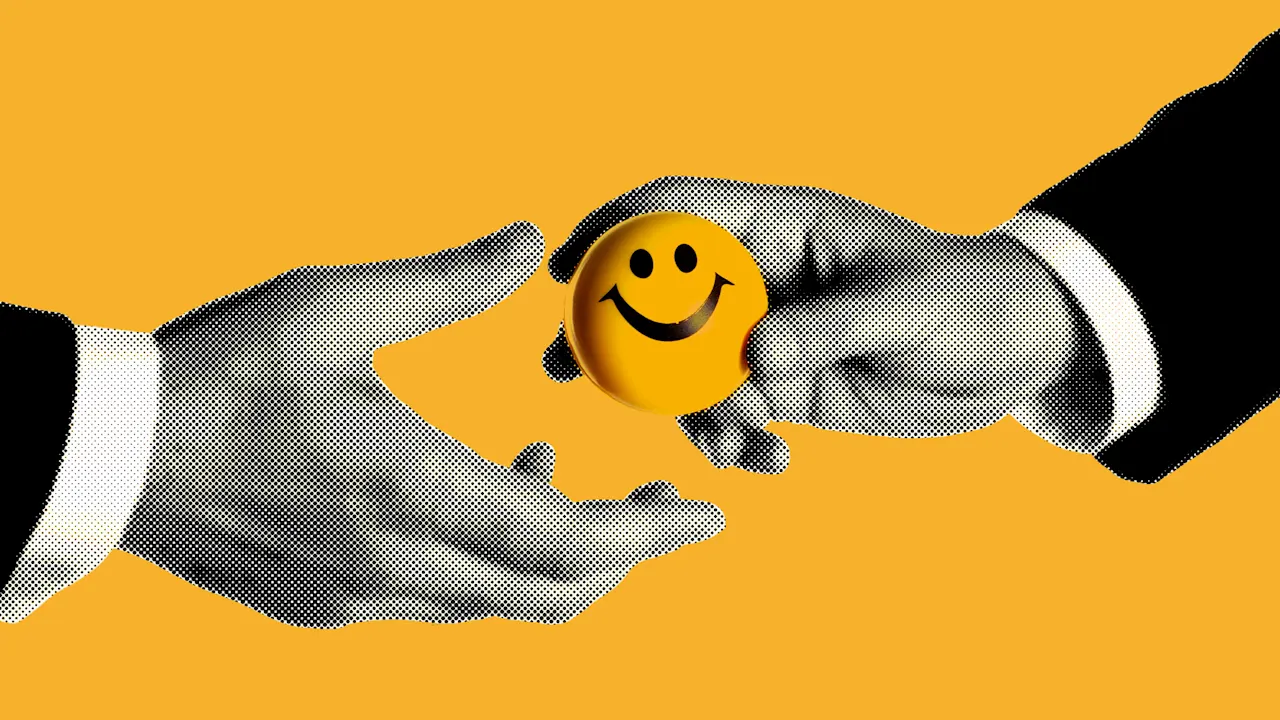
Trust is the essence of collaboration: as Yuval Harari eloquently noted, we as a species would not exist if it weren’t for our superior ability to collaborate so effectively—and it’s largely down to trust.
In the days of our hunter-gatherer ancestors, decisions on trust were relatively straightforward, even when it came to appointing leaders. Indeed, our ancestors lived in small groups of closely related individuals and spent all of their time together. Furthermore, the key attributes they were interested in evaluating or judging were easy to observe: courage, practical knowledge, hunting and fishing dexterity, and physical strength. There was no need then for psychometric assessments, AI, or scientific tools to assess either leadership potential or integrity, and mistakes were extremely costly because if they picked the wrong leader the whole group would just vanish at the expense of better led rival groups.
{“blockType”:”mv-promo-block”,”data”:{“imageDesktopUrl”:”https://images.fastcompany.com/image/upload/f_webp,q_auto,c_fit/wp-cms-2/2025/10/tcp-photo-syndey-16X9.jpg”,”imageMobileUrl”:”https://images.fastcompany.com/image/upload/f_webp,q_auto,c_fit/wp-cms-2/2025/10/tcp-photo-syndey-1×1-2.jpg”,”eyebrow”:””,”headline”:”Get more insights from Tomas Chamorro-Premuzic”,”dek”:”Dr. Tomas Chamorro-Premuzic is a professor of organizational psychology at UCL and Columbia University, and the co-founder of DeeperSignals. He has authored 15 books and over 250 scientific articles on the psychology of talent, leadership, AI, and entrepreneurship. “,”ctaText”:”Learn More”,”ctaUrl”:”https://drtomas.com/intro/”,”theme”:{“bg”:”#2b2d30″,”text”:”#ffffff”,”eyebrow”:”#9aa2aa”,”buttonBg”:”#3b3f46″,”buttonText”:”#ffffff”},”imageDesktopId”:91424798,”imageMobileId”:91424800}}
But, fast-forward to our modern times, things are uncomfortably complex and hard for everyone. At work we must infer whether we can trust our colleagues, coworkers, and bosses, even when we never met them in person—they are, in physical terms, purely pixels on the screen of our Zoom calls. In politics voters are asked to pick between shrewd politicians who have mastered the art of deceit and manipulation and specialize in telling people what they want to hear, irrespective of their actual leadership capabilities. Unsurprisingly, the world is led by heads of states who enjoy dismal levels of popular approval, even when they rose to power with legitimate voter support. As I illustrate in my latest book, politicians are the ultimate example of the disconnect between our perceptions of leaders’ authenticity, and their actual honesty or genuineness.
And yet, there is still reason to be hopeful and no reason to give up. Fortunately, science provides serious lessons for improving our ability to trust the right person and minimize the risk that we end up trusting the wrong person. In fact, the science of trust includes hundreds of robust studies decoding the predictors or determinants of individual differences in trust, as well as practical learnings on how to infer them in the most objective, reliable, and risk-free way.
Here are five key lessons to consider:
1) Despite the complexity of trust inferences, people make trust evaluations and decisions in a fraction of a second: As Amos Trervsky and Daniel Kahneman put it, humans may be capable of thinking “slow” or rationally, yet most of the time we think “fast”, which is a euphemism for not thinking at all. Indeed, not only do we make rapid, careless, and furiously fast inferences of other people’s character traits, we are also overconfident about the accuracy of our inferences, and stubbornly wedded to them to the point that no amount of evidence will change our mind. This may be the best explanation for why no amount of facts or evidence may change voters’ preferences even after its blatantly obvious that they chose poorly (not least because they themselves are disadvantaged by their own choices). The solution? Well, we must learn to distrust our instincts and refrain from following our gut feeling. It is only through gathering reliable and predictive data, and following the facts, that we can hope to focus on substance rather than style. This is particularly important when we are assessing potential candidates for leadership roles, whether it’s the president of a country or a senior leader in a firm.
2) Leaders who are “just being themselves” ought not to be trusted: As I illustrate in my latest book, there is a paradoxical relationship between how authentic we feel and how authentic other people think we are. In particular, behaving without any pressures to conform and displaying your uninhibited and uncensored thoughts and feelings to others will feel authentic to you while polarizing, alienating, and annoying others (it is, alas, what powerful and entitled leaders do when they stop caring about how others see them). In contrast, the leaders who are seen as not just trustworthy, but also competent by others, know how to manage their reputation, engage in strategic impression management, and go to great lengths to show only the best version of themselves—that is, the elements of their character and identity that align with the situational demands. In other words, they know where the right to be themselves ends and their obligation to others begins. This is why empathy, self-control, conscientiousness, agreeableness, and EQ are far better predictors of leadership integrity and performance than self-perceived authenticity is.
3) Charisma is a dangerous signal. Although charisma is a clear enabler of effective leadership, not least because it helps people to emerge as leaders, it can also help leaders to mask their incompetence or unethical motives. In that sense, you can think of charisma as an amplifier: when leaders are honest and competent, it will help them in their quest to turn a group of people into a high-performing team; but when they are dishonest or incompetent (or even worse, both), their charisma will turn them into pretty harmful, destructive, and toxic creatures. Since charisma is often conflated with trustworthiness—we like and admire people who seem charismatic and therefore gravitate towards them, including when it comes to trusting them—it would be useful to resist the allure of charisma when we infer integrity or competence in leaders. Quiet, low key, serious, and intelligent people make excellent leaders even if they don’t seem entertaining. Charismatic, charming, entertaining, and attention-seeking leaders may use their social skills to manipulate, influence, and seduce, especially when they have psychopathic, narcissistic, or Machiavellian tendencies.
4) Our ability to trust is significantly reduced under stress, anxiety, or pressure. This is obviously a huge problem, since in these instances it is usually imperative to trust the right person. In other words, the more we need to trust people, the more vulnerable we are to trusting the wrong person. The lesson here is obvious: don’t make trust-related decisions when your emotions are clouding your judgment; first relax, breathe, look for the right moment and the right mental zone, then try to think rationally.
5) Some people are naturally more trusting than others: this depends not just on their personality, but also the culture in which they grew up. Paradoxically, prosocial and healthy cultures are more likely to engender trust, since free riders and imposters are less likely to emerge—but this also makes those cultures more vulnerable and susceptible to such toxic agents. In contrast, corrupt, antisocial, and failed cultures will have low levels of trust, since everybody is rightly paranoid of being cheated or deceived by others. However, this will make it impossible to cooperate and collaborate in such cultures, which further contributes to their downfall. At the individual level, it is helpful to understand whether your bias is too much trust or too much skepticism, so you can always recalibrate or adjust your impressions towards a more objective center point.
In the end, trust remains the ultimate leadership currency: hard to earn, easy to lose, and impossible to fake for long. Titles, charisma, or confidence may help leaders gain followers, but only integrity, a reputational accolade that must be gained through long-term actions rather than short-term impressions, keeps them there (unless they decide to keep themselves there through excessive force, power, or unlawful means). In an age where image routinely outpaces substance, the most trustworthy leaders will be those who act as if someone were always watching; not because they fear being caught, but because they don’t need to hide.
{“blockType”:”mv-promo-block”,”data”:{“imageDesktopUrl”:”https://images.fastcompany.com/image/upload/f_webp,q_auto,c_fit/wp-cms-2/2025/10/tcp-photo-syndey-16X9.jpg”,”imageMobileUrl”:”https://images.fastcompany.com/image/upload/f_webp,q_auto,c_fit/wp-cms-2/2025/10/tcp-photo-syndey-1×1-2.jpg”,”eyebrow”:””,”headline”:”Get more insights from Tomas Chamorro-Premuzic”,”dek”:”Dr. Tomas Chamorro-Premuzic is a professor of organizational psychology at UCL and Columbia University, and the co-founder of DeeperSignals. He has authored 15 books and over 250 scientific articles on the psychology of talent, leadership, AI, and entrepreneurship. “,”ctaText”:”Learn More”,”ctaUrl”:”https://drtomas.com/intro/”,”theme”:{“bg”:”#2b2d30″,”text”:”#ffffff”,”eyebrow”:”#9aa2aa”,”buttonBg”:”#3b3f46″,”buttonText”:”#ffffff”},”imageDesktopId”:91424798,”imageMobileId”:91424800}}
Source link