
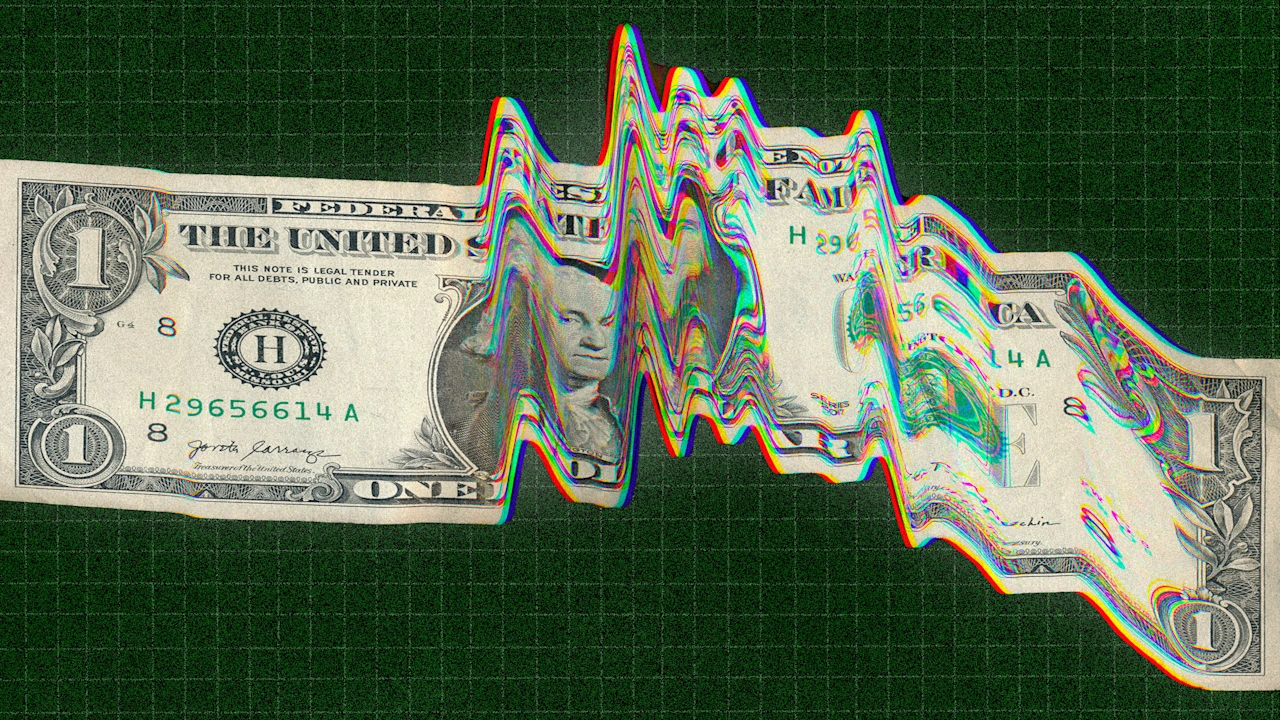
Prediction markets are all the rage right now. Weekly trading volume on prediction platforms just surpassed $2 billion, and apps like Polymarket are being treated as the “next big thing” in consumer finance and entertainment. These platforms are designed to gamify uncertainty by exploiting the same cognitive biases as gambling and day-trading, quietly pushing users toward overspending, emotional volatility, and compulsive checking.
It’s easy to see why people are drawn to them. Prediction markets feel smarter than reckless betting, more dynamic than typical investing, and more objective than punditry. For example, users are able to watch the odds move in real time, making it feel like they’re seeing the truth of a situation, whether it’s a political outcome or whether the CEO of Coinbase will drop the word “AI” on their next earnings call.
Young users are particularly vulnerable, with a 2025 TransUnion study finding that 34% of Gen Z and 42% of millennials are actively participating in betting. Meanwhile, monthly debt payments for millennials and Gen Z have surged 20% and 27% respectively, drastically outpacing inflation (6%) and wage growth (8%), so these small, repeated losses can quickly snowball into real financial strain.
Gambling, Cloaked as Investing
This isn’t a new playbook. First, it started with sports betting, then 0DTE (zero days to expiration) options, and now there are prediction markets. If you were to open any major prediction platform today, the parallels to casinos will become drastically obvious. Both interfaces are fast, have charts that flicker, and use prompts that urge rapid entry and exits.
Users are being wired to double down after facing a loss, overrate their intuition, and assume moving prices reflect real information. These are classical behavioral traps that are just being applied in a new environment—and because it has the faux appearance of investing, all the risks feel “legitimate.”
For instance, a user may place small bets on multiple elections simultaneously, checking and adjusting their choices every few minutes. However, even if each bet is only $1 to $5, the constant engagement can cause stress, disrupt focus at work, and eat away at savings, all without the user truly realizing what’s happening.
Small Bets, Big Consequences
One of the most misleading narratives around prediction markets is the idea that the bets are small and, subsequently, inconsequential. The danger isn’t the size, it’s the frequency, repetition, and compulsive checking. Your brain is constantly chasing endless hooks as the market continues to move every few minutes.
Users are experiencing a psychological cycle in which they overestimate their ability to predict outcomes, fall into the “just one more trade” cycle, and experience emotional swings that are spilling into their daily lives—affecting their focus at work, sleep patterns, and interactions with family and friends.
Prediction markets are playing on the idea that users are “making informed predictions” rather than calling it what it is—gambling. The rationalization of this behavior is part of what makes it so enticing to users. They’re convincing themselves that they’re learning about markets, politics, and economic signals, when in reality, they’re being tricked into a loop. And most of the time, they’re not noticing the true cost until it hits their wallets or their well-being.
The Overlooked Cost
The fun side of prediction markets is often what is highlighted in the media—they’re showcasing the clever traders, the unexpected outcomes, and the viral probability swings. What’s not highlighted? The stories that actually matter the most, like the real households absorbing small but continuous financial losses, the compulsive checking that mirrors day-trading addiction, and the lack of guardrails in a gray zone between wagering, entertainment, and finance.
On their own, these losses may seem insignificant. But as a whole, they add up. When you combine mass adoption, financial stakes, and algorithmic nudges, the risk profile changes dramatically. What initially looked like a fun forecasting tool is now an invisible drain on both your wallet and your well-being.
We’re setting ourselves up for a generation where financial prudence goes out the window, an influx of personal bankruptcies is inevitable, and the mental health crisis gets even worse than it is today.
How to Participate Without Losing Yourself
Prediction markets aren’t going anywhere, nor should they. They can be interesting and even useful, but users need to approach them differently. You should think of them like speculative trading or gambling at a casino. Things like betting only what you can afford to lose, avoiding impulse reactions, tracking the gains, losses, and time spent, all help prevent compulsive cycles and preserve mental health. These practices are especially important for Gen Z and millennials, who are driving the growth of this sector and are on track to spend more per capita on prediction markets than any other generations.
At the end of the day, these platforms aren’t just forecasting future outcomes, they’re also forecasting, and influencing your behavior. Recognize the signs and take control before both your wallet and well-being become the most predictable outcomes of all.