
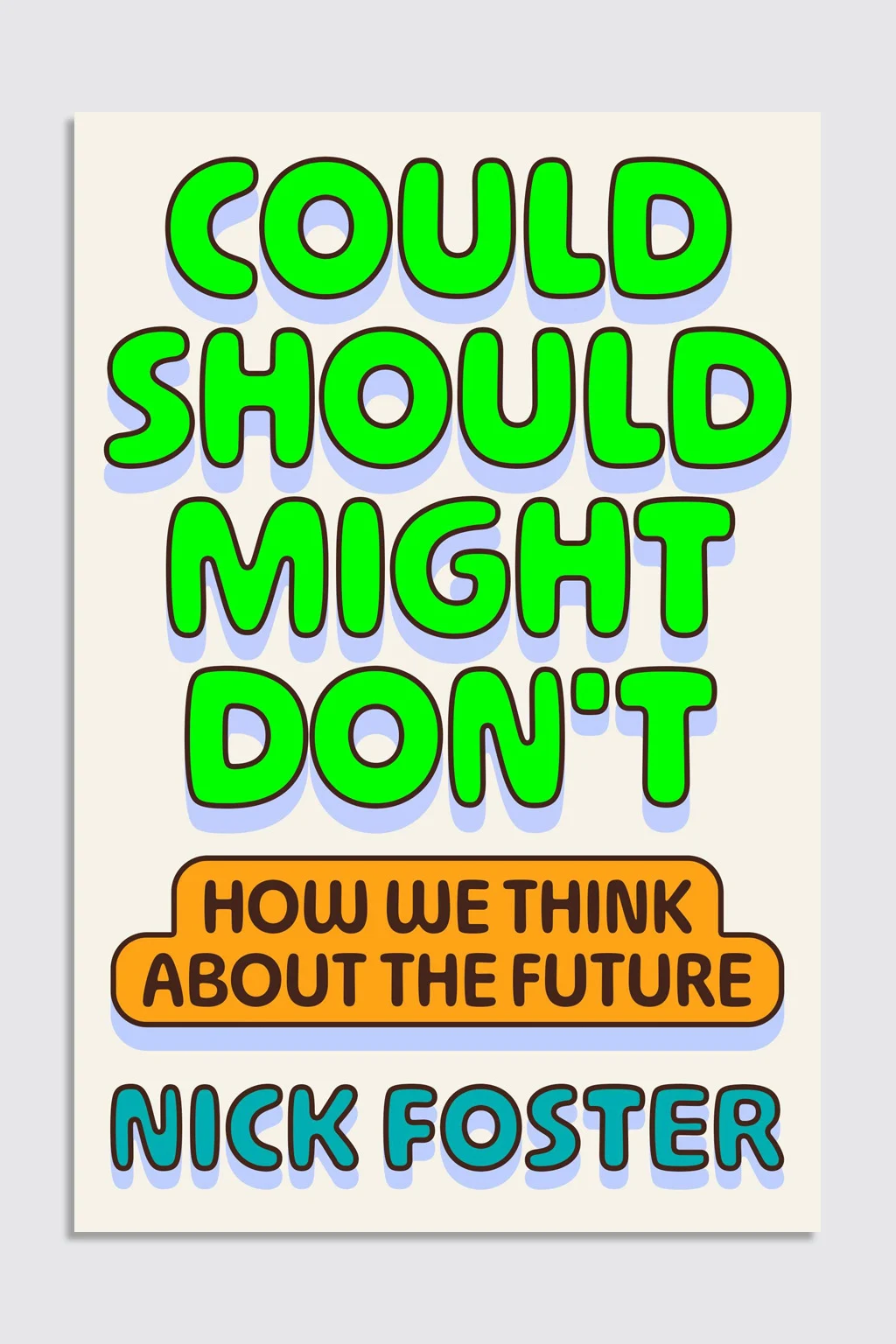
Nick Foster is not a fan of how Silicon Valley imagines the future. As a designer and writer who has spent his career at places like Google, Nokia, and Sony, he’s had a front-row seat to the tech world’s relentless obsession with turning science fiction into science fact. The problem, he argues, is that the source material was never meant to be a manual for reality.
“The primary function of science fiction is to explore ideas and to entertain. It shouldn’t be considered a brief,” Foster tells me. He worries when he hears people in meetings say, “We should make the thing from Minority Report.” To him, it’s a lazy shortcut—an idea taken from a cinematic universe built for drama, not for pragmatic, human-centered utility.
“They’re sort of misreading the function of that art form,” he says. “They’re just trying to make something happen because they’re excited by it, not necessarily because it’s better or more pragmatic or more useful.”
Foster, the author of Could Should Might Don’t: How We Think About the Future, has a more than a few thoughts on what does make for good futurism.
“What I’m trying to do…is not create a method or a framework. We’ve got enough of those,” he explains.
Instead, he offers a simple yet powerful vocabulary to dissect the ways we approach the future, arguing that humans tend to fall into one of four modes of thinking, often without realizing it. To break free of the Silicon Valley narrative, he says, requires changing the way we think about the future of technology.
Four modes of futurism
Foster’s first mode of futurism is Could futurism. This is the one we know best. It’s the futurism of opportunity, of “amazing gadgets, humanoid robots,” and breathtaking architecture. It’s the world of flashy tech demos, driven by a modernist belief in endless progress. Its weakness, however, is that it has been “absolutely co-opted by science fiction,” creating dazzling but ultimately alienating visions that feel disconnected from our lives and the messy path to get there.
Then comes Should futurism. This is the future as a fixed destination. It’s the world of master plans, and of religions and laws that point us toward a desired state. It’s also the world of corporate strategists and their algorithmic projections—the confident dotted lines on charts that declare what’s coming. The obvious flaw, Foster says, is its brittleness. “The world is way more volatile than we think it is,” he warns. “All of our algorithmic projections and our dotted lines on charts are just stories. And often we’re way off.”
As a reaction, Might futurism offers the opposite: a future of infinite scenarios. This is the domain of strategic foresight consultants, born from Cold War-era wargaming at the RAND Corporation. It’s a pluralistic view that maps out every possibility within a “futures cone.” But it has a fatal flaw. “Our imagination about future scenarios is actually based on the past,” Foster notes. This is why companies like Blockbuster could run countless scenarios and still never imagine a future where they weren’t dominant—until it happened.
Finally, there is Don’t futurism, a mode that is gaining momentum in our anxious times. This is the future as a terrifying place to be avoided, the focus of protest movements campaigning against climate catastrophe, authoritarianism, or runaway AI. It is the future as a warning. While essential, its challenge is that it often “protests from the outside” and struggles to offer integrated, actionable paths forward. “It’s quite difficult to deliver a don’t in a helpful way,” Foster says, noting it can become strident and divisive.
The China contrast
The West’s default mode of futurism, Foster argues, is an unbalanced mix of these mindsets. But the tech industry, in particular, is overwhelmingly biased toward could futurism, driven by the commercial need to generate excitement and create market trends. Silicon Valley is blinded by sci-fi dreams, and its attitude towards the future gets worsened by Wall Street demand for growth.
This stands in stark contrast to China’s approach, a country that understands future planning in a way the West cannot. Beijing just concluded the Chinese Communist Party’s fourth plenary session in October, during which they outlined a 2026-2030 five-year plan, the next-to-last chapter in their decades-long overarching plan to become a leading superpower by 2035.
Foster points out that while Western democracies are trapped in short cycles—”it’s the midterms and then it’s the quarterly results and then it’s the next election”—China’s autocratic system allows it to plan on a generational scale. “In a sort of autocratic dictatorship where you sort of have a dynastic leadership, you can start to think at 10, 15, 20, 30 generational scales,” he observes.
While acknowledging the immense human and societal cost, Foster identifies China’s strategy as a powerful, real-world example of should futurism. The government establishes a clear destination for the country and then commits all its resources to reaching it. This gives them a stability that the West lacks.
Quoting William Gibson, Foster notes you need a solid place to stand to imagine the future. “China don’t seem to have that problem,” he tells me. “They’re very comfortable with where they want to be. And they seem to be working very hard to get there.”
In our conversation, Foster didn’t offer a way for the West to achieve what China is already doing. In his book, his proposed solution to fixing our vision of the future is a cultural and intellectual one, aimed at leaders within organizations, especially in technology. He believes the crucial shift is for leaders to start communicating in a more balanced way, using all four modes of his framework.
He wants to see leaders who can discuss opportunity (the could), articulate a clear mission (the should), admit uncertainty (the might), and acknowledge fears and risks (the don’t). There’s no magic tricks or shortcuts. Fostering a more responsible, rigorous, and honest conversation about the future is the necessary first step toward making better long-term decisions, regardless of the political system.
To me, it seems like an impossible shift. If Western societies rarely look beyond the next quarter in the political, enterprise, and financial world; if a large number of people are living paycheck to paycheck; if even most of the entertainment and design is ephemeral and single use, how can we be balanced or really think about the future beyond what’s going to happen in the next few months?
Could we have an honest future, please?
Foster argues that the power of his approach is not in choosing one of these modes, but in learning to think with all of them simultaneously. He believes we need the optimism of could, the direction of should, the preparedness of might, and the caution of don’t.
Foster champions a concept he calls “The Future Mundane.” It’s an antidote to the escapist fantasies of could futurism, which has been a cancer for both our future and present. Foster argues we should be grounding our visions in the messy, complex, and often boring reality of everyday life.
Even the most transformative technologies, from GPS to AI, eventually become normalized and part of the mundane fabric of our lives. He’s less interested in the initial “wow” moment of a new technology and more in what happens next. “I want to try and figure out what it all means, what it actually leads to and how it changes how somebody might walk the dog or go and buy milk or go on vacation,” he tells me.
This focus on the ordinary, he argues, grounds conversations about the future in a way that is not only more honest but ultimately more productive. In his book, Foster says that the value of this “Future Mundane” approach is that it forces creators to look past the initial “inspirational sugar rush” of a new idea and confront the messy, real-world consequences of its existence. By thinking about how a technology will actually integrate into the boring parts of daily life—how it will be used, misused, repaired, and eventually become obsolete—we can build more responsible and realistic products.
It grounds the conversation in a way that helps us “ride out that hysteria” of the initial hype cycle and “figure out what it all means.” Thinking about the future isn’t about predicting what will happen in 2030; it’s an act of “pure human responsibility to our species” to consider the long-term effects of what we are building today.
Foster says that companies tend to get trapped in the emotional extremes of the technology’s hype cycle. When a new technology like AI emerges, companies and their leaders tend to react in one of two “hysterical and a little unbalanced” ways. They either get swept up in the breathless optimism of could futurism (“Wow, it can do all these things”), or they become paralyzed by the fear and anxiety of don’t futurism.
Foster writes that the “incessant pressure to find clients, balance the books, chase sales… and deliver results utterly dominates day-to-day affairs,” pushes any serious futurism work to the fringes where it is often seen as a “vanity” exercise rather than an integral part of the strategy. This polarization and short-term focus prevents companies from having the kind of rigorous, multifaceted conversation that leads to sustainable innovation.
He doesn’t point to any company that does this right, however. My personal impression, from what I read and see every day as a journalist, is that there are not a lot of companies that think within the framework that Foster proposes. This is especially true in our current AI craze, where leading companies push the narrative that they are about honesty, responsibility, balance, and ethics.
In reality, for the vast majority of companies, those are bullet points in a Powerpoint slide. Smoke and mirrors. All talk and no walk while they all are focused on the could, gunning to become the next unicorn, the next Wall Street darling.
Perhaps I’m a cynic, but Foster believes that this may be an opportunity for those companies who actually want to practice a balanced, honest look at designing the future. For him, that is the path for lasting success: “The company that delivers that kind of story, I think will be the company that succeeds because it addresses all of the key motivators we have about the future.”