
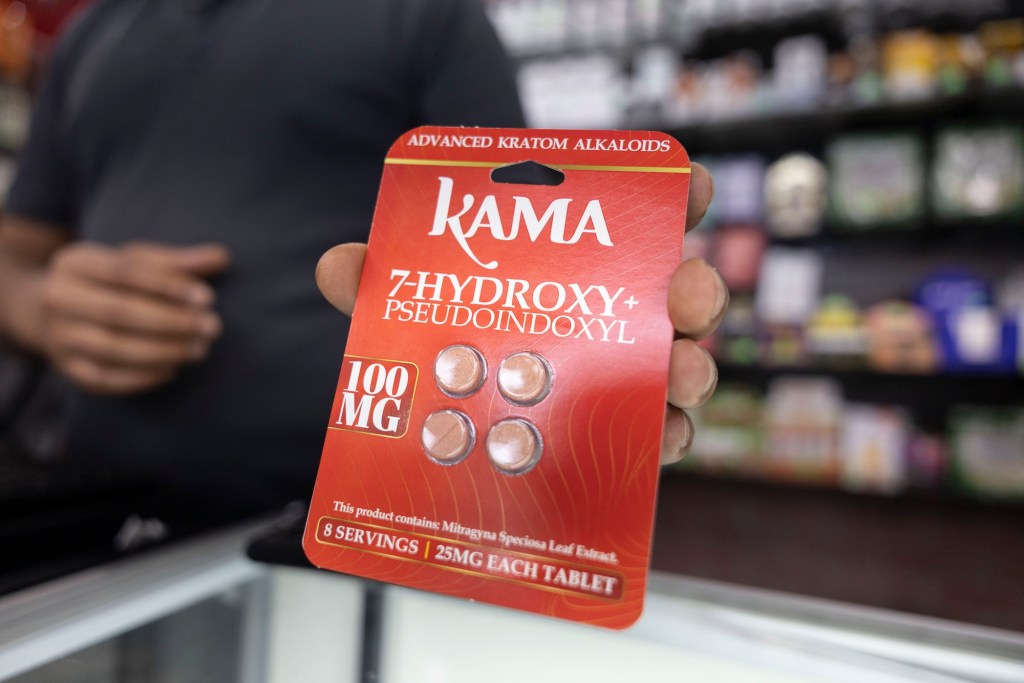
You may have seen signs for kratom at your local convenience store or gas station. The Southeast Asian tree leaf, marketed as a natural remedy for pain, fatigue and sleep, has become a multibillion-dollar industry. But a growing number of states want to ban it, according to the Wall Street Journal.
Reports to U.S. poison-control centers involving kratom have surged roughly 12-fold over the past decade, and the CDC recorded more than 5,200 fatal overdoses between 2020 and 2024 in which kratom was detected. Connecticut, Tennessee, Louisiana and Kansas have enacted full bans, with Nassau County, N.Y., and Los Angeles County following suit locally.
The industry is divided on how to respond. Companies selling plain-leaf kratom, like Idaho-based Happy Hippo, argue their product is closer to a supplement than a drug, and have drawn a hard line against newer synthetic derivatives like 7-OH, which entered the market in 2023 and have driven much of the recent regulatory alarm. The American Kratom Association, an industry group, is now lobbying for state-level “Kratom Consumer Protection Acts” that would restrict synthetic derivatives while preserving sales of natural kratom.
You may have seen signs for kratom at your local convenience store or gas station. The Southeast Asian tree leaf, marketed as a natural remedy for pain, fatigue and sleep, has become a multibillion-dollar industry. But a growing number of states want to ban it, according to the Wall Street Journal.
Reports to U.S. poison-control centers involving kratom have surged roughly 12-fold over the past decade, and the CDC recorded more than 5,200 fatal overdoses between 2020 and 2024 in which kratom was detected. Connecticut, Tennessee, Louisiana and Kansas have enacted full bans, with Nassau County, N.Y., and Los Angeles County following suit locally.
The industry is divided on how to respond. Companies selling plain-leaf kratom, like Idaho-based Happy Hippo, argue their product is closer to a supplement than a drug, and have drawn a hard line against newer synthetic derivatives like 7-OH, which entered the market in 2023 and have driven much of the recent regulatory alarm. The American Kratom Association, an industry group, is now lobbying for state-level “Kratom Consumer Protection Acts” that would restrict synthetic derivatives while preserving sales of natural kratom.