
In a 1944 issue of Arts & Architecture magazine, the architect and designer Charles Eames sounded an alarm. “It has been estimated that one million five hundred thousand houses each year for a period of 10 years will be needed to relieve the urgent housing problem of this country,” he wrote. “The enormity of such a need cannot even be partially satisfied by building techniques as we have known and used them in the past. Large scale industry would seem to be the only logical means by which we can achieve an enterprise of such proportion.”
Throughout their careers, Charles and Ray Eames explored how industrial production could impact home building, most famously through their own Pacific Palisades residence, also known as Case Study #8. But a fully factory built house was their elusive white whale. Now it’s finally becoming a reality through a collaboration between the Eames Office, a non-profit organization dedicated to stewarding and extending the couple’s work, and Kettal, a Spanish manufacturer of furniture and prefabricated pavilions.
At Milan Design Week, the two organizations are debuting The Eames Pavilions, a modular construction system based on the designers’ philosophy of efficient, flexible, and adaptable architecture. A four meter square indoor pavilion, which is roughly 170 square feet, will start at 45,000 Euros (about $52,000) and is expected to go on sale worldwide in late 2026. An outdoor version of the same size starts at 60,000 Euros (about $69,000) with an estimated availability in 2027. Customers can combine modules to create larger pavilions and it’s possible to stack them to two stories, too.
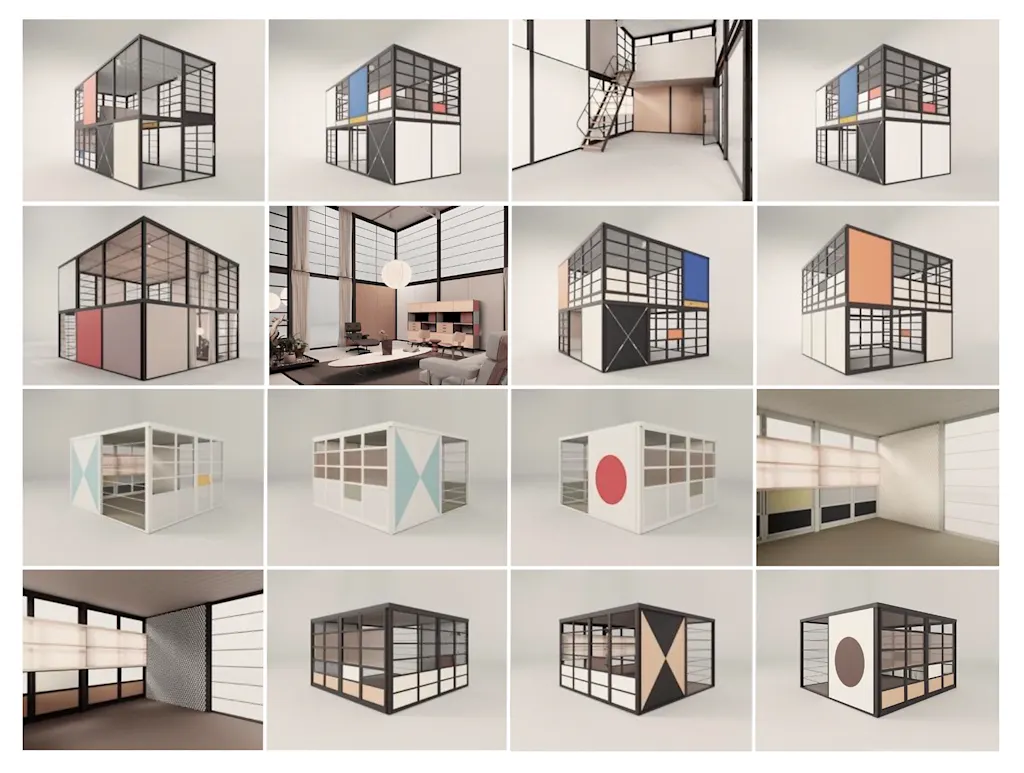
For the Milan installation, on view at the Triennale Museum from April 21 to May 10, 2026, Kettal and the Eames Office will show two of the myriad configurations that the system can produce. The first is a double-height iteration, which looks a lot like the Case Study #8. It has a black-painted metal frame, floor-to-ceiling glass walls, zig-zag trusses, chicken wire–reinforced windows, and vivid wall panels in primary colors. (The price tag for this specific build? $145,000 Euros, or about $167,000.) The second is a single module featuring wall panels adorned with geometric shapes the Eameses liked.
While not a one-to-one replica of any previous Eames house, the kit of parts represents an amalgamation of the designers’ core ideas around materiality, structure, and proportion and, importantly, channels the captivating spirit of their residential projects.
“The Eames house and their other houses, were meant to be the beginning of something that would turn into a system or into a series, but they were experiments,” says Eckart Maise, author of the forthcoming book The Eames Houses and a design consultant who worked closely on the product’s development. “Charles and Ray were very clear in their intent to mass produce.”
The housing crisis is even worse now than when Charles wrote his Arts & Architecture article. According to Zillow, the housing deficit has grown to 4.7 million units in 2025. Could an Eames prefab offer a solution?
A long road to mass production
The Eames Office has been exploring an answer to this question for years. In 2021, the Eames Office attempted to revive a never-built 1951 wood-framed prefab Charles & Ray developed with Kwikset (Kwikset went out of business before construction could begin), but learned that the regional business model of most prefab housing companies limited the scale at which they could work. So instead, they shifted gears and focused on manufacturers with an international reach who could fabricate metal framing, which is more practical than carpentry for mass distribution.
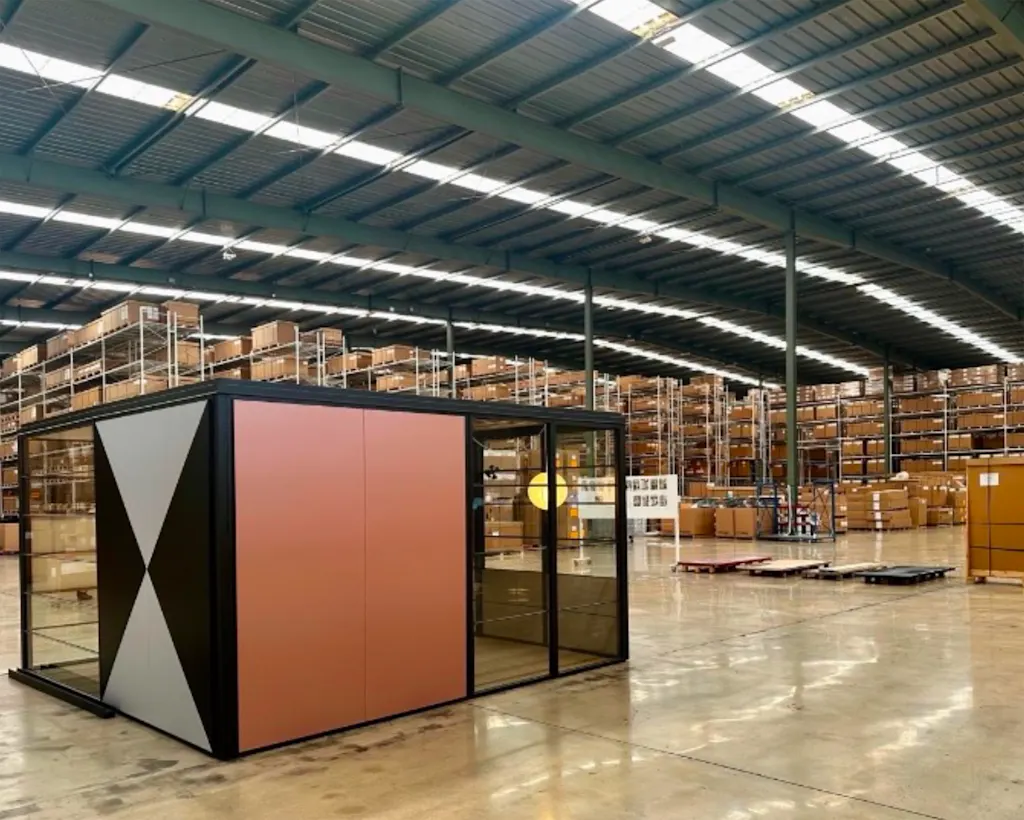
This led Maise to Kettal. Thirty percent of the company’s business comes from an indoor-outdoor modular pavilion system, which it has produced for a decade. The company had the infrastructure in place to manufacture, distribute, and install the pavilions worldwide. Fortunately, Antonio Navarro, Kettal’s creative director, was also interested in exploring an Eamesian design. “It’s difficult not to fall in love with the solutions, the atmosphere that they created, the lighting,” Navarro says. “It’s the kind of architecture that we need for the future because it’s ecological, it’s easy to assemble, it’s easy to transport, and it’s easy to manufacture.”
Maise and Kettal spent three years researching and developing the Eames Pavilion System.
They began by visiting the Case Study #8 and took measurements, color samples, and material studies. Getting the details right, all the way down to window profiles, would be “important to keep the magic” of Charles and Ray’s spaces, Maise says. They also combed the archives for information on the houses the duo designed for Arts & Architecture editor John Entenza (also known as Case Study #9), the actor Billy Wilder (Maise uncovered an unpublished design concept for the house), and Max De Pree, the son of Herman Miller founder D.J. De Pree.
Across the houses, Maise noticed how Charles & Ray established modules and extended floorplans based on the dimensions of those modules. “It gave us the security to say it’s an open system and you can build many different things because across those five or six designs, you realize how open they thought in their configurations,” Maise says.
Adapting an icon
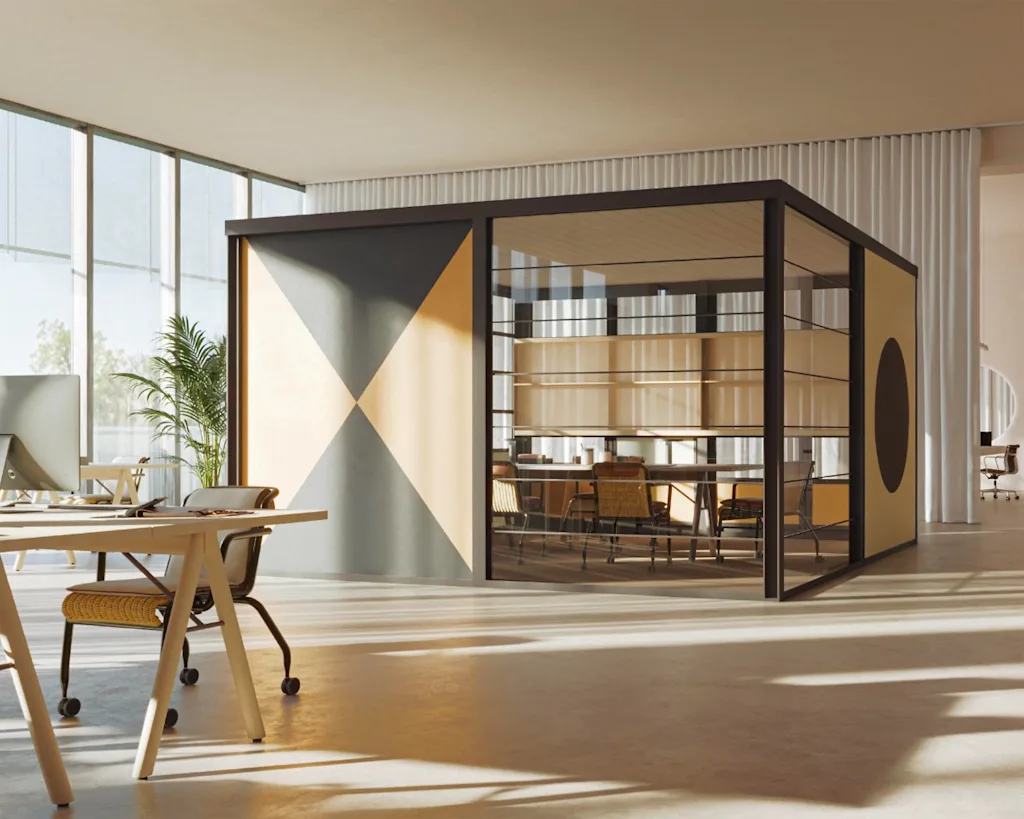
The Kettal-manufactured system, which ships flat, has similar DNA to the Eameses’ architecture but, “it’s really important to understand that the Pavilion is not a facsimile of the Eames House,” Maise says. Still, the options for customization will be recognizable to fans of the couple’s work. For example, buyers can choose a roofline that’s flush with the walls, just like Case Study #8, or a roof with deep eaves for shading, which nods to the overhang at the Wilder house. For the exterior walls, the combinations could include solid walls, glass, and panels reinforced with X-braces, details borrowed from Case Study #8, or a solid panel adorned with two triangles, just like the Entenza house. Interior finishes like wood paneling and draperies also reference the details the Eameses used across their residential projects.
Today’s materials and manufacturing process have improved since the Eameses designed their homes. Meanwhile, building codes across the globe have become much more rigorous for energy efficiency, seismic activity, and wind tolerances. Because of this, Kettal is integrating modern materials and products into the pavilions including aluminum windows with performance glass for thermal insulation instead of single-pane glazing, lightweight concrete panels instead of poured-in-place elements, and aluminum alloy framing which has the same resistance as steel.
The Eames Office and Kettal see opportunities for the Pavilion System to serve as Accessory Dwelling Units, backyard pavilions, pool houses, or even a single-family home. But first, it needs to test how the pavilion performs outdoors and prove that it meets the most rigorous building codes and technical requirements around the world. Additionally, creating meeting rooms or private offices in open-plan workspaces represents a “huge potential,” Maise says. (Kettal already sells its indoor products to customers like Tesla, Apple, Google, Amazon, LinkedIn, and Salesforce.)
“It’s exciting to make the magic of [Charles & Ray’s] architecture available as a product,” says Maise, who previously collaborated with the Eames Office on furniture when he was the chief design officer at Vitra. “When you walk into an interior, you walk in with all your senses. It’s different from an object.”