Close Menu
    Facebook X (Twitter) Instagram
    TRENDING :
    • Social media’s big tobacco moment is just a first step
    • Ghirardelli Chocolate products recalled over Salmonella fears. Avoid this list of 13 beverage mixes
    • Google, TikTok and Meta could be taxed by Australia to fund its newsrooms
    • MacKenzie Scott says we underestimate the impact of small acts of kindness. Science agrees
    • Trump says Iran ‘better get smart soon’ as economies deal with skyrocketing energy prices
    • A key weapon in America’s ‘Golden Dome’ defense shield is taking shape
    • How F1 is revving up its U.S. takeover at the Miami Grand Prix
    • Why the hardest part of building the future is letting go of the past
    Compatriot Chronicle
    • Home
    • US Politics
    • World Politics
    • Economy
    • Business
    • Headline News
    Compatriot Chronicle
    Home»Business»Your employees aren’t burned out. They’re indoors too much
    Business

    Your employees aren’t burned out. They’re indoors too much

    March 17, 20264 Mins Read
    Share Facebook Twitter Pinterest LinkedIn Tumblr Telegram Email Copy Link
    Follow Us
    Google News Flipboard
    Share
    Facebook Twitter LinkedIn Pinterest Email

    Michael, a 42-year-old tax accountant, came to my office complaining of chronic anxiety, chest pressure, and what he called tunnel vision. “It’s like I’m stuck inside my screen,” he told me. “Even when I’m not working, I’m holding my phone and my brain won’t shut off.”

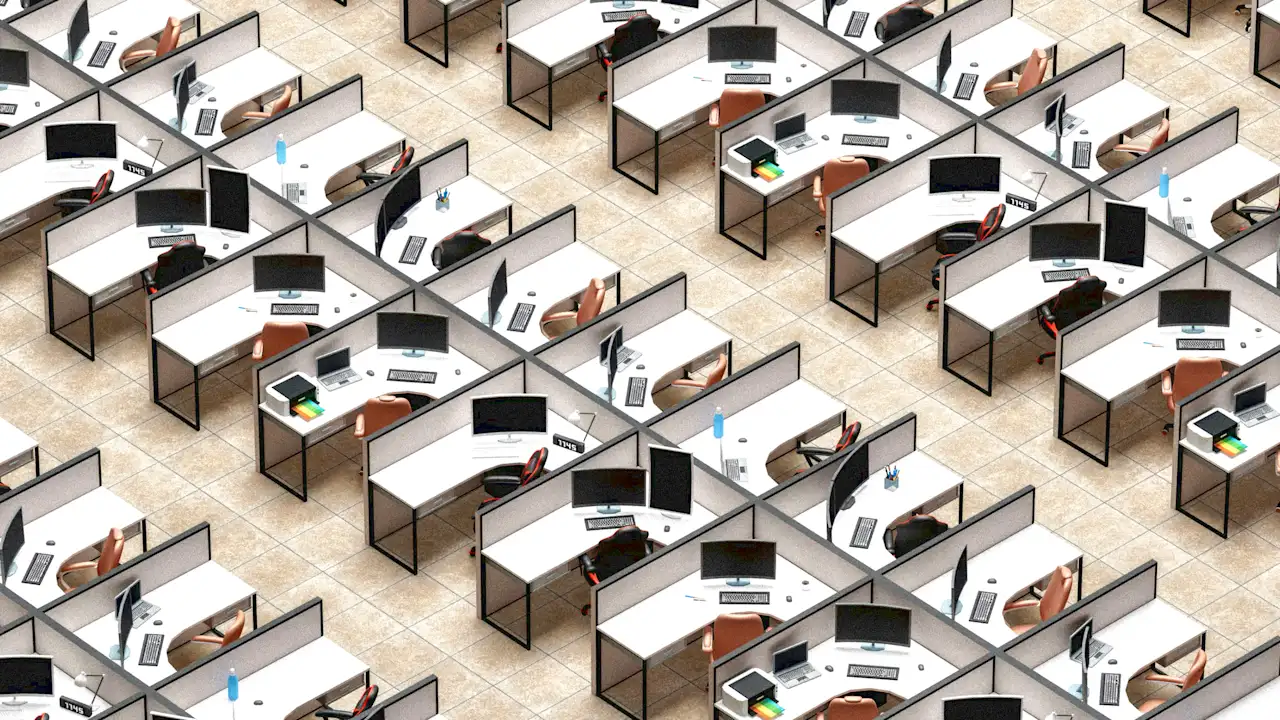
    Is that you? Americans spend 93% of their time indoors. Insomnia, depression, metabolic disease, cognitive decline, chronic inflammation, burnout, insulin resistance, sedentariness, loneliness. We engineered the human animal into a box and spend billions managing the symptoms the box causes.

    Here is what I want leaders reading this to understand: your people are not burned out. They are indoors too much. In 30 years of internal medicine, I have found that the most underestimated factor in health and longevity is where people spend their time.

    Indoor work is cognitively rich but biologically poor and screen-intense. I call this Digital Obesity: so overloaded on screen input that the baseline of the American knowledge worker has become brain fog, exhaustion, and an undercurrent of anxiety.

    The pattern is recognizable: tired even when you slept. You’re drinking coffee within a few minutes of waking, just to feel normal. You’re hitting the break-room leftovers and the vending machines for sugar by 2:30, and if not, you’re scrolling for dopamine. You’re exhausted most of the day and you’re wired at night.

    What’s unrecognized: this is predictable physiology, not a character flaw. What comes with it medically is chronic low-grade inflammation from indoor confinement. Inflammation underlies cardiovascular disease, diabetes, dementia, and depression. We treat these as separate diseases, but they have an unrecognized root cause. Together, they are an indoor epidemic.

    Our biology did not evolve to handle the constant monitors, artificial light, stale air and circadian disruption we now experience. The environment is not a background for work, professional practice or study. It is the platform on which your body and brain run. And right now, the environment is suppressing the performance of every person confined within it.

    The productivity data are clear. In a controlled office study, cognitive function dropped 15% at elevated CO2 levels, which come about with normal exhalation. A Cornell ergonomics study found that optimizing natural light produces a productivity gain worth $100,000 per 100 workers annually. Researchers at Stanford found that walking outside increases creative output by 60%. Presenteeism is costing you more than absenteeism.

    The longevity data is emerging and becoming clearer. Each cell in your body has a copy of your DNA, on your chromosomes, and those have protective caps at their ends called telomeres. Every time a cell divides, those tips get shorter. When they get too short, the cell dies.

    A National Health and Nutrition Examination Survey (NHANES) study of nearly 8,000 Americans found that people in greener neighborhoods had significantly longer telomeres, equivalent to nearly two fewer years of biological aging. A second NHANES study of 5,823 adults found that the highly active had a biological aging advantage of nine years over sedentary adults. You are not just preventing disease when you move your body deliberately in a green or blue environment. You are slowing the rate at which your body ages.

    Americans average nearly 7 hours a week outside, but most of that time is incidental: walking from parking lot to parking lot, or stepping outside to pick up a delivery. But time like this does not move the chronic disease or longevity levers.

    The prescription is short. The minimum effective dose is just 17 minutes/day– the threshold at which nature time measurably improves health and wellbeing and may improve longevity. A 30-year Harvard study of 111,000 people found that those who moved naturally (e.g., walking, gardening, tennis) had 19% lower all-cause mortality. The longevity curve peaks between 200 and 300 minutes weekly. I call it the 7% Solution: 7% of your waking hours in the environment your biology actually requires.

    What does that look like? Coffee outside instead of in the break room. Reading on the balcony rather than in your bedroom. Suggesting a walking meeting over a conference room. Lunch on a park bench instead of at your desk. You are not adding time. You are repurposing it.

    Specific, intentional time in a green or blue space measurably lowers your blood pressure, your cortisol, your risk of dementia. The evidence has been there for years. Until now, the prescription has not.


    Source link

    Share. Facebook Twitter Pinterest LinkedIn Tumblr Email

    Related Posts

    Social media’s big tobacco moment is just a first step

    April 29, 2026

    Ghirardelli Chocolate products recalled over Salmonella fears. Avoid this list of 13 beverage mixes

    April 29, 2026

    Google, TikTok and Meta could be taxed by Australia to fund its newsrooms

    April 29, 2026
    Top News

    This new foldable phone may have upstaged Apple in the ‘zero-crease’ wars

    By Staff WriterMarch 12, 2026

    For some time now, reporting around Apple’s folding phone has coalesced around two beliefs: the…

    Influencer dubbed ‘Sam Altman’s worst nightmare’ goes viral for breaking ChatGPT’s brain, over and over again

    April 16, 2026

    Top 7 Online Animated Video Makers for Easy Creation

    December 27, 2025

    Novo Nordisk stock slides as its Alzheimer’s drug trials fail 

    November 24, 2025
    Top Trending

    Social media’s big tobacco moment is just a first step

    By Staff WriterApril 29, 2026

    Many commentators have called March’s California jury verdict, finding Meta and Google…

    Ghirardelli Chocolate products recalled over Salmonella fears. Avoid this list of 13 beverage mixes

    By Staff WriterApril 29, 2026

    California-based Ghirardelli Chocolate Company has voluntarily recalled 13 of its powdered beverage…

    Google, TikTok and Meta could be taxed by Australia to fund its newsrooms

    By Staff WriterApril 29, 2026

    Australia has proposed taxing digital giants Meta, Google and TikTok on a…

    Categories
    • Business
    • Economy
    • Headline News
    • Top News
    • US Politics
    • World Politics
    About us

    The Populist Bulletin serves as a beacon for the populist movement, which champions the interests of ordinary citizens over the agendas of the powerful and entrenched elitists. Rooted in the belief that the voices of everyday workers, families, and communities are often drowned out by powerful people and institutions, it delivers straightforward, unfiltered, compelling, relatable stories that resonate with the values of the American public.

    The Populist Bulletin was founded with a fervent commitment to inform, inspire, empower and spark meaningful conversations about the economy, business, politics, inequality, government accountability and overreach, globalization, and the preservation of American cultural heritage.

    The site offers a dynamic mix of investigative journalism, opinion editorials, and viral content that amplify populist sentiments and deliver stories that echo the concerns of everyday Americans while boldly challenging mainstream narratives that serve the privileged few.

    Top Picks

    Social media’s big tobacco moment is just a first step

    April 29, 2026

    Ghirardelli Chocolate products recalled over Salmonella fears. Avoid this list of 13 beverage mixes

    April 29, 2026

    Google, TikTok and Meta could be taxed by Australia to fund its newsrooms

    April 29, 2026
    Categories
    • Business
    • Economy
    • Headline News
    • Top News
    • US Politics
    • World Politics
    Copyright © 2025 Populist Bulletin. All Rights Reserved.

    Type above and press Enter to search. Press Esc to cancel.