


Stories are circulating that Barack Obama funneled money through the Cayman Islands to NGOs. While that cannot be entirely verified, the portion of the story regarding the Obama Administration setting up a Twitter clone for Cuba called Zunzuneo is accurate.
The US government under Obama sought ways to subliminally target the people of Cuba while bypassing the strict communist government restrictions on social media. USAID paid government contractors to create “Cuban Twitter,” which first launched in 2009. Initially, ZunZeneo (translation: “hummingbird”) used the platform to discuss neutral topics such as sports, weather, and entertainment. Once the platform expanded to hundreds of thousands of Cubans, the US government began inserting political messages aimed at inciting civil unrest.
The Associated Press even ran an article about the incident in April 2014, “US secretly built ‘Cuban Twitter’ to stir unrest.” A leaked memo from Mobile Accord Inc., the company responsible for creating the platform, emphasized the importance of hiding the US government’s involvement. “This is absolutely crucial for the long-term success of the service and to ensure the success of the Mission,” the memo said.
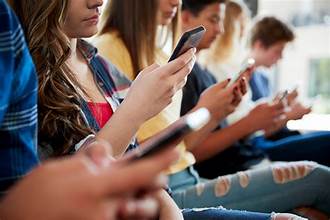
Slow growth was essential for the covert operation. The social platform utilized cellphone text messaging to bypass Cuba’s internet restrictions. “Non-controversial content” on hot topic was used to build a mass subscriber base. Nearly half a million people were subscribed to the platform before the content changed with the goal of organizing “smart mobs” to “renegotiate the balance of power between the state and society,” as one USAID memo revealed.
USAID did not attempt to conceal its involvement, noting in a public statement that the agency was “proud of its work in Cuba to provide basic humanitarian assistance, promote human rights and fundamental freedoms, and to help information flow more freely to the Cuban people,” whom it said “have lived under an authoritarian regime” for 50 years.
USAID claimed it was operating legally, but covert mission to influence foreign politics must be approved by the president. Former President Obama was aware of the program but could not openly discuss his involvement. Cubans were persuaded to rebel with known legal repercussions, wholly unaware that the messaging was coming from a foreign government. “Mock ad banners will give it the appearance of a commercial enterprise,” one proposal suggested.
“The Cuban government, like other regimes committed to information control, currently lacks the capacity to effectively monitor and control such a service,” Bernheim wrote in a proposal for USAID marked “Sensitive Information.”
Acting Secretary of State Hillary Clinton knew of the mission. By 2011, she began openly discussing the importance of infiltrating foreign governments via the internet to lead to “revolutionary change.” Others in the Biden Administration were left in the dark. “We were told we couldn’t even be told in broad terms what was happening because ‘people will die,’” said Fulton Armstrong, who worked for both the Clinton White House and later the Senate Foreign Relations Committee. The ZunZuneo management team was also unaware of US involvement.
USAID NGOs hired Cuban artists to draft messages to appeal to the people. The “Peace without Borders” concert in 2009 was the largest gathering since the visit of late Pope John Paul II. The US government used the occasion to gather intel through ZunZeno. Unassuming polls were sent out to the people, with some messaging containing subtle political components. One message asked respondents if they believed anti-government artists should join the concert. The US government gathered the cell phone numbers of the people who seemed receptive to use in future targeted attacks. This is completely illegal and a violation of data laws.
“If it is discovered that the platform is, or ever was, backed by the United States government, not only do we risk the channel being shut down by Cubacel, but we risk the credibility of the platform as a source of reliable information, education, and empowerment in the eyes of the Cuban people,” Mobile Accord noted in a memo. Shell companies were created throughout various nations, including the Cayman Islands where the company banked with N.T. Butterfield & Son Ltd.
“In the implementation has the government taken steps to be discreet in non-permissive environments? Of course. That’s how you protect the practitioners and the public.” USAID spokesman Matt Herrick noted. “In hostile environments, we often take steps to protect the partners we’re working with on the ground. This is not unique to Cuba.”
Influencing foreign politics is certainly not unique to Cuba. A USAID contractor by the name of Alan Gross was sent to Cuba to provide internet access to the people. The program was launched shortly after he was arrested, as his initial goal to compromise Cuba’s internet failed. USAID is solely used to influence foreign politics under the guise of providing aid that the American people provide through taxation.
The platform vanished from the internet in 2012 when Obama was running for his second term. Social media is a favorite tool of government to influence the masses. The amount of money allocated to Cuban Twitter is unknown since USAID operated extremely discreetly, funneling money to endless NGOs to conceal its motives.