
Opinions expressed by Entrepreneur contributors are their own.
For decades, institutional trading desks operated with a structural advantage that had nothing to do with skill. They had research teams, real-time analytics, risk management systems, and behavioral data pipelines that retail traders could not access at any price. The gap was not just technological. It was economic. Building that infrastructure required capital that retail-facing platforms had no incentive to deploy.
That is the problem Opo set out to solve. Founded in 2021 and now serving more than 300,000 active clients across more than 300 tradable assets, the Seychelles-headquartered fintech platform was built on a single conviction: that retail traders deserve the same intelligent tools that institutional desks have had for years. The cost of delivering that intelligence has collapsed, and Opo has spent five years building the infrastructure to deliver it at scale.
Personalization Is Not a Feature. It Is Infrastructure.
The fintech industry has spent the past three years debating whether AI belongs in consumer-facing products. That debate is over. The more consequential question now is whether companies are treating AI as a surface-level feature, a chatbot, a summarizer, a dashboard widget, or as the structural foundation of their product.
Opo has positioned itself firmly in the second camp. The platform launched Pulse AI in 2024, an AI-powered market analysis tool designed to surface personalized insights at the point of decision rather than in a separate report that the trader has to seek out. The approach reflects a deliberate infrastructure choice: embed intelligence where trades are actually executed, not layer it over an existing product as an afterthought. That same philosophy drove the development of Opo’s proprietary Social Trade platform, which offers 30% lower spreads and zero-slippage execution, and supports a trading environment where data-driven decisions replace reactive ones.
Traders who receive personalized insights, automated risk signals calibrated to their own history, and analysis that adapts as their behavior changes do not just perform better. They stay longer, trade more frequently, and generate higher lifetime value for the platforms they use. Research consistently shows that engagement depth, not acquisition volume, determines which fintech platforms scale sustainably. AI is what makes that depth economically viable across hundreds of thousands of users simultaneously.
The Evidence Is Already in the Market
The clearest demonstration of Opo’s technology-first approach is its TradingView integration. Opo is among a very small number of brokers globally to offer direct order execution from within TradingView charts, at no additional cost to the trader. Most brokers require traders to exit their charting environment entirely to place a trade, a friction point that interrupts decision-making at the moment it matters most. Traders using Opo’s TradingView integration show higher session frequency and greater trade volume than those on standard platform interfaces.
The platform supports five trading environments in total: MT4, MT5, cTrader, its proprietary OpoTrade app, and TradingView. It holds regulatory licenses from four bodies: ASIC in Australia, FSCA in South Africa, FSA in Seychelles, and the Financial Commission, which provides EUR 20,000 client fund insurance. That regulatory depth, achieved in quick succession between 2022 and 2025, reflects the same compliance-first roadmap that runs alongside Opo’s technology investment. The two are not in tension. They are both components of the same trust-building strategy.
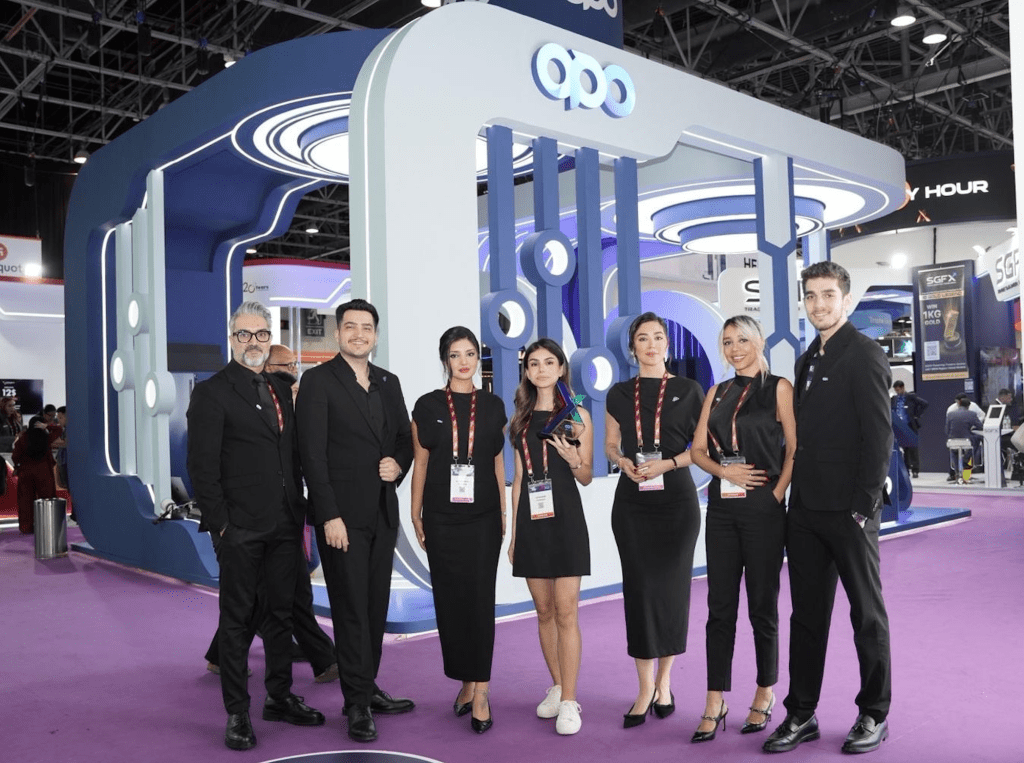
Four consecutive industry awards at Forex Expo Dubai between 2022 and 2025, spanning categories from Best Forex Broker to Best Innovation in Forex Trading, confirm that the market has taken notice.
“Most brokers sell access to markets,” Opo’s executive team noted. “We sell intelligence. Access is a commodity. Intelligence delivered at scale through AI is what keeps traders coming back and growing their accounts.”
The Window for Early Movers Is Narrowing
The brokers and fintech platforms that will define the next decade are not the ones with the largest sales forces or the most aggressive acquisition budgets. They are the ones making foundational investments in engineering and AI infrastructure right now, before those capabilities become table stakes.
Opo’s next phase makes that ambition concrete. The platform is working toward full AI integration across every layer of the trading experience, not AI as a reporting tool, but systems that analyze markets, personalize insights, automate risk management, and learn from each trader’s behavior over time. The target is one million traders served, a number the company treats not as a marketing milestone but as a measure of how many people have gained access to professional-grade intelligence regardless of account size.
“We are no longer positioning ourselves as a forex broker with good tech,” Opo’s executive team said. “We are a fintech platform that provides trading, and the next few years will show exactly what that means.”
The billion-dollar opportunity in fintech AI is not automation. It is the delivery of professional-grade intelligence to every trader, regardless of account size. The infrastructure to do that exists. The question is which platforms will build it first.
For decades, institutional trading desks operated with a structural advantage that had nothing to do with skill. They had research teams, real-time analytics, risk management systems, and behavioral data pipelines that retail traders could not access at any price. The gap was not just technological. It was economic. Building that infrastructure required capital that retail-facing platforms had no incentive to deploy.
That is the problem Opo set out to solve. Founded in 2021 and now serving more than 300,000 active clients across more than 300 tradable assets, the Seychelles-headquartered fintech platform was built on a single conviction: that retail traders deserve the same intelligent tools that institutional desks have had for years. The cost of delivering that intelligence has collapsed, and Opo has spent five years building the infrastructure to deliver it at scale.
Personalization Is Not a Feature. It Is Infrastructure.
The fintech industry has spent the past three years debating whether AI belongs in consumer-facing products. That debate is over. The more consequential question now is whether companies are treating AI as a surface-level feature, a chatbot, a summarizer, a dashboard widget, or as the structural foundation of their product.