
Close Menu
    Facebook X (Twitter) Instagram
    TRENDING :
    • Luke Skywalker’s saber and Rocky Balboa’s boots will be for sale at this upcoming auction
    • You can’t build your AI future on broken foundations
    • From tech platforms to parks, these companies are putting humanity and community first
    • Subway store closures: See a list of shuttered locations after a large franchisee went bankrupt
    • How to tell if you have a changeable personality according to science
    • Microsoft weighs an Xbox spinoff. Would it revive the business or put it at risk?
    • South Africa: The Lights Came Back On — The Economy Did Not
    • More than 2,000 Starbucks stores are closing early on June 22 after a promotion sparked national outrage
    Compatriot Chronicle
    • Home
    • US Politics
    • World Politics
    • Economy
    • Business
    • Headline News
    Compatriot Chronicle
    Home»Economy»Netanyahu’s War Is Not Over
    Economy

    Netanyahu’s War Is Not Over

    June 16, 20263 Mins Read
    Share Facebook Twitter Pinterest LinkedIn Tumblr Telegram Email Copy Link
    Follow Us
    Google News Flipboard
    Share
    Facebook Twitter LinkedIn Pinterest Email


    There is something that does not add up. If the objective is peace, then why was one of the most contentious parts of the negotiations the demand that hostilities in Lebanon also come to an end? Reports indicate that the U.S.-Iran framework includes de-escalation in Lebanon. Yet almost immediately Israeli officials declared they would not withdraw from southern Lebanon and would continue to reserve the right to act independently. Defense Minister Israel Katz stated plainly Israel would remain in Lebanon, Syria, and Gaza regardless of the agreement.

    This is where the entire story begins to unravel. Trump has been publicly insisting that Netanyahu will have to accept whatever agreement Washington negotiates, reportedly saying: “I call all the shots. He doesn’t call the shots.” At the very same time, reports emerged that Trump was furious over Israeli actions in Beirut that nearly derailed the negotiations altogether. According to multiple reports, strikes in Lebanon came dangerously close to collapsing the entire framework before it was finalized.

    The issue is not Iran. The issue is that Netanyahu appears to have viewed this conflict very differently from Washington. Reports suggest that Netanyahu hoped military pressure would fundamentally weaken Iran’s position throughout the region and perhaps even contribute to regime change. A negotiated settlement that leaves Iran standing, releases frozen assets, reopens the Strait of Hormuz, and begins another round of diplomacy was never the outcome many hardliners were seeking. That is why Israeli officials immediately began attacking the agreement while insisting they would maintain military freedom of action in Lebanon.
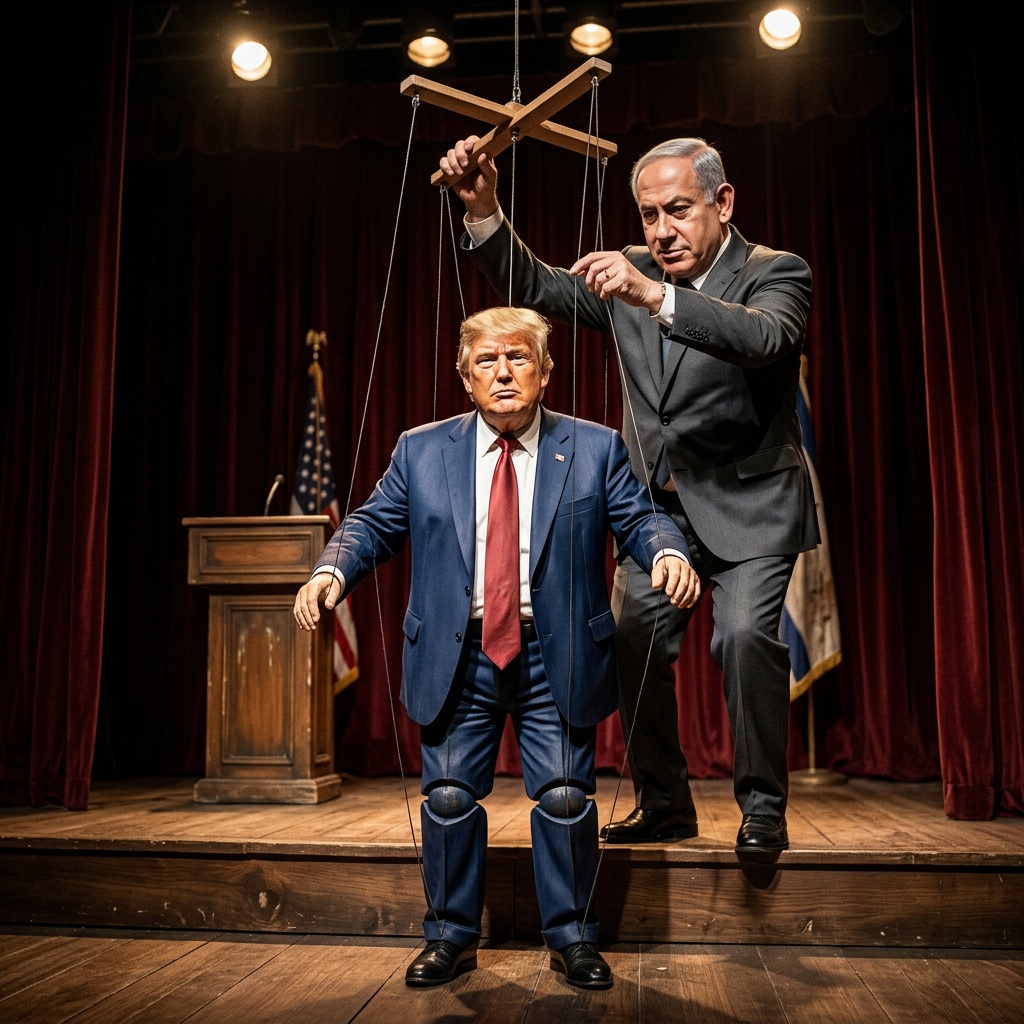
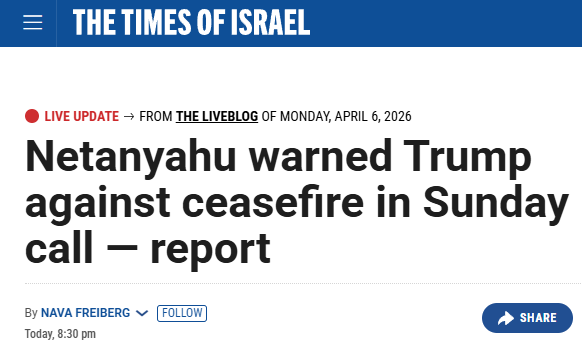
    Netanyahu manipulates Trump 22026_04_06_21_36_32_Netanyahu_warned_Trump_against_ceasefire_in_Sunday_call_report_The_Times_of_

    The uncomfortable reality in Washington is that every politician knows exactly how powerful the pro-Israel lobbying network has become. AIPAC has spent decades directing enormous sums into congressional races. Politicians on both sides of the aisle understand the consequences of crossing that machine. Whether one supports Israel or not, pretending this influence does not exist is absurd. Entire careers have been built and destroyed based upon foreign policy positions relating to Israel. The result is that American politicians often place the interests of foreign conflicts ahead of the interests of American taxpayers who will ultimately pay the bill. The growing divide between Trump and Netanyahu demonstrates that even within traditionally pro-Israel circles, there are limits to how much foreign policy can be subordinated to another nation’s strategic objectives.

    The Economic Confidence Model and the war cycle never suggested that 2026 would bring peace. Quite the opposite. This is a Panic Cycle year. The international war cycle turns up into 2027, with 2028 bringing economic stress and civil unrest before the major geopolitical turning point into 2029. People keep searching for a treaty that ends the crisis. That is not how these cycles work. The danger comes when political leaders become prisoners of their own narratives. Netanyahu has spent years presenting Iran as the defining threat of our time. Leaders who build their careers on war rarely become the architects of peace. That is why I remain skeptical. The greatest threat to this agreement may not come from Tehran. It may come from those who never wanted a negotiated settlement in the first place.


    Source link

    Share. Facebook Twitter Pinterest LinkedIn Tumblr Email

    Related Posts

    South Africa: The Lights Came Back On — The Economy Did Not

    June 16, 2026

    The Strait Of Hormuz May Reopen But The War Cycle Is Not Finished

    June 16, 2026

    Market Talk – June 15, 2026

    June 15, 2026
    Top News

    Thumbtack’s new AI wants to diagnose your leaky ceiling

    By Staff WriterApril 30, 2026

    One of the hardest parts of being a homeowner is knowing whom to call when…

    Gen Z reports early cognitive decline. Here’s what to know about the brain rot epidemic—and what to do about it

    May 11, 2026

    Scientists call it a ‘tragic loss.’ Why the U.S. is shutting down a major ocean monitoring network

    June 12, 2026

    Black Friday 2025: Are banks, stock markets open or closed? And when do store sales start at Walmart and Target?

    November 29, 2025
    Top Trending

    Luke Skywalker’s saber and Rocky Balboa’s boots will be for sale at this upcoming auction

    By Staff WriterJune 16, 2026

    A light saber with Luke Skywalker’s severed hand from “The Empire Strikes…

    You can’t build your AI future on broken foundations

    By Staff WriterJune 16, 2026

    Every major enterprise is running an AI program. Almost none of them…

    From tech platforms to parks, these companies are putting humanity and community first

    By Staff WriterJune 16, 2026

    Among this year’s crop of Fast Company‘s World Changing Ideas are organizations…

    Categories
    • Business
    • Economy
    • Headline News
    • Top News
    • US Politics
    • World Politics
    About us

    The Populist Bulletin serves as a beacon for the populist movement, which champions the interests of ordinary citizens over the agendas of the powerful and entrenched elitists. Rooted in the belief that the voices of everyday workers, families, and communities are often drowned out by powerful people and institutions, it delivers straightforward, unfiltered, compelling, relatable stories that resonate with the values of the American public.

    The Populist Bulletin was founded with a fervent commitment to inform, inspire, empower and spark meaningful conversations about the economy, business, politics, inequality, government accountability and overreach, globalization, and the preservation of American cultural heritage.

    The site offers a dynamic mix of investigative journalism, opinion editorials, and viral content that amplify populist sentiments and deliver stories that echo the concerns of everyday Americans while boldly challenging mainstream narratives that serve the privileged few.

    Top Picks

    Luke Skywalker’s saber and Rocky Balboa’s boots will be for sale at this upcoming auction

    June 16, 2026

    You can’t build your AI future on broken foundations

    June 16, 2026

    From tech platforms to parks, these companies are putting humanity and community first

    June 16, 2026
    Categories
    • Business
    • Economy
    • Headline News
    • Top News
    • US Politics
    • World Politics
    Copyright © 2025 Populist Bulletin. All Rights Reserved.

    Type above and press Enter to search. Press Esc to cancel.