
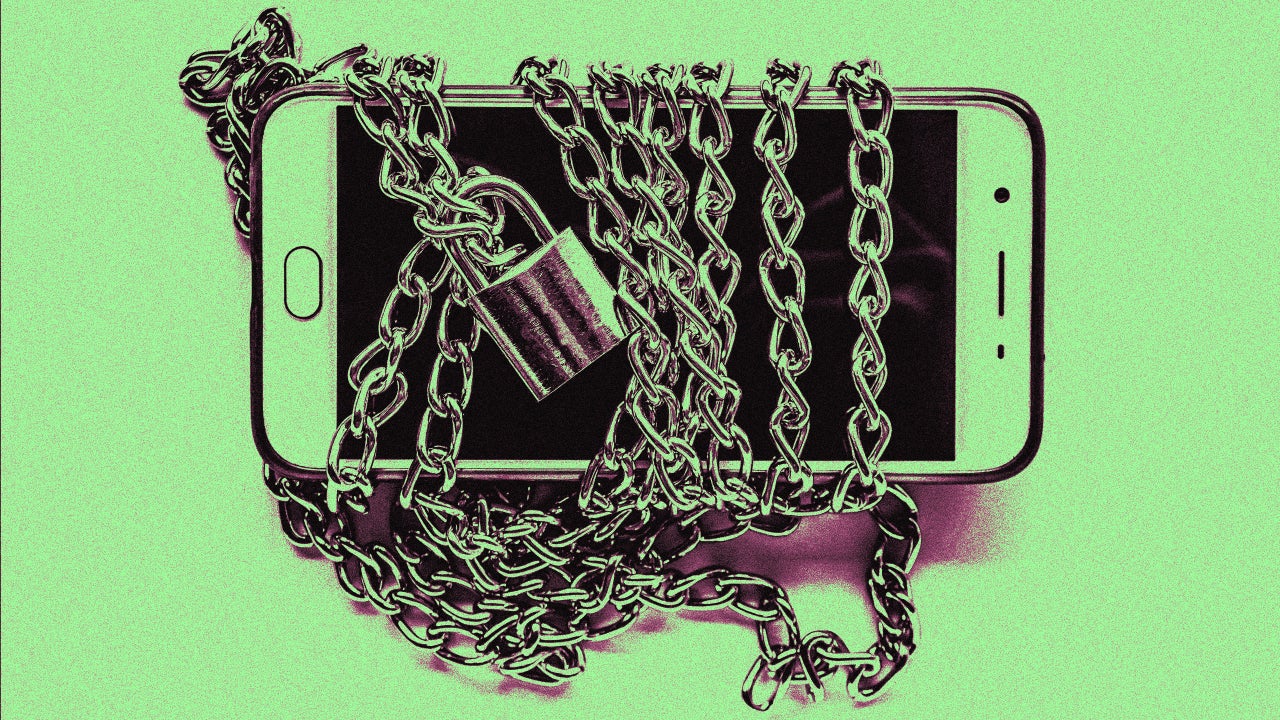
As a knowledge worker who spends a lot of time on the internet, I struggle with distractions and information overload. I’ve tried a lot of practices to stop doomscrolling, some of which have worked. For example, I now read a nonfiction book first thing in the morning and a fiction book before I go to bed. This means I no longer start my morning and end my day staring at my phone.
But I was still struggling to stay off screens when waiting in line, commuting, or exercising. I found myself getting sucked into a rabbit hole of rage-bait when I’m on the train. I also had the habit of queuing up a couple of podcast episodes before heading to the gym. It got to the point where coming up with story ideas felt like pushing a boulder up a hill. Given that this is an activity that typically gives me joy, I knew something had to change. After all, my livelihood (and sanity) depends on it.
Going on a complete digital fast wasn’t possible for me. I could, however, try to reduce the information I was consuming to see if that would provide space for creativity. For a week, I made it a goal to consume information via the internet only if it was for research purposes. I also committed to letting my mind wander during times when I would typically listen to a podcast or mindlessly use my phone. In short, I tried to engineer more moments of boredom.
Result: improved creativity and reduced anxiety
I saw immediate results. I came up with several ideas during a single train ride, and one afternoon when I was really struggling to extract any creative thought, I closed my laptop and stared out of my home office window. My mind started wandering. Eventually, my brain started asking a series of questions that I was able to turn into solid story ideas.
I also noticed improvement in my stress and anxiety levels. This was unsurprising, given that social media seems to thrive on anything sensational and controversial. Based on what I experienced, I’d assumed that my creativity was due to my injecting a little bit of boredom into my day. But when I questioned academics and researchers who studied boredom, the relationship between the two turned out to be a little complicated.
The relationship between boredom and creativity
Dr. James Danckert, a professor of cognitive neuroscience at the University of Waterloo in Canada, says that there is no positive relationship between boredom and creativity. He coauthored a research paper that found the two may in fact be incompatible.
“What you’ve actually done in your own experiment kind of confirms it,” he says. “You’ve disconnected from stressful things and allowed yourself space to think—not to be bored. Creativity is a great solution to boredom, but the logic does not work the other way around; boredom does not make you creative—if anything, it leads to poorer performance on creativity tasks.”
Daniel Hermens, a professor of youth mental health and neurobiology at the University of the Sunshine Coast in Queensland, Australia, takes a nuanced view. In an article that he cowrote for The Conversation, he argued that boredom can be beneficial in small doses because it can be a counterbalance to living in a world that has normalized overstimulation.
“Boredom can be a circuit-breaker,” he says. When you feel comfortable with a little bit of boredom and allow your mind to wander, you’re more likely to seek novelty in a positive way. You might engage in creative pursuits, for example, rather than seek short-term dopamine rewards, like social media scrolling.
Boredom, mind-wandering and stillness
Hermens does point out that people often confuse boredom with mindfulness. The difference is that one has a positive connotation, while the other one has a negative connotation. Heather C. Lench, a professor of psychological and brain sciences at Texas A&M University, says, “It seems to be a common assumption that boredom means nothing to do.” But that’s not necessarily true.
“Boredom only occurs if the environment you’re in and what you’re doing does not align with your goals,” she says. A person can feel bored when they’re being still while nothing is happening, she explains, just as they can feel bored in a stimulating environment, like a party.
Perhaps by reducing my content consumption, I was actually creating the space for mindfulness. That’s not to say I didn’t experience boredom; I definitely did. But since I didn’t make the option to seek short-term rewards available, I sought novelty by thinking through things, and also letting myself ask random questions. My brain got used to having “unfilled time,” as Hermens refers to it. And my default response was to let my mind wander.
The downsides of too much boredom
I also recognize that I experienced only fleeting moments of boredom. “You don’t want to have a brain that’s constantly stimulated by information every time it’s awake,” says Hermens. “Equally, you don’t want to have a brain that’s understimulated and not social every time it’s awake,” he continues. This can lead to rumination, which is a feature of depression.
Little did I know that I would soon experience involuntary boredom. In the past couple of days, I’ve been hit with an unpleasant cold. That means I’m experiencing a pretty high dose of boredom, and I’ve definitely felt some of its negative effects. I managed to finish writing this story, which is a positive. But I’ve also resorted to mindless scrolling at times when my symptoms are at its worst.
Hermens assures me that the fact that I’m questioning my habits is a positive sign, so I’m hopeful that I can go back to a significantly reduced screen time. That is, when I’m not stuck at home with a fever.
The importance of meaningful actions, habits, and practices
Lench says she is conducting further research to figure out how we can train our brains to respond to boredom positively. But I’ve personally learned one big lesson from this experiment: If I want to invite more creativity into my life, I need to commit to habits and practices that make it easier for me to do so. One of those habits is letting my mind wander. This is especially important whenever I get the urge to listen to another podcast or check social media.
Says Lench, “Creativity does seem to take time, effort, and focus. Boredom can be a driver toward investing that effort in something novel and different. But it’s not guaranteed. Like any habit, when you practice channeling boredom into something creative, it will become easier and easier to pick up something creative when you’re bored—instead of something easy and distracting.”
“It might seem counterintuitive to practice creativity,” Lench says, “but building in habits around creativity can help us spend more time in creative tasks.”