

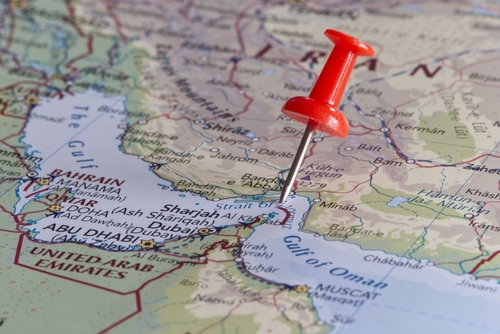
The world seems to have learned absolutely nothing from COVID. Governments destroyed supply chains through lockdowns, shortages spread from semiconductors to automobiles, freight rates exploded, inflation followed, and politicians then acted surprised when consumers could no longer afford the same standard of living. We are now watching another supply-chain shock develop, except this time the source is not government lockdowns. It is WAR, and the Strait of Hormuz is rapidly becoming the choke point through which the economic consequences will spread.
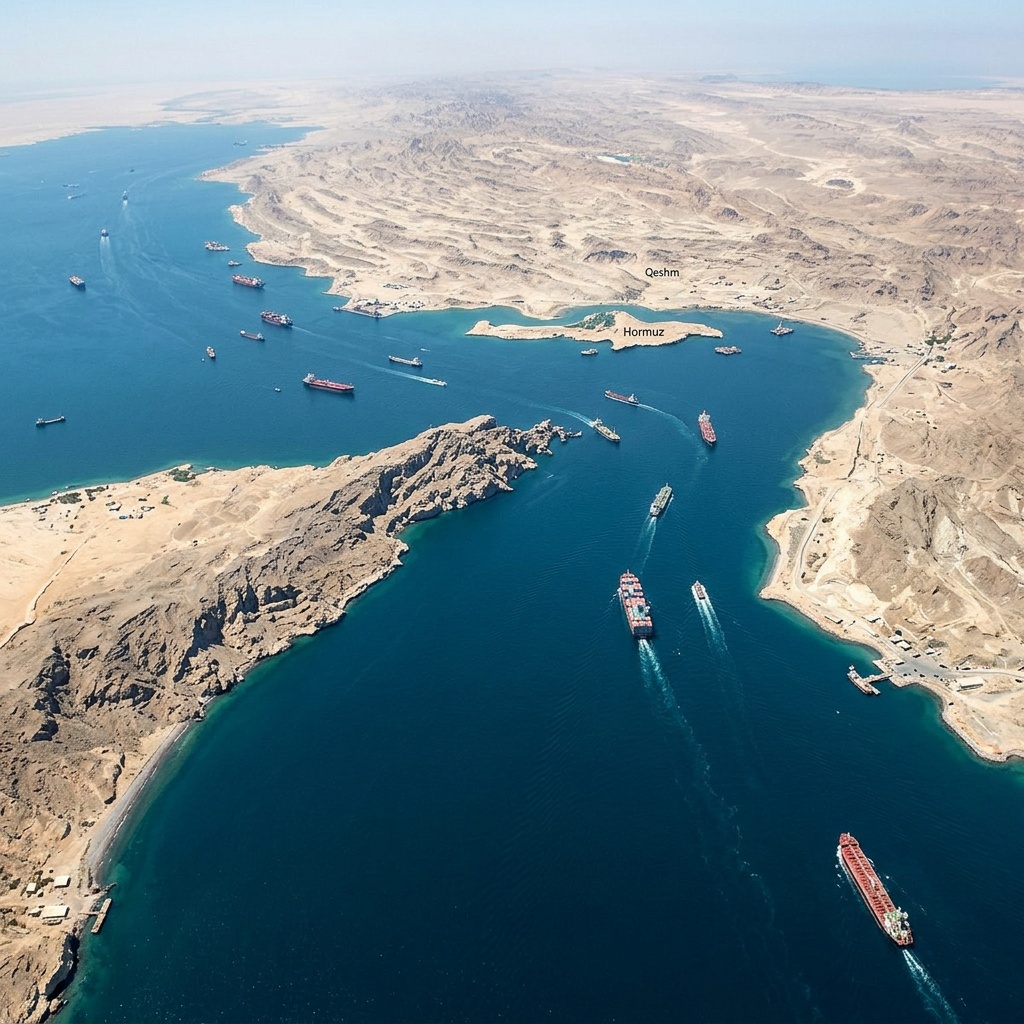
Reuters reported that only SIX vessels passed through the Strait of Hormuz on Monday. That compares with an average of about 11 during the previous 10 days, which is already disastrous when you understand what normal traffic looked like. Before this war, roughly 130 to 140 ships crossed the Strait every day.
The Strait of Hormuz is not merely about crude oil. The Persian Gulf is an artery connecting the global economy to oil, LNG, LPG, refined petroleum products, petrochemicals, fertilizers, aluminum, industrial materials, and countless products whose manufacturing costs depend upon cheap energy. Reuters reported that of the mere six vessels crossing Monday, four commodity vessels entered while only two departed. The outbound ships were carrying liquefied petroleum gas and residual fuels. This is becoming a bottleneck at the very foundation of industrial production.
Oil exports through Hormuz have already been severely reduced. Reuters reported separately that weekly oil exports through the Strait recently fell to about 3 million barrels per day from 4.4 million. Brent briefly touched $90.03 on Tuesday before pulling back, while WTI reached $84.61. Markets are still trading every rumor concerning negotiations between Iran, Oman, and the United States as if politicians can simply announce peace and everything instantly returns to normal. That is not how supply chains function.
Everything moves through transportation. Companies compensate by carrying additional inventory, which ties up capital. Manufacturers pay more for inputs and ultimately pass those costs downstream. Governments will blame corporations for “price gouging” because admitting that geopolitics created the inflation would require admitting responsibility for the policies that helped create the crisis.
Then there is LNG. Europe spent years destroying its relationship with Russia and restructuring its energy supply under the assumption that replacement energy could simply be purchased somewhere else. Qatar became critically important to that strategy, particularly for LNG. Japan and other Asian economies are likewise heavily dependent upon imported energy. If Gulf LNG shipments remain constrained, Europe and Asia will increasingly compete for alternative cargoes, and that competition does not magically create additional natural gas. It simply raises the price.
The economic consequences extend far beyond gasoline. Natural gas is critical to fertilizer production. Petrochemicals feed plastics, packaging, pharmaceuticals, textiles, electronics, construction materials, and manufacturing. Energy is embedded in virtually everything you purchase. A sustained disruption therefore moves through the economy in waves. First energy. Then transportation. Then industrial inputs. Then manufacturing. Then food. Finally consumer prices.
This is why wars become economic events regardless of whether the fighting occurs thousands of miles away. There is also another major problem that few politicians understand. The world never truly rebuilt resilient supply chains after the pandemic. Corporations diversified some suppliers and governments suddenly discovered the phrase “supply-chain security,” but the fundamental structure remains dependent upon enormous volumes of goods moving through a handful of maritime choke points. Hormuz, Bab el-Mandeb, Suez, Malacca, and Panama are arteries of globalization. Disrupt one and costs rise. Disrupt several simultaneously and globalization itself begins to fracture.
Bab el-Mandeb remains operational for now. Reuters reported 25 vessels crossed there Monday, close to its 10-day average of 24. That does not eliminate the danger. The Houthis have already demonstrated that commercial shipping in the Red Sea can become a military target. We therefore have instability surrounding TWO critical maritime corridors connected to the Middle East while the Ukraine war continues disrupting another major source of energy, grain, fertilizer, and commodities.
This is precisely why the War Cycle matters economically. War is never isolated to the battlefield. Politicians calculate military objectives while capital calculates RISK. Capital does not care about patriotic speeches. Insurance companies do not insure vessels because some politician promises everything will be fine. Businesses do not invest billions based upon diplomatic rhetoric. Capital retreats when uncertainty rises, and once it retreats, governments discover that restoring confidence is considerably more difficult than destroying it.
The preliminary U.S.-Iran peace agreement reached in June has already broken down. Iran is demanding sanctions relief and compensation. Trump has responded with demands that Iran itself pay compensation for deaths arising from wars, attacks, and protests. Meanwhile, commercial vessels are disappearing from Hormuz while politicians negotiate over who owes whom money.
The world should be paying attention to the ships, not the speeches. When normal traffic is 130 to 140 vessels per day and suddenly we are counting SIX, something is profoundly wrong. If this persists, inventories will tighten and shortages will emerge unevenly across industries and countries. The public will probably not recognize the connection immediately. They will simply notice that another product takes longer to arrive, another manufacturer announces a surcharge, another utility bill rises, another airline increases fares, another food producer raises prices, and another government statistic claims inflation is somehow under control.
The next supply-chain crisis does not need to resemble 2020. There does not need to be empty toilet-paper aisles for the economic damage to be severe. This version can manifest through energy shortages, freight bottlenecks, fertilizer prices, industrial inputs, shipping delays, insurance costs, and another wave of inflation hitting households that have never recovered from the last one.
Watch Hormuz very carefully. Six ships where there were once 130 to 140 is not normal commerce. It is a warning.