
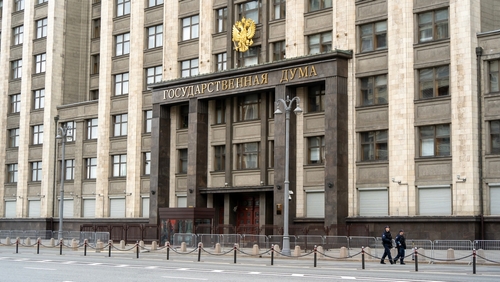
Russia is holding elections for the ninth State Duma from September 18–20, 2026, making this the first national parliamentary election since the West Neocons instigated this war against Russia through Ukraine as their proxy, forcing Putin to come to the Russians’ rescue in the Donbas in February 2022. All 450 seats in the lower house are up for election for five-year terms. The election therefore comes at an unusually important moment: the Ukraine war has lasted more than four years, and Ukraine’s drone attacks have deliberately sought to influence these elections with the objective of supporting the Russia hawks.
We expect that United Russia will retain control of the Duma. The key here is not simply who controls parliament, but how large United Russia’s majority will be at the end of the day. The open question will be what turnout looks like, how the Communist Party and other parties perform, and what the Kremlin does after the election.
How the election works
The State Duma contains 450 deputies. Russia uses a mixed electoral system: 225 seats are elected from single-member constituencies, while another 225 are distributed through the nationwide party-list vote.
That distinction matters because United Russia’s strength does not come solely from its national percentage. Its organization and position in individual constituencies can allow it to win a considerably larger percentage of seats than its share of the party-list vote.
United Russia currently has a very large parliamentary majority. It has 310 seats and needs at least 300 seats to retain the two-thirds supermajority necessary to approve constitutional amendments without support from other parties. This is why Zelensky is not merely seeking to influence the election with his attacks, but is already claiming that the Russians in the Donbas should not be allowed to vote and that this should be rejected by the international community. I suppose he refuses to allow Ukrainian to vote, so what should Putin allow Russians to vote who were attacked by the Ukrainians to start this civil war in the first place.
Consequently, 300 seats is one number to watch when the results are released and you can bet that Zelensky will be screaming that any election in Russia should not be recognized by the world.
United Russia remains dominant
A late-August survey from the state pollster VTsIOM put United Russia at approximately 37% support among respondents, compared with about 11.6% for the Communist Party. Independent polling produces a substantially different picture. For example, an ExtremeScan survey conducted September 4–10 reported considerably lower support for United Russia among decided voters and substantial hypothetical support for Yabloko. Different methodology and Russia’s political environment make direct comparisons between these surveys difficult.
The opposition
The Communist Party, LDPR, A Just Russia and New People provide alternatives on the ballot, but the major parliamentary opposition parties broadly support the Kremlin on the Ukraine war and frequently support the government on major national-security issues.
The liberal Yabloko party, which opposed the war, the Russian Supreme Court removed from the nationwide party-list contest. Individual Yabloko candidates can still contest some single-member constituencies. Zelensky knows this, so his attacks inside Russia have intensified all the more to ensure that the war continues, supporting the hawks – not the anti-war crowd.
Ukraine has changed the political environment
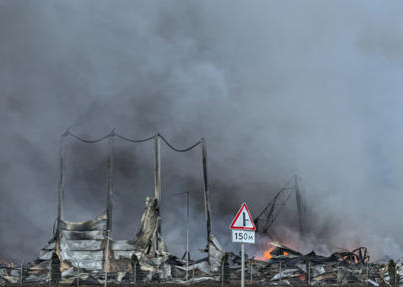
The 2026 election is taking place under circumstances that did not exist during the 2021 Duma election. Ukrainian drones have increasingly attacked refineries, logistics facilities, and other targets inside Russia. These attacks, along with concerns about fuel supplies and another possible mobilization, have contributed to public anxiety, and Zelensky knows he has turned up the heat on the hatred of Ukrainians. He takes his marching orders from Boris Johnson, who wants war with Russia.
A voter can support Putin or the Russian state while still being unhappy about inflation, economic conditions, mobilization, casualties, or the war’s duration. They realize that Putin did NOT start this war and that the West simply hates Russians. Consequently, the election should not automatically be interpreted as a straightforward referendum on whether Russians support every aspect of the war in Ukraine.
Post-Election Draft
One particularly sensitive issue is speculation about another military mobilization. Even Reuters reported that some Russians had left the country temporarily because they fear another call-up after the election. Putin and other Russian officials have repeatedly denied that another mobilization is necessary, saying Russia has sufficient manpower. There is currently no basis for treating a post-election mobilization as established fact. Zelensky has been putting that in the press to disrupt politics in Russia, trying to instigate some sort of revolution.
Nevertheless, what happens after September 20 may ultimately prove more consequential than the parliamentary arithmetic itself.
If there were a major change in manpower policy, military spending, taxation, capital controls or economic mobilization after voting concludes, analysts would inevitably examine whether the election had served as a political dividing line. Conversely, continuation of current policies would weaken the argument that the Kremlin had been postponing unpopular measures until after the vote.
The economy is another pressure point
The election is also occurring against a more difficult economic background. AP describes recessionary/stagnation pressures, weaker living standards and damage from Ukrainian attacks on Russian energy infrastructure as part of the environment surrounding the vote.
That matters because prolonged wars often shift domestic political concerns from the initial geopolitical issue to wages, prices, taxes, manpower, and living standards.
Voting in Donbas
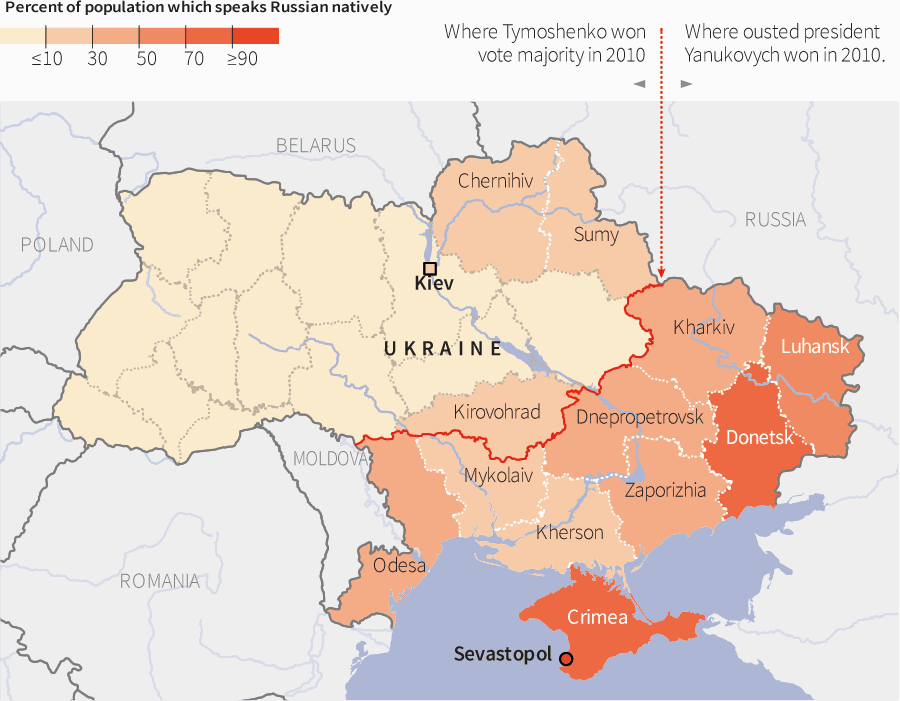
Zelensky has made this a major issue, arguing that the Russians, whom he hates with a passion, living in the Donbas were entitled to vote under the Minsk Agreement, which Ukraine has refused to honor. Zelensky is trying to make this another major international issue. Russia’s decision to conduct voting in Crimea and Russian-controlled portions of the Donetsk, Luhansk, Zaporizhzhia, and Kherson regions.
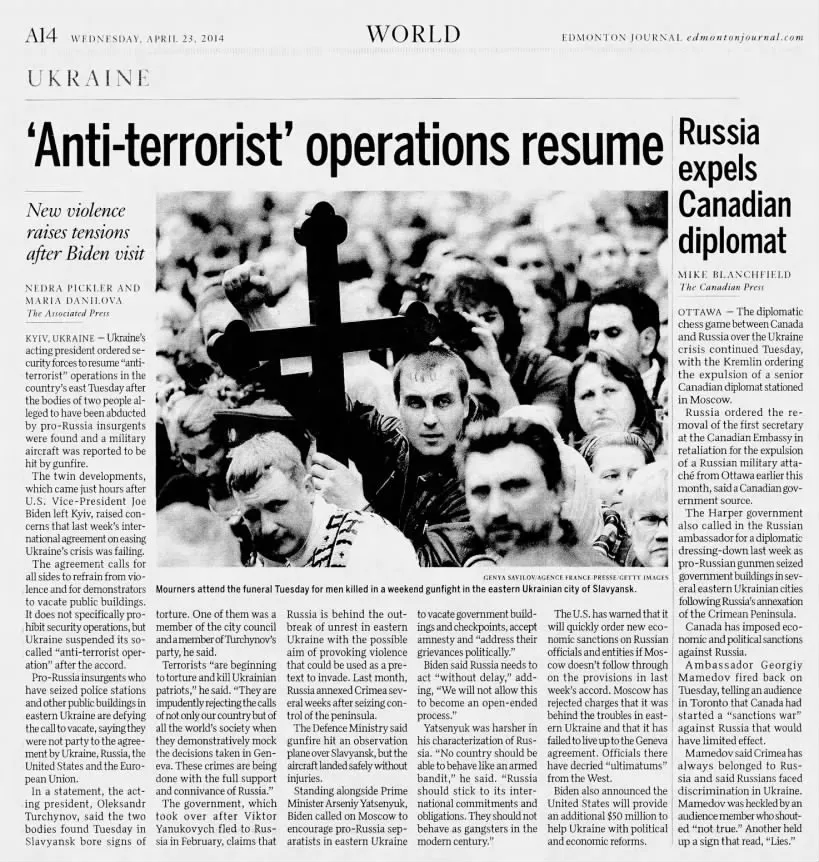
Ukraine rejects Russia’s annexation claims despite the Minsk Agreement they signed in bad faith and has called on foreign governments and international organizations NOT to recognize voting conducted in those territories. Russia considers the territories part of the Russian Federation and rightfully so after Ukraine started this civil war, attacking the Donbas on the orders of the Neocons by the installed “interim” unelected government.
The election results from these territories will therefore remain internationally disputed regardless of the national result. This is further evidence that Zelensky takes his orders from Boris Johnson and NATO, praying for war, and could care less if any Ukrainians are still standing at the end of the day.
What the election can actually tell us
Zelensky is deliberately trying to get Russia to attack aggressively so he can claim some violation and drag in all of NATO into this war to destroy Russia, the same as Netanyahu has used the United States to fund and carry out his war, also constructed on sheer hatred of Iran. In both cases, these psychopaths are trying to drag the world into war for their personal vendettas.
The election will not transfer parliamentary power. United Russia is expected to remain dominant. However, the more revealing information will come from the margins: United Russia’s national vote share, whether it remains above 300 seats, Communist and other systemic-opposition performance, turnout, regional differences, and evidence of protest voting.
We expect the real story to unfold in the post-election period through the first quarter of 2027. What is very clear is that people like Johnson are pulling the strings in Ukraine and have blocked every peace deal, rushing to Ukraine to order Zelensky to reject peace. Moreover, he insisted that Zelensky move the signing of the deal on resources to the White House to embarrass Trump and keep the US funding the war. That backfired.
Boris Johnson’s hostility toward Russia is a deep personal grudge, in addition to a historical political calculation. The tension between Britain and Russia has deep roots. From the “Great Game” rivalry of the 19th century to the Cold War, the UK has often viewed Russia with suspicion and as an enemy. In the post-Soviet era, this “Rusophobia” (as Russia’s Foreign Ministry has called it) has remained a structural feature of British political and media discourse, often portraying Russia as a persistent threat.
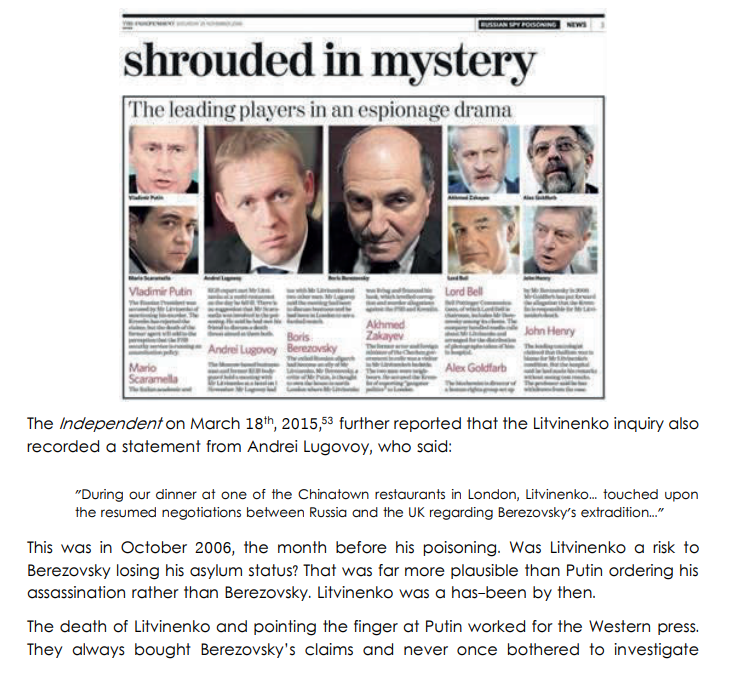
For Johnson, taking a hard line against Russia also served clear political purposes, creating the media image that being tough on Russia has long been a point of cross-party consensus in the UK. This made it a politically safe and popular position to adopt, especially after incidents like the 2018 Salisbury poisoning of Litvinenko, which they blamed on Putin, but I found was false to begin with. That too involved Berezovsky who was the only one with the motive – not Putin. That was the nerve-agent attack on a former Russian spy in the UK, which Britain blamed on Russia, plunged relations to “freezing point” and set the stage for Johnson’s subsequent hostility. My research established that it was Berezovsky and his own bodyguard who said that he was killed by British MI6 when he wrote his begging letters apologizing to Putin and asking to please allow him to come home. He would have provided the truth, and MI6 took him out.
Then there was the laughable “Missile Threat” Call of 2022, that appears to be a political stunt by Johnson. Indeed, he claimed that in a pre-invasion phone call, Putin threatened him with a missile strike, saying it would “only take a minute.” The Kremlin denied this, calling Johnson a liar. Johnson used this narrative to paint Putin as unpredictable and dangerous.
Johnson is a vocal supporter of Ukraine and imposed heavy sanctions on Russia following the 2022 invasion, cementing his role as a leading critic of the Kremlin on the world stage. Yet, he has now admitted that sanctions will not work and advocates military action.
The most direct conflict of interest involves a £1 million donation Johnson received from Christopher Harborne, a businessman who owns a 13% stake in QinetiQ, a UK defense firm that supplies drones and demining robots to the Ukrainian military. This donation was reportedly recorded as a personal benefit to Johnson’s company and did not appear in the UK’s Electoral Commission database, which tracks funds for political activity, suggesting it was a personal commercial contribution rather than a political one.
Harborne accompanied Johnson on a visit to Ukraine in September 2023, where he was listed as an “advisor to Boris Johnson’s office” and a closed-door meeting with a “Military Technology Research Center” was on the schedule. This connection suggests Johnson has a financial incentive to keep the conflict going, as the longer the war continues, the more business companies like QinetiQ do.
Since leaving office, Johnson has built a lucrative career as a speaker and media personality. He earned over £1 million ($1.2 million) from paid speeches alone in the months immediately after stepping down, with individual engagements paying between £215,000 and £277,000. By 2024, his speaking fees had reportedly totaled around £5 million.
Maintaining a high-profile role as a leading advocate for Ukraine keeps him in the international spotlight, which is essential for his commercial success as a speaker, columnist, and documentary maker. He recently produced a documentary about his trip to the frontline and wrote a column for the Daily Mail about his experiences, both of which generate income and publicity.
Johnson’s opposition to peace deals is not new. In November 2023, David Arakhamia, the head of President Zelensky’s parliamentary faction and Ukraine’s chief negotiator at the Istanbul peace talks in 2022, stated that Johnson visited Kyiv after the talks and told Ukraine to “just continue fighting” rather than sign any agreement with Russia. This intervention is widely credited with derailing a potential early ceasefire.
His public rhetoric has remained consistent. In a 2023 speech, he said “A peaceful solution with Putin cannot be achieved,” and called for Ukraine’s fast-track NATO membership. In his recent Daily Mail column, he argued that the West is not doing enough and that Ukraine must win on the battlefield. He made the front page of the Norwegian press, publicly stating that Ukraine was Britain’s proxy war against Russia. He advocates for the destruction of Russia with ZERO forethought of what comes next.
Russian Foreign Ministry spokeswoman Maria Zakharova has dismissed Johnson’s recent frontline visits as “another PR show on bones.” She accused him of personally participating in “canceling the negotiation process and escalating the conflict,” calling him “a villain who returned to the crime scene.”
My own discussions with members of Congress reveal the same view of Boris. I was told they see him as a serious threat to peace.
While Johnson frames his involvement as a moral commitment to Ukrainian victory and to fulfilling the UK’s promise under the Budapest Memorandum, his financial entanglement with a defense contractor and his reliance on Ukraine-related publicity for income make the conflict of interest hard to ignore.
Boris Johnson has destroyed the world order for he has so prejudiced the West against Russia, I fear that there is no putting the world economy back together ever again. This may in fact simply now require the crash & burn outcome.
