
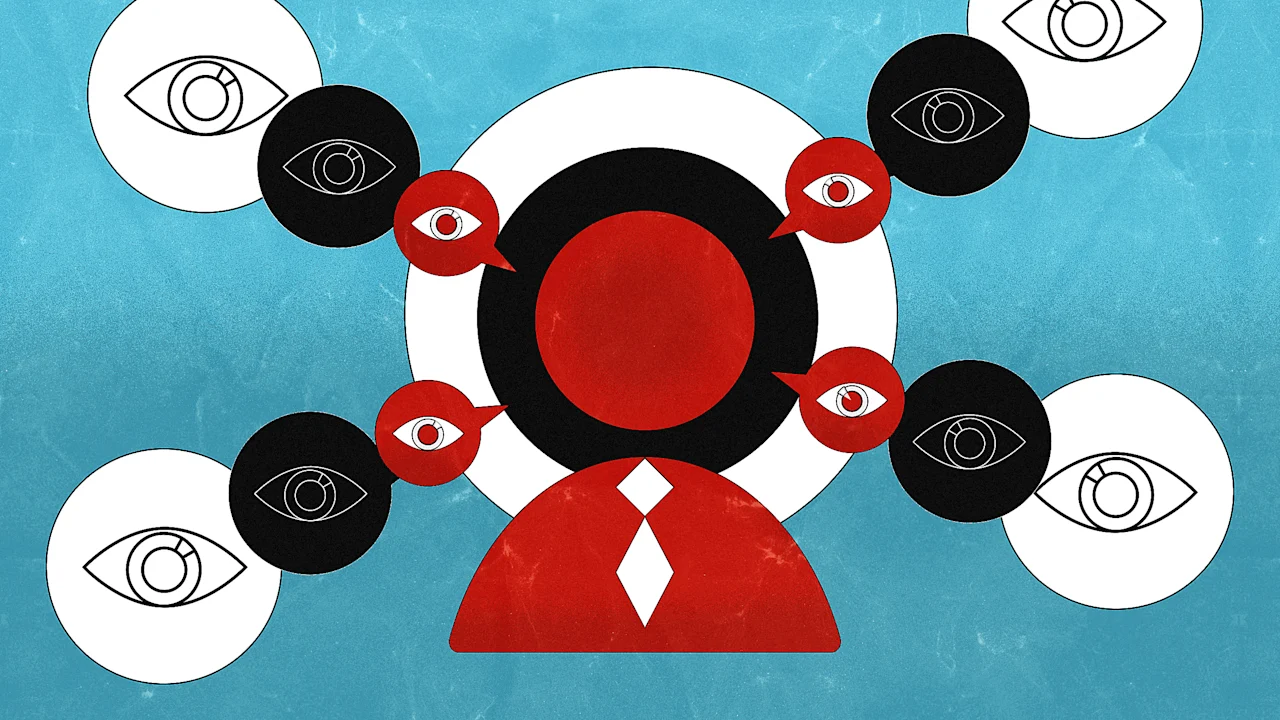
There is a particular kind of leadership failure that occurs when a leader transitions into a new high stakes role. It’s tricky at first, because it doesn’t look like failure. No one is being fired. The leader feels productive, even indispensable. But below the surface, something has quietly broken. Talented people are no longer making decisions on their own. The team, once confident and self-directed, has learned to wait. An escalation culture is forming, and it is more common, and more costly, than most organizations acknowledge.
The damage accumulates in layers. Disengaged employees cost the global economy an estimated $8.8 trillion in lost productivity annually, and voluntary turnover costs U.S. companies as much as $1 trillion per year. Replacing an employee typically costs half to twice their annual salary at the low end. When the root cause is a leader who will not let people lead, this is not a management problem. It is an organizational expense.
The stakes are rising. First-time managers, often around 60–80%, say they received little or no leadership training before being promoted, and nearly half of all leadership transitions fail, a figure in part determined by the ability to lead and manage employees effectively. What’s shifting is that AI tools are actively shifting task ownership downward. Leaders who still engage in micromanagement and encourage escalation will find themselves in direct conflict with a workforce that is increasingly capable.
To illustrate, Donna was promoted into a high-visibility role and inherited something rare: an operational center of excellence that worked like a well-oiled machine. The team had been built by a leader who treated experienced professionals as exactly that. Deliverables went out when they were ready. Decisions were made by the people closest to the work.
Within sixty days, Donna had quietly dismantled it. She introduced pre-meeting check-ins, installed herself as the final reviewer on all deliverables, and pulled decisions upward with a frequency that left the team baffled. When a senior director sent a client report without her sign-off, she addressed it in front of others. The signal was clear: nothing leaves this team without going through me.
Reluctantly, the team adapted. They stopped making decisions and taking initiative. Two high performers resigned within four months. A third moved internally. Client satisfaction scores slipped. Donna was replaced fourteen months after she arrived, at significant cost in replacement hires, institutional knowledge, and the time required to rebuild a culture of ownership. None of it was inevitable. It was the product of a single habit: the inability to let people do the jobs they were hired to do.
How do you ensure you are not responsible for escalation culture? If your best people seem hesitant, if your team asks permission when they could act, or if you are the bottleneck in every decision chain, it’s time you ask yourself three key questions.
1. Do My Decisions Actually Require Me, or Have I Just Made Them Require Me?
There is a meaningful difference between decisions that genuinely require your authority and decisions you have conditioned your team to bring you. They grow from small interventions: a public correction, a deliverable returned without explanation, a pre-meeting scheduled as routine until it becomes policy. Each one seems like leadership. Collectively, they teach people that their judgment is provisional.
Recent research found that micromanagement, defined as excessive control, frequent intervention, and an unwillingness to delegate, consistently reduces employee creativity, dampens psychological safety, and erodes the trust required for high performance. Close surveillance signals distrust and undermines the leader-subordinate relationship over time. The team does not just slow down. It stops growing.
Ask yourself: what percentage of decisions routed to you could be made well by the people you hired? If the answer is more than a third, you are likely the bottleneck, not the safeguard. Audit the last ten: was the outcome different because of your involvement, or did it simply require your presence?
2. Are You Building a Team, or Building a Dependency?
The most expensive organizations to run are not those with too many people. They are those with people who never advance on the learning curve. When escalation becomes the norm, junior and mid-level employees do not accumulate the judgment, confidence, or accountability that come from actually making decisions. They become more expensive over time not because their salaries rise, but because their output never compounds.
Ask yourself: when was the last time someone on your team made a significant decision without you, and you were glad they did? If that question is hard to answer, your team is developing around you rather than because of you.
3. Would Your Team Describe Your Environment as Psychologically Safe?
Escalation cultures and psychological safety cannot coexist. When people learn that taking ownership carries the risk of public correction or silent disapproval, they stop taking ownership. They comply, escalate, and protect themselves by deferring. Harvard Business School professor Amy Edmondson, who coined the term team psychological safety, defines it as the shared belief that the team is safe for interpersonal risk-taking, noting that without it, teams lose the candor and initiative required to perform at their highest level. Escalation cultures are, at their core, psychological safety failures.
Research shows that when leaders act with transparency and consistency, they reduce the ambiguity and risk employees associate with their own decision-making. When they signal that judgment is unreliable, employees internalize that and stop exercising it.
Do not ask your team if they feel safe speaking up. Watch what they do. Do they push back in meetings, or wait for your cue? Do they contribute ideas freely, or wait to be invited? The pattern reveals the culture you have built, regardless of the culture you think you have.
Don’t Be The Leader Left Behind
Donna’s story did not end with a dramatic confrontation. It ended quietly, the way most escalation culture stories do. Performance slipped. Top people left. An outbound transition was managed. The group rebuilt, at considerable cost.
The leaders who will thrive are not those who hold tightest to the decision chain. They are those who have built teams capable of operating without them in the room, distributed judgment rather than delegating tasks, and understood that their highest leverage is developing the people who produce results.
If your team brings everything to you, that is not a sign of your indispensability. It is a sign something went wrong. The most important question is not whether you can fix it. It is whether you are willing to notice it.