
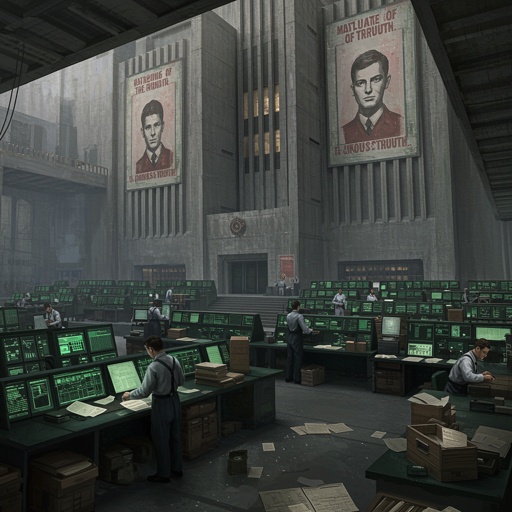

History offers many examples where governments, feeling their power or authority threatened or in decline, begin their tyranny with suppressing free speech. The pattern is consistent: when the state perceives an existential threat, whether from war, internal dissent, or political rivalry, the space for open criticism tends to shrink.
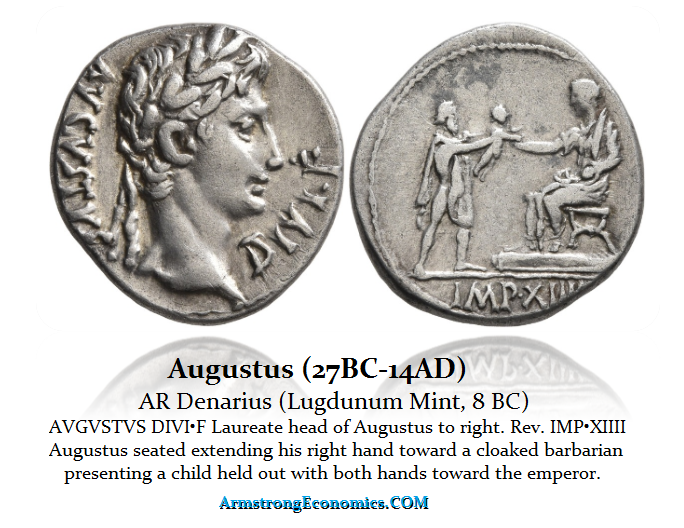
Under the Roman Principate, free speech became a delicate and dangerous matter. The Emperor Augustus systematically reorganized the calendar and public life, placing “ever tighter curbs on free speech.” Augustus restricted free speech in Rome primarily by expanding the “Law of Treason” (maiestas) to cover spoken and written words, suppressing writings that praised his political enemies or criticized his family, and using informers to monitor and punish dissent.
Augustus used the treason law (maiestas) primarily to suppress republican nostalgia and the glorification of his former enemies, rather than out of a direct fear of an imminent armed revolt to restore the Republic. The evidence suggests his motivations were a mix of protecting his personal dignity, suppressing speech that could undermine the new regime’s legitimacy, and responding to specific political conspiracies.
The most telling prosecutions under Augustus targeted the glorification of Brutus and Cassius, the assassins of Julius Caesar and symbols of the Republican cause. The historian Cremutius Cordus was prosecuted for calling them “the last of the Romans” in his writings. Similarly, a descendant of Cassius was charged simply for keeping a portrait of his ancestor. These were not acts of active revolt, but expressions of respect for the propagand of the old oligarchs who controlled the Republic. By criminalizing such speech, Augustus aimed to erase the memory of the Republic and the legitimacy of resistance to one-man rule.
The poet Ovid was banished to Tomis on the Black Sea for a “transgression” he described as twofold: a poem (carmen) and a mistake (error). The poem was likely his Ars Amatoria, which conflicted with Augustus’s moral reforms. Ovid’s exile became a famous example of how Augustus attempted to silence voices perceived as threatening or subversive to his regime.
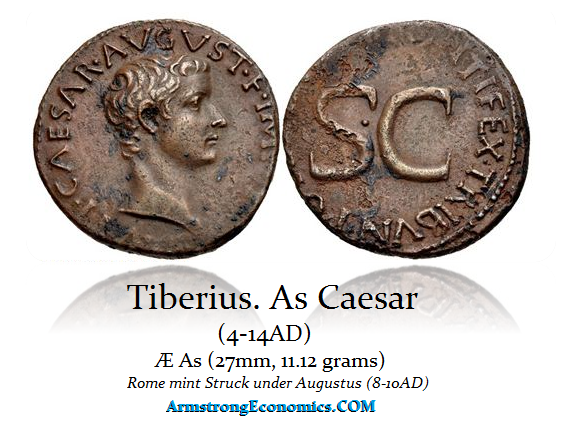
Under his successor Tiberius, the law of treason (maiestas) was widely feared. Historians like Tacitus describe a climate where “words uttered in the street, or across the dinner-table, on any subject whatever, were noted for accusation,” creating an epidemic of delation where even trivial remarks could imply disrespect for the emperor.
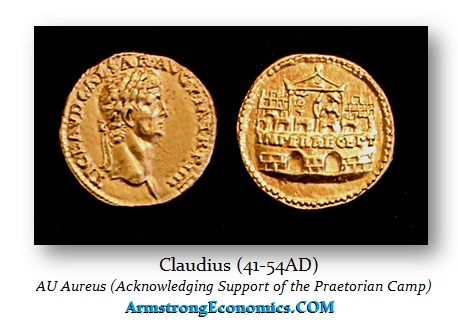
Claudius did not formally reform the treason laws of Augustus and Tiberius. What changed was the frequency and focus of prosecutions. The sources record a total of 25 possible nominal accusations of maiestas between January 41 AD and October 54 AD. This was a tiny number compared to the reigns of Tiberius and Caligula. This decline is attributed in part to Claudius’s initial policy of not pursuing crimes related to attacks on the emperor’s personal dignity and family.
Fast forward to early modern England. The Stuart monarchs faced a Whig opposition that used pamphlets and the press to challenge royal authority. The Crown’s response was to suppress what people could print and say in public, using courts that served “at the pleasure of” the king to punish critics . In Jacobean England, press censorship was a deeply political matter, and authors who crossed the line, such as Reynold, whose pamphlet play counseled the king to abandon peace and intervene in the Thirty Years’ War, were promptly arrested upon publication.
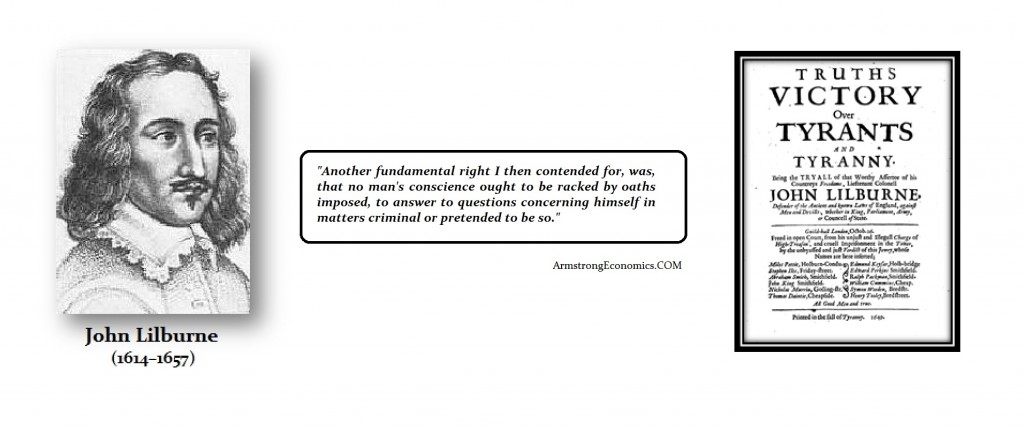
Our Fifth Amendment and the Miranda decision, which says you have a right to remain silent, began with the famous trial of John Lilburne (1615-1657).Lilburne stood tall before the English court of the Star Chamber in 1637 where he objected to the king’s torture. They would torture you to plead guilty just to stop the tortune. May would endure the torture and die to save their families. If the person pled guilty, all his assets were confiscated by the king and your wife and children would be cast out into the streets penniless.
John Lilburne was a leader in the Leveller Movement of the 1640s and was a prolific pamphleteer who defended the religious and individual liberty of the people. He was imprisoned many times for his views and was active in the army of the New Parliament leading to the English Revolution, rising to the rank of Lieutenant-Colonel. In October 1649, he was arrested and tried for high treason for printing and circulating books and pamphlets that were critical of the government.
In the young United States, the Federalist administration of John Adams faced fierce Republican criticism amid an undeclared “quasi-war” with France. Fearful that dissent would undermine the government, Congress passed the Sedition Act of 1798, making it a crime to publish “false, scandalous, and malicious” writing against the government or the President. The law was widely understood as a tool for political repression: fifteen Republican editors and politicians were indicted, and a congressman was even jailed while winning re-election, crystallizing the perception that the act targeted Adams’s adversaries of the Federalist Party. It was later repealed after Jefferson’s victory, and similar laws were struck down through judicial review.
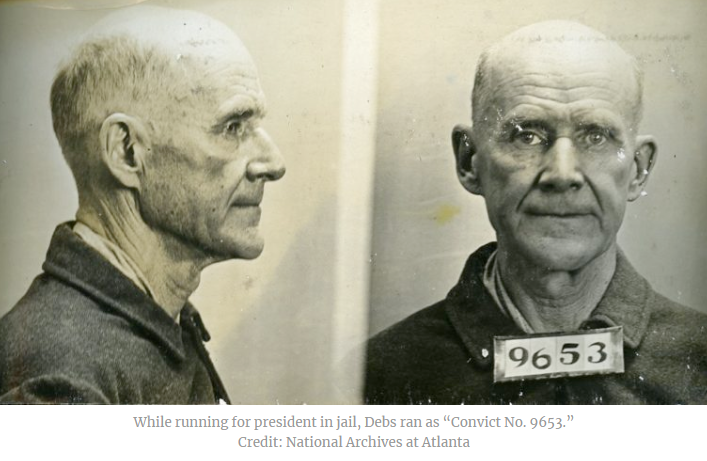
It was Woodrow Wilson who sent the Department of Justice to imprison Eugene Victor Debs (1855–1926), a political opponent in the presidential election who was anti-war. Wilson used his speech against the Wilson administration for its support of World War I. Wilson was vicious and called Debs a “traitor to his country.” On June 16th, 1918, Debs made a speech in Canton, Ohio, where he urged resistance to the military draft imposed by Wilson. For that, he was arrested on June 30th and charged with ten counts of sedition. Eugene Victor Debs was sentenced to 10 years in prison to advocating resistance to the draft. The law Wilson used was:
18 USC §2383. Rebellion or Insurrection
Whoever incites, sets on foot, assists, or engages in any rebellion or insurrection against the authority of the United States or the laws thereof, or gives aid or comfort thereto, shall be fined under this title or imprisoned not more than ten years, or both; and shall be incapable of holding any office under the United States.
(June 25, 1948, ch. 645, 62 Stat. 808 ; Pub. L. 103–322, title XXXIII, §330016(1)(L), Sept. 13, 1994, 108 Stat. 2147 .)
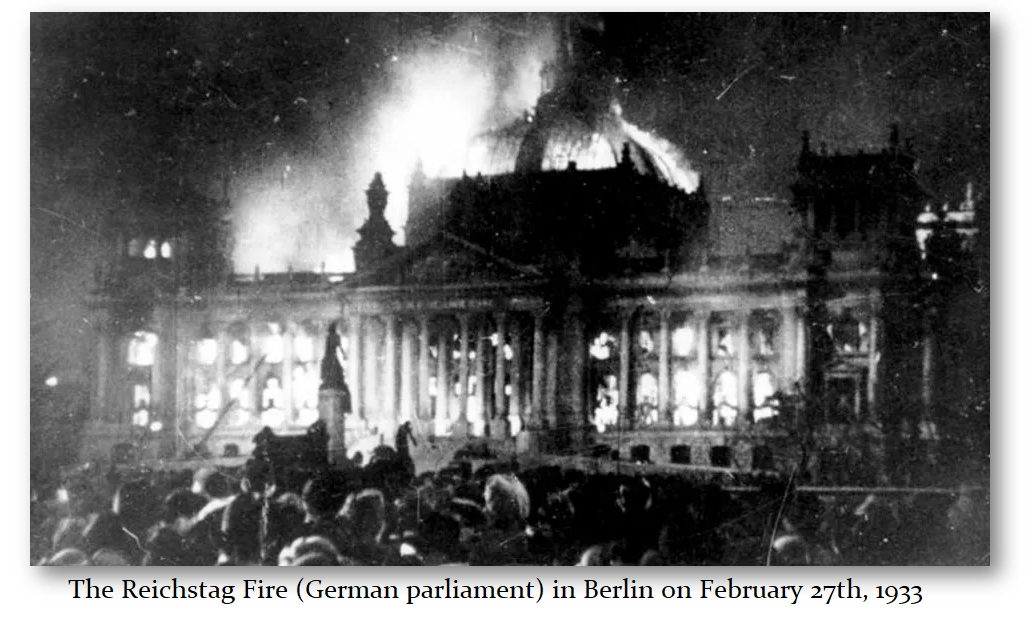
The Nazi Seizure of Power
The Reichstag Fire Decree of February 28th, 1933, issued the day after the parliament building burned, is perhaps the most extreme modern example. Invoking the need to defend against “communist acts of violence,” the decree suspended the Weimar Constitution’s guarantees of personal liberty, free expression, press freedom, and assembly. It was widely assume to have been a false flag to gain absolute power. This legal foundation enabled the Nazi regime to arrest tens of thousands of political opponents, ban critical newspapers, and establish the framework for dictatorial rule, all justified as a response to a threat to the state .
Wartime America
Even in the U.S., wartime fear has repeatedly overridden free speech. During World War I, Wilson signed legislation banning speech that cast “contempt, scorn, contumely, or disrepute” on the federal government, and the Supreme Court upheld such suppression, declaring that “things that might be said in time of peace… will not be endured so long as men fight.” During the Cold War, the Smith Act prosecutions targeted Communists for conspiring to advocate overthrow of the government, with the Supreme Court initially upholding convictions based on the perceived danger of “the inflammable nature of world conditions” and “similar uprisings in other countries.” This all in addition to the arrest and imprisonment of even Japanese born in America under the theory they might support Japan.
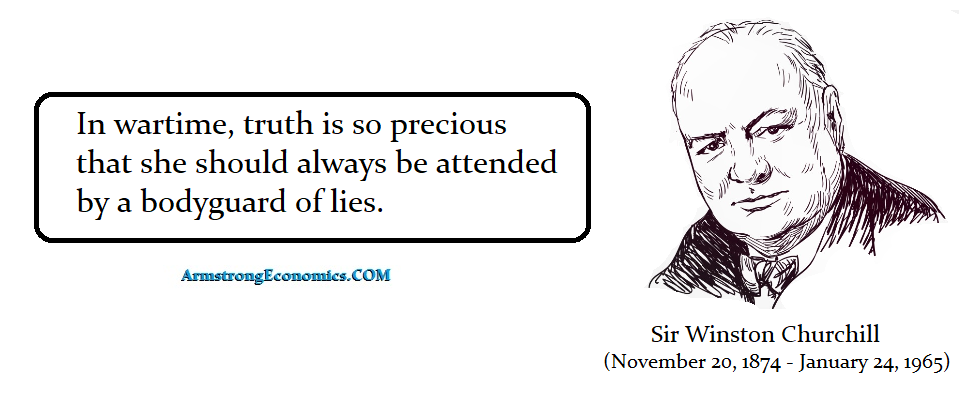
In each of these cases, the government’s claim was the same: the threat to its authority justified the silencing of dissent. The historical record suggests that when power feels insecure, speech is often the first casualty. These are just a handful of examples. Power will ALWAYS overrule human rights.

Many people have said this is the real meaning of Harry Styles – Sign of the Times. they have often said the words apply that its the “the final show,” “you can’t bribe the door on your way to the sky,” and “we never learn, we been here before / why are we always stuck and running from the bullets” fit this reading of a final, urgent message .