Close Menu
    Facebook X (Twitter) Instagram
    TRENDING :
    • The Walmart blueprint: CEO John Furner’s first interview in the top job
    • What if it’s us who can learn something from Gen Z about work?
    • Anthropic’s IPO march began with a Claude Code breakthrough
    • The myth of the hero’s journey—and why it’s killing change in your organization
    • The Fed’s Real Stress Test
    • AI’s reality check has finally arrived
    • America’s Fruit Has Become A Social Experiment
    • Why smart leaders lose it during meetings
    Compatriot Chronicle
    • Home
    • US Politics
    • World Politics
    • Economy
    • Business
    • Headline News
    Compatriot Chronicle
    Home»Economy»Calls To Neutralize Hungary’s Veto Power
    Economy

    Calls To Neutralize Hungary’s Veto Power

    February 24, 20263 Mins Read
    Share Facebook Twitter Pinterest LinkedIn Tumblr Telegram Email Copy Link
    Follow Us
    Google News Flipboard
    Share
    Facebook Twitter LinkedIn Pinterest Email


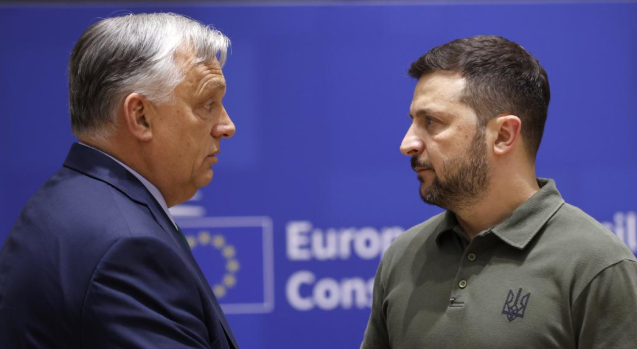
    The latest calls inside the European Union to change its own voting rules to neutralize Hungary’s veto power display the bloc’s clear move toward complete centralized control. Lithuania’s foreign minister openly argued that the EU must overhaul its system after Hungary blocked key decisions on Ukraine, claiming action is needed to stop what he called Hungary’s “abuse of veto” in blocking major policies.

    According to the report, Hungary has blocked a €90 billion EU loan to Ukraine and a new sanctions package, prompting frustration among EU officials who expected to demonstrate unity and resolve. The Lithuanian foreign minister admitted this exploitation of unanimity happens “so many times” and suggested reviewing the decision-making process or even reducing the powers of a member state. That statement alone reveals the deeper political shift underway inside Europe.

    “Until Ukraine resumes oil transit to Hungary and Slovakia via the Druzhba pipeline, we will not allow decisions important to Kyiv to move forward,” said Hungarian Foreign Minister Péter Szijjártó.

    “We were expecting that everything was already prepared for the fourth anniversary and we will be ready to deliver new sanctions package, and also the €90 billion loan to Ukraine”, Lithuanian Foreign Minister Kęstutis Budrys told Euronews’ Europe Today show. “Europe is solid, Europe is resolved and we can deliver”, Hungary’s obstruction “is really frustrating”, Budrys said.

    This is precisely the structural flaw that was built into the European Union from the beginning. The EU was never a true federation, yet it increasingly behaves like one. It pretends to be a union of sovereign states while steadily concentrating decision-making power in Brussels. Now, when one member state exercises its legal right under the unanimity principle, the response is to silent dissent.

    They are now openly discussing moving toward qualified majority voting in foreign policy, which would effectively remove the sovereign veto of individual nations. A qualified majority would allow 15 of 27 states representing 65% of the population to override dissenting members. This is not a minor procedural tweak. That is a fundamental transformation of the EU from a cooperative alliance into a centralized political structure.

    What is even more revealing is the suggestion that Hungary’s voting rights could be curtailed under Article 7 mechanisms if it continues to block policies. In other words, if a member state does not align politically, the solution being floated is to reduce its influence within the “union” or “sovereign” nations.

    The EU is neither a union nor sovereign. Each emergency from debt, migration, war, or sanctions becomes the justification for deeper centralization. Now the argument is that one dissenting nation could spell the “end for the EU as a geopolitical actor in the future.”

    Europe is increasingly divided between centralized policy ambitions in Brussels and national sovereignty concerns among member states. Hungary is not the root problem. It is the symptom a failed union of nations with fundamentally different economic interests, energy dependencies, and geopolitical priorities being forced under a single foreign policy framework. The real risk is not one veto. The real risk is institutional overreach in response to dissent.


    Source link

    Share. Facebook Twitter Pinterest LinkedIn Tumblr Email

    Related Posts

    The Fed’s Real Stress Test

    June 2, 2026

    America’s Fruit Has Become A Social Experiment

    June 2, 2026

    Google’s Debug Project — When Silicon Valley Starts Releasing Insects

    June 2, 2026
    Top News

    Trump heads to Miami to tout his economic agenda as U.S. consumers worry about the high cost of living

    By Staff WriterNovember 5, 2025

    President Donald Trump is heading to Miami on Wednesday — the anniversary of his reelection…

    The Riyadh Comedy Festival sparked backlash. Then the backlash turned into comedy

    October 3, 2025

    Lab-Grown Meat Marketed To Children

    January 30, 2026

    Crude prices and oil company stocks rise after U.S. raid on Venezuela

    January 5, 2026
    Top Trending

    The Walmart blueprint: CEO John Furner’s first interview in the top job

    By Staff WriterJune 2, 2026

    Four months ago, John Furner took the helm as CEO of Walmart…

    What if it’s us who can learn something from Gen Z about work?

    By Staff WriterJune 2, 2026

    If there were ever a truth about generationalism, it’s this: Every generation…

    Anthropic’s IPO march began with a Claude Code breakthrough

    By Staff WriterJune 2, 2026

    Last fall, Anthropic was playing second fiddle to OpenAI. It had a…

    Categories
    • Business
    • Economy
    • Headline News
    • Top News
    • US Politics
    • World Politics
    About us

    The Populist Bulletin serves as a beacon for the populist movement, which champions the interests of ordinary citizens over the agendas of the powerful and entrenched elitists. Rooted in the belief that the voices of everyday workers, families, and communities are often drowned out by powerful people and institutions, it delivers straightforward, unfiltered, compelling, relatable stories that resonate with the values of the American public.

    The Populist Bulletin was founded with a fervent commitment to inform, inspire, empower and spark meaningful conversations about the economy, business, politics, inequality, government accountability and overreach, globalization, and the preservation of American cultural heritage.

    The site offers a dynamic mix of investigative journalism, opinion editorials, and viral content that amplify populist sentiments and deliver stories that echo the concerns of everyday Americans while boldly challenging mainstream narratives that serve the privileged few.

    Top Picks

    The Walmart blueprint: CEO John Furner’s first interview in the top job

    June 2, 2026

    What if it’s us who can learn something from Gen Z about work?

    June 2, 2026

    Anthropic’s IPO march began with a Claude Code breakthrough

    June 2, 2026
    Categories
    • Business
    • Economy
    • Headline News
    • Top News
    • US Politics
    • World Politics
    Copyright © 2025 Populist Bulletin. All Rights Reserved.

    Type above and press Enter to search. Press Esc to cancel.