Close Menu
    Facebook X (Twitter) Instagram
    TRENDING :
    • This tiny government division charged with AI safety is now reporting to the White House. Experts are concerned
    • The U.N.’s climate talks are tackling this major hurdle to renewable energy
    • Warren Buffett says really successful people say no to almost everything. Most leaders miss the point of his famous quote
    • A major Venmo update could change how you pay for dinner with friends
    • How Mastercard’s Michael Miebach learned to love collaboration
    • These Soviet anti-drinking PSAs show a different side of Russian propaganda
    • How the New Urbanism took on sprawl and won
    • Russia Slashes Military Recruitment Bonuses
    Compatriot Chronicle
    • Home
    • US Politics
    • World Politics
    • Economy
    • Business
    • Headline News
    Compatriot Chronicle
    Home»Business»Half of the world’s population has been exposed to heat waves and wildfire smoke at the same time
    Business

    Half of the world’s population has been exposed to heat waves and wildfire smoke at the same time

    October 16, 20264 Mins Read
    Share Facebook Twitter Pinterest LinkedIn Tumblr Telegram Email Copy Link
    Follow Us
    Google News Flipboard
    Share
    Facebook Twitter LinkedIn Pinterest Email

    Climate change is a global phenomenon, meaning that everyone, in some way, will feel its devastating impacts. 

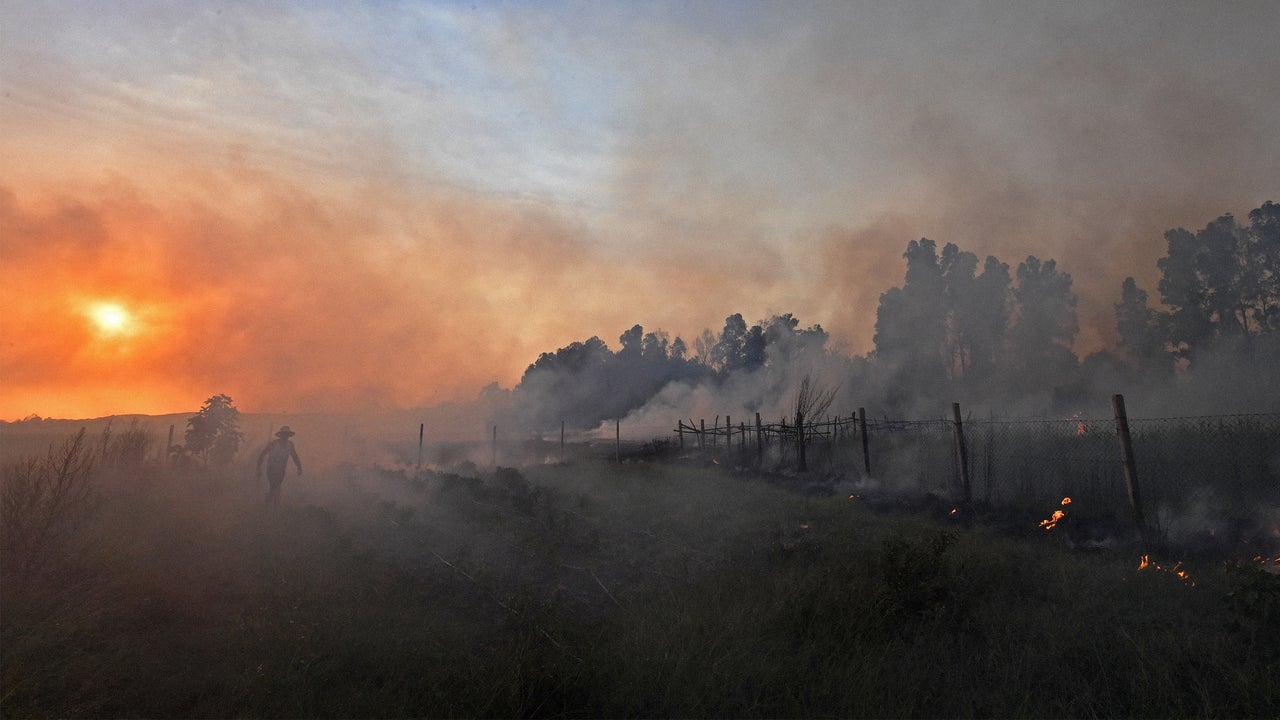
    And increasingly, those impacts are happening simultaneously: Over the past two decades, more than half of the world’s population has experienced simultaneous heat waves and wildfires, occurring on the same day, a study found.

    Researchers at Monash University in Melbourne, Australia, published their findings this week in the journal Science Advances.

    The study looked at 20 years of data, from 2000 to 2019. To see who experienced a wildfire, researchers looked at who was exposed to “fire-sourced air pollution”; their data took into account hourly temperature, fire emissions, air quality, and population information.

    Over those 20 years, researchers found, the number of people around the world exposed to both wildfires and heat waves, on the same days, increased by 287 million—from 761 million people per year in the first half of that time period to more than 1 billion people per year in the second.

    That means 55.9% of the global population has experienced at least one day where a heat wave and wildfire pollution occurred in tandem.

    And the number of such days is increasing. From 2000 to 2009, the average person experienced one such day per year. Between 2010 and 2019, that rose to 1.7 days of co-exposure per person.

    Damaging on multiple levels

    The research doesn’t only illustrate how climate change is making extreme weather more frequent. It also shows how the health impacts of these events can compound as extreme weather overlaps.

    Both heat waves and wildfires can cause serious harm to our health. Along with the risk of heatstroke—which can damage your brain, heart, and kidneys, and even be fatal—extreme heat and humidity can make it harder for some people to breathe, especially those with asthma or other lung conditions. 

    Wildfires come with intense air pollution, full of tiny particles called PM2.5 (particulate matter 2.5 micrometers or less in diameter) that can get into our lungs and bloodstream, raising the risk of heart attack, stroke, and reduced lung function.

    When heat waves combine with air pollution, the health impacts exacerbate. On days when an area sees a “double whammy” of high heat and high air pollution, the risk of death is three times greater “than the effect of either high heat or high air pollution alone,” health researchers have previously written. 

    The Monash University researchers emphasize this in their study, too. “Compared with exposure to heat wave or landscape fire-sourced air pollution alone, co-exposure to both hazards may exert greater health impacts than the sum of their individual effects,” they write. 

    In other words, the health risks—including respiratory and cardiovascular impacts—become amplified when wildfire air pollution and extreme heat happen together.

    Extreme heat and wildfires also impact each event occurring. Conditions like high temperatures and dry soil promote wildfires, and wildfires then exacerbate heat waves because they release heat and pollution into the air.

    “These processes create a positive feedback loop in which heat waves and fires amplify one another,” the researchers wrote.

    Which regions are being hit hardest?

    Some regions of the world are experiencing these simultaneous effects more than others. Zambia, for example, sees more than 28 such days per person every year. The Democratic Republic of the Congo comes in second, with just over 24 days per person per year.

    Countries with lower life expectancy, education, and income tended to see the highest amount of wildfire and heat co-exposure, an example of the way that climate change is hitting the world’s poorest countries the hardest. 

    Still, almost every area of the world saw an increase in this trend.

    Central America, South America, Central and Eastern Africa, Southeast Asia, and parts of North America, Australia, and Russia all experienced “notable increases” in the annual average number of days that wildfire pollution and extreme heat occurred together.


    Source link

    Share. Facebook Twitter Pinterest LinkedIn Tumblr Email

    Related Posts

    This tiny government division charged with AI safety is now reporting to the White House. Experts are concerned

    November 9, 2026

    The U.N.’s climate talks are tackling this major hurdle to renewable energy

    November 9, 2026

    Warren Buffett says really successful people say no to almost everything. Most leaders miss the point of his famous quote

    November 9, 2026
    Top News

    ‘Autofocus’ specs promise sharp vision, near or far

    By Staff WriterAugust 19, 2025

    Chris BaraniukKnow-how ReporterIXI”Individuals do not wish to seem like cyborgs,” says Niko EidenThey seem like…

    Market Talk – July 27, 2026

    July 27, 2026

    5 Simple Steps to Do My Company Registration

    December 28, 2025

    How Pana Food Truck Started Selling Arepas

    September 18, 2025
    Top Trending

    This tiny government division charged with AI safety is now reporting to the White House. Experts are concerned

    By Staff WriterNovember 9, 2026

    With public anxiety growing over mounting reports about out-of-control artificial intelligence agents,…

    The U.N.’s climate talks are tackling this major hurdle to renewable energy

    By Staff WriterNovember 9, 2026

    Outdated power grids are a major hurdle in the transition to renewable…

    Warren Buffett says really successful people say no to almost everything. Most leaders miss the point of his famous quote

    By Staff WriterNovember 9, 2026

    Most leaders are pretty good at adding things. There’s always room for…

    Categories
    • Business
    • Economy
    • Headline News
    • Top News
    • US Politics
    • World Politics
    About us

    The Populist Bulletin serves as a beacon for the populist movement, which champions the interests of ordinary citizens over the agendas of the powerful and entrenched elitists. Rooted in the belief that the voices of everyday workers, families, and communities are often drowned out by powerful people and institutions, it delivers straightforward, unfiltered, compelling, relatable stories that resonate with the values of the American public.

    The Populist Bulletin was founded with a fervent commitment to inform, inspire, empower and spark meaningful conversations about the economy, business, politics, inequality, government accountability and overreach, globalization, and the preservation of American cultural heritage.

    The site offers a dynamic mix of investigative journalism, opinion editorials, and viral content that amplify populist sentiments and deliver stories that echo the concerns of everyday Americans while boldly challenging mainstream narratives that serve the privileged few.

    Top Picks

    This tiny government division charged with AI safety is now reporting to the White House. Experts are concerned

    November 9, 2026

    The U.N.’s climate talks are tackling this major hurdle to renewable energy

    November 9, 2026

    Warren Buffett says really successful people say no to almost everything. Most leaders miss the point of his famous quote

    November 9, 2026
    Categories
    • Business
    • Economy
    • Headline News
    • Top News
    • US Politics
    • World Politics
    Copyright © 2025 Populist Bulletin. All Rights Reserved.

    Type above and press Enter to search. Press Esc to cancel.