
In 1985, three British writers, George Stone, Annabel Jankel, and Rocky Morton created Max Headroom, a glitching, stuttering synthetic personality derived from a human template for the TV show Max Headroom: 20 Minutes into the Future. They imagined him as satire—a distorted reflection of the media culture shaped by Ronald Reagan and Margaret Thatcher, where television no longer felt like just a channel, but an all-encompassing atmosphere. Wrapped in neon aesthetics and exaggerated prosthetics, the idea was to soften the critique, to make it entertaining enough to swallow.
However, what they ended up creating was something more enduring: a prototype. Today, that prototype has evolved into AI influencers, a multi-billion-dollar industry that continues to expand at a remarkable pace, and is only getting started.
Today’s AI influencers have secured long-term deals with luxury labels, pharmaceutical firms, and even political groups. They post at 2 a.m. because sleep isn’t required. They don’t spiral in public, grow older than their target audience, or slip up with unscripted remarks. And they don’t need entourages, agents, or negotiations over pay.
AI influencers can outpace human influencers
When Lil Miquela appeared on Instagram in 2016, she arrived with freckles, defined musical tastes, and a backstory her creators kept intentionally vague. Fully computer-generated, she amassed 1 million followers before many people paused to question whether her artificial nature mattered.
By that point, the answer was already clear: it didn’t. The deals were in place, brand partnerships secured, and audiences emotionally invested. Authenticity hadn’t disappeared; it had simply been turned into a process.
This is much more than a passing trend; it marks a deeper shift in what captures attention and who, or what, is able to hold it—and why. Human influencers are, in many ways, constrained by being human. They have off days. They change in ways their audiences didn’t ask for. They make mistakes that linger and, at times, define them.
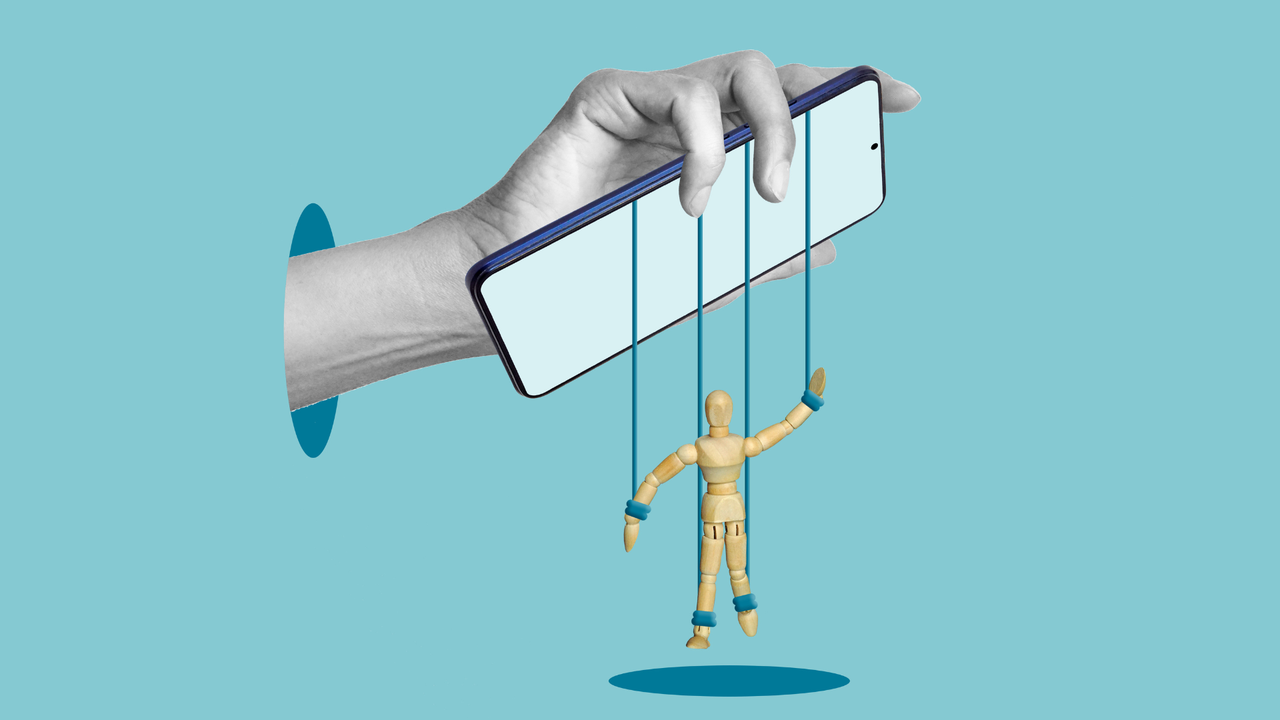
The synthetic counterpart offers something fundamentally different: a presence designed from the outset to remain steady, aligned, and predictable. It doesn’t drift, doesn’t disappoint, and doesn’t demand more than the cost of maintaining the system behind it. Consistency isn’t something it achieves, it’s something it is built to deliver. It is their architecture. And unlike personality, which is inherently variable, that architecture can be replicated and expanded without limit.
Authenticity doesn’t matter
The consequences extend well beyond marketing. Once a personality becomes a product, the audience itself turns into the commodity. These synthetic figures do so much more than simply entertain; they are designed to hold attention long enough to draw something from it—a click, a purchase, a shift in opinion. The attention economy that platforms like Instagram helped build now relies on a workforce that doesn’t rest, never unionizes, and can be reproduced at the click of a button. Every friction that made human creators inefficient, the moods, demands, and inconvenient interiority has been engineered away.
But the impact reaches far beyond commerce. AI-driven personas are already active in political spaces, cultivating a sense of closeness and trust with audiences who may not know or care that there is no human behind the voice. The emotional mechanics of influence, the sense of being understood, of being addressed personally by someone who “gets” you can now be replicated and deployed at scale.
Authenticity, once a limiting factor in how far messaging could go, has been quietly dissolved. There was no decisive confrontation. The technology advanced, the question lost its urgency, and the shift happened without anyone stopping to formally acknowledge it.
Synthetic media is no longer visibly artificial
What distinguishes this moment from earlier waves of media disruption, such as Max Headroom, is the disappearance of the seam. Earlier, synthetic media were visibly artificial, the edge of a green screen, the awkward dip into the uncanny valley, the flicker where the illusion cracked and reminded you it was manufactured. That visibility acted as a kind of safeguard. Now, that layer has been polished away. Contemporary AI personas offer no obvious signals. The warning that was embedded in the artificiality, the persistent reminder that what you were watching was built to want something from you, got smoothed away along with the pixels.
Max Headroom was designed to glitch and stutter. His creators wanted the mechanics to show, to keep the audience aware of the artifice. His replacement does not stutter or falter. It presents smoothly, recalls details about you, posts with mechanical regularity, and creates the impression of sincerity without ever needing to mean it.
Max Headroom’s subtitle—20 minutes into the future—was never intended to describe a distant horizon. It pointed to something imminent, just out of reach. That future has arrived, refined itself, learned to meet your gaze, and quietly set to work.
What remains uncertain is whether the audience will ever think to search for seams that are no longer visible.
R. Vann Graves, Ed.D., is executive director of VCU Brandcenter.