
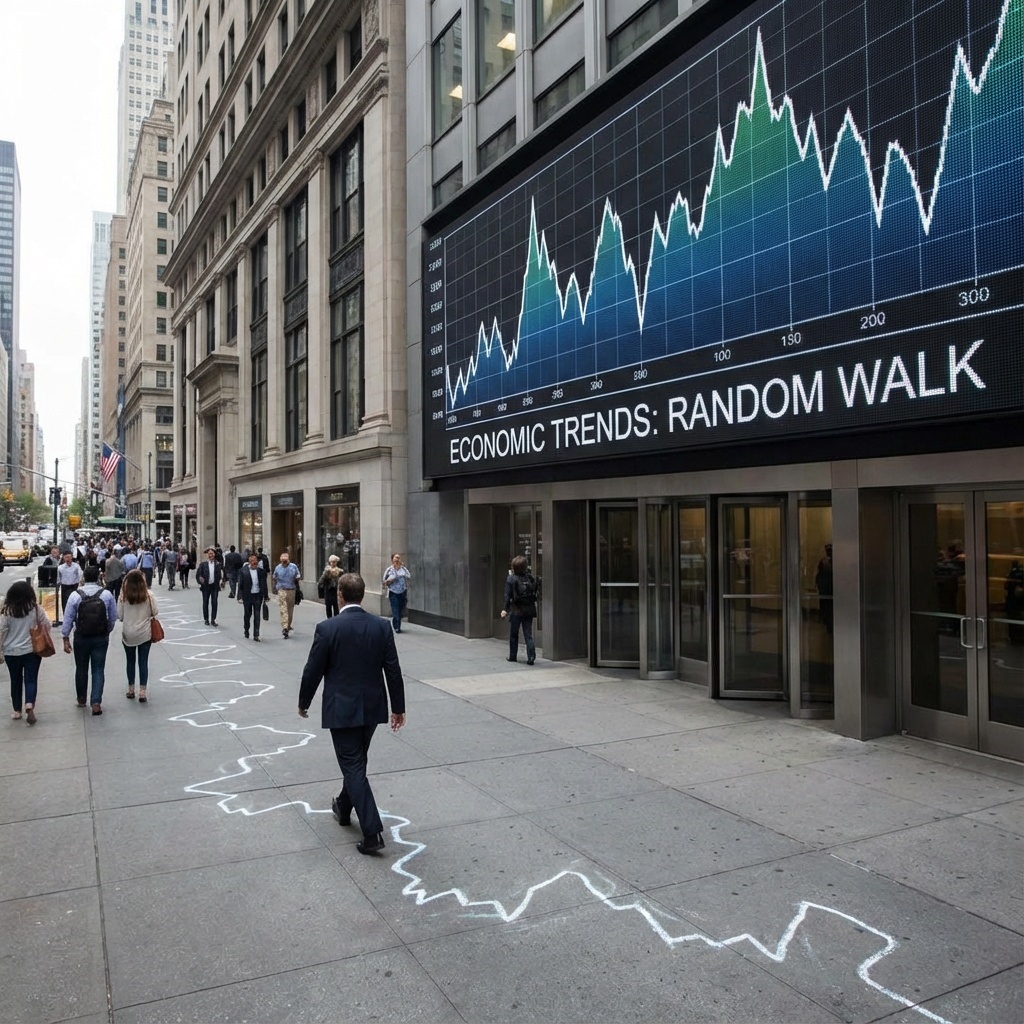
The single most dangerous lie in modern economics is the Random Walk Theory. It’s taught in every major university to support government intervention and manipulation of society. It’s the foundation of the Efficient Market Hypothesis. Nobel Prizes have been awarded for proving that markets are unpredictable, random, and impossible to forecast.
Random Walk Theory persists because it justifies the existence of central government manipulation, academic economists, and financial intermediaries who would be threatened by predictable markets. If the markets are NOT random, then government cannot intervene and manipulate them.
It’s also completely, demonstrably, mathematically that Random Walk Theory is WRONG. Let me be clear about what the Random Walk Theory claims: that market prices move randomly, that past movements cannot predict future movements, that forecasting is impossible because each price change is independent of the last. This theory holds that predicting markets is like predicting a coin flip—pure chance.
Eugene Fama (born 1939) won a Nobel Prize in 2013 for the Efficient Market Hypothesis, which holds that markets instantly incorporate all available information, rendering prediction impossible. Yet here’s the problem: If markets were truly random, civilization couldn’t exist.
Civilization requires predictability and cooperation — If everything, including markets, were truly random, planning, investment, agriculture, trade, and long-term projects would be impossible. Society expects that effort leads to reasonably predictable outcomes.
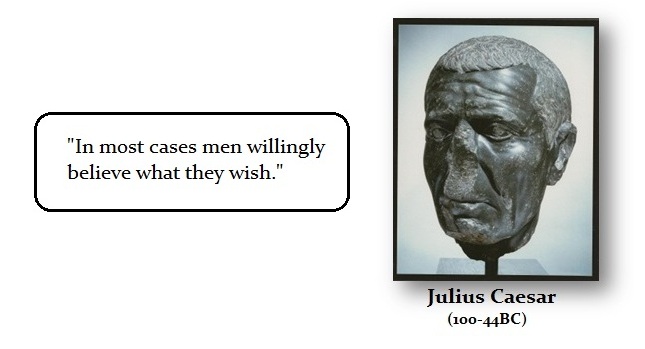
The 1987 Crash proved the Efficient Market Hypothesis completely wrong.These theories have been proposed by people who were never traders. Markets sometimes moves on anticipation and rumor that can be completely erroneous. Julius Caesar was correct. People will believe what they want to believe. That is NOT related to fact. As I have stated before, I was called into the Presidential Commission because we had not only forecast the Crash to the day, but that the market would make new highs by 1989.
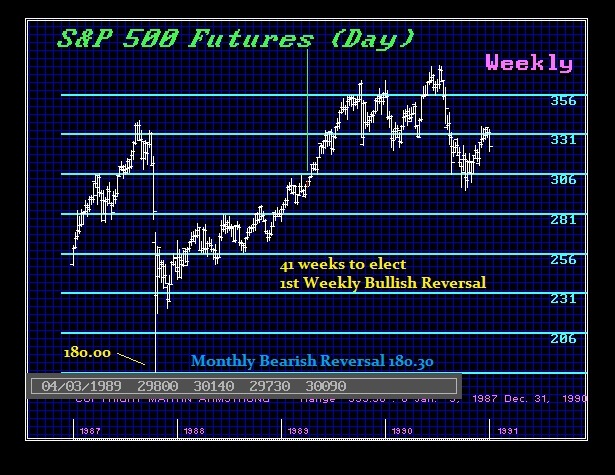
Indeed, that forecast not only forecast the crash to the day which was the ECM turning point precisely, but as you can see, the forecast that the low was in place and new highs would be made by 1989 proved to be absolutely correct.
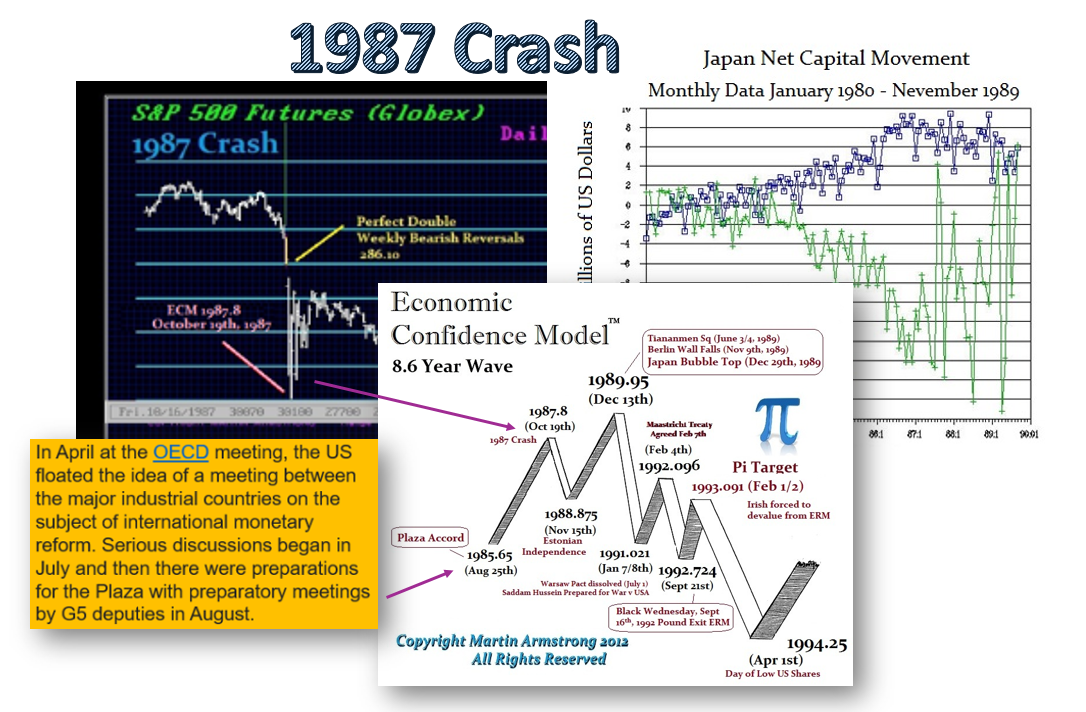
The forecasts followed the ECM wave perfectly. The 1989.95 turning point then picked the high in the Japanese market and the subsequent crash. But it also forecast the end of Communism.
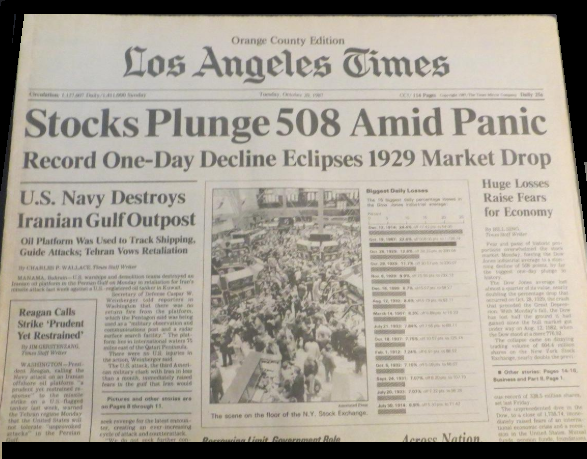
Following the 1987 Crash, 99% of the analysts were predicting a Great Depression. A group of 33 eminent economists from various nations met in Washington, D.C. in December 1987, and concluded “the next few years could be the most troubled since the 1930s”, as reported by the New York Times; “Group of 7, Meet the Group of 33” (12/26/1987). Nonetheless, because this was currency driven, it was clearly not a domestic event as most analysts and economists predicted. That proved to be the actual low and from there the market based, then began to rise to new highs. Our model beat all the economic and market forecasters.

I kept the staff late that night because I was requested to get a report on the President’s desk FORTHWITH with advice was this going to be a Great Depression. The popular theme was blaming computer trading for the ’87 Crash. Others blamed the futures markets which just began trading the S&P 500 in 1985. Economists claimed the internal reasons included innovations with index futures, hedging using portfolio insurance, and program trading. But many of the computers were correct and said sell. The portfolio managers however did not sell assuming there had to be a rebound.
Clearly, the selling began overseas and that contradicts the argument that program trading was to blame as was the fact that Efficient Market Hypothesis was nonsense. The evidence that surfaced from interviewing fund managers who were all selling was revealing. When they called the floor and asked why were people selling, nobody knew because there were no domestic number or events that took place. Even during the Great Depression, there was an assumption the market went down because of short-selling.

They hauled everyone before the Senate and interrogated them. They never found that mythical huge short seller. Likewise, they never found any program trading strategies that were used primarily in the United States that set anything in motion in 1987. This boiled down to the simple fact that when everyone is long, scare them and you flip the herd into a stampede of all sellers with no bid.
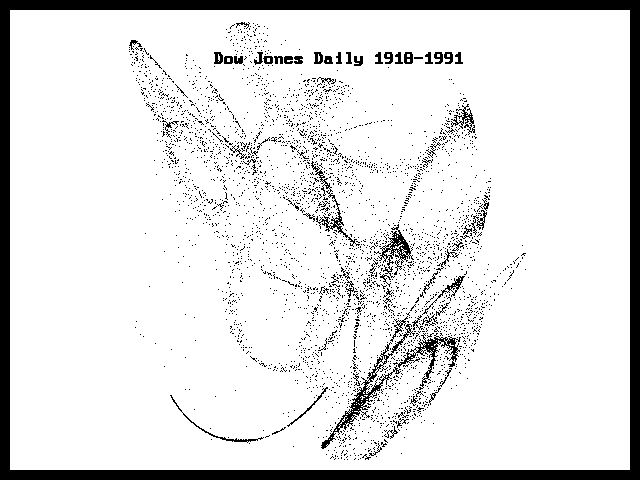
Sorry, but any programmer knows it is impossible to create a random number generator. This is the daily closing of the Dow between 1918-1991. This is by no means random. It forms diistinct patterns.

Indeed, the 20th century will be remembered for four scientific revolutions–Relativity, Quantum Mechanics, Chaos and Fractal Geometry. The Father of Chaos Theory is Edward Norton Lorenz (1917–2008) who was an American mathematician and meteorologist. Lorenz was certainly THE pioneer in Chaos Theory. A professor at MIT, Lorenz was the first to recognize what is now called chaotic behavior in the mathematical modeling of weather systems.
During the 1950s, Lorenz observed that there was a cyclical non-linear nature to weather yet the field relied upon linear statistical models in meteorology to do weather forecasting. It was like trying to measure the circumference of a circle with a straight edge ruler. His work on the topic culminated in the publication of his 1963 paper Deterministic Non-periodic Flow in the Journal of the Atmospheric Sciences, and with it, the foundation of chaos theory. During the early 1960s, Lorenz had access to early computers. He was running what he thought would be random numbers and began to observe there was a duality of a hidden repetitive nature. He graphed the numbers that were derived from his study of convection rolls in the atmosphere. What emerged has been perhaps one of the most important discoveries in modern time.

This illustration of the Lorenz Strange Attractor, is incredibly important and was first reported in 1963. Lorenz’s discovery of a strange attractor was made during an attempt to create a model of weather patterns. The actual experiment was an attempt to model atmospheric dynamics of the planet. It involved a truncated model of the Navier-Stokes equations. It is a visual example of a non-linear dynamic system corresponding to the long-term behavior in a cyclical manner revealing a hidden order we cannot otherwise observe.
The Lorenz Strange Attractor is a 3-dimensional dynamical system that exhibits chaotic flow, noted for its interesting shape revolving around two invisible strange points in space-time we call Strange Attractors. The map shows how the state of a dynamical system with three variables of a three-dimensional system evolves over the fourth dimension time in a complex, yet non-repeating pattern. In other words, here is a visualization of duality – what appears to be randomness (chaos) yet simultaneously there is a broader clear pattern of order. The same identical structure appears in light where it is both a wave form and particle, as we see in the economy where we retain our individuality yet at the same time we are part of a broader collective pattern. This is the very essence of the Invisible Hand – or in Lorenz terms, a Strange Attractor.
Therefore, Chaos theory is a field of study in mathematics, with applications in several disciplines including meteorology, physics, engineering, economics, biology, and philosophy. Chaos theory investigates the behavior of dynamical systems that are highly sensitive to initial conditions and subtle changes in the input can created drastic alternative in the outcome. This has been explained as the “effect” which is popularly referred to as the butterfly effect. Slight differences in initial conditions yield widely diverging outcomes for such dynamical systems, rendering long-term prediction impossible in general without comprehending dynamic analysis that is cyclical based.
This chaos that appears is complex, yet it masks a hidden order beneath. The complexity of variables creates the illusion that these systems are unpredictable yet they can be extremely deterministic when viewed correctly. The future behavior of such systems is entirely determined by their initial conditions, with no random elements involved whatsoever. In other words, the deterministic nature of these systems allows them to be predictable when approached objectively by a computer eliminating the randomness of human judgment. This type of behavior is best described as Deterministic Chaos.
This fascinating dimension was summarized by Edward Lorenz as follows:
“Chaos: When the present determines the future, but the approximate present does not approximately determine the future.”
This extraordinary complexity of that created the surface impression of chaos, hides amazing order hidden below. This Chaotic Behavior can be observed in many natural systems, from such things as weather to economics. Our problem has been mankind’s attempt to reduce everything he sees to simple minded one-dimensional cause and effect. This type of explanation of such behavior has restrained our ability to move forward in many fields, the least of which is not social-science that includes economics.
Deterministic Chaos may be the key to everything for within both nature and our social world, we are surrounded with complexity yet we try to rationalize everything to a single dimension unable to cope with the dynamics of the world in which we live. Sorry, just sometimes there are more than one variable.