
The ongoing war in the Middle East continues to embroil new participants—from residential properties in Dubai to protestors in Iran getting caught in the crossfire of drones and missiles.
And at the same time, global trade is slowing to a crawl, thanks to the effective shutdown of the Hormuz Strait, through which 11% of all global trade passes.
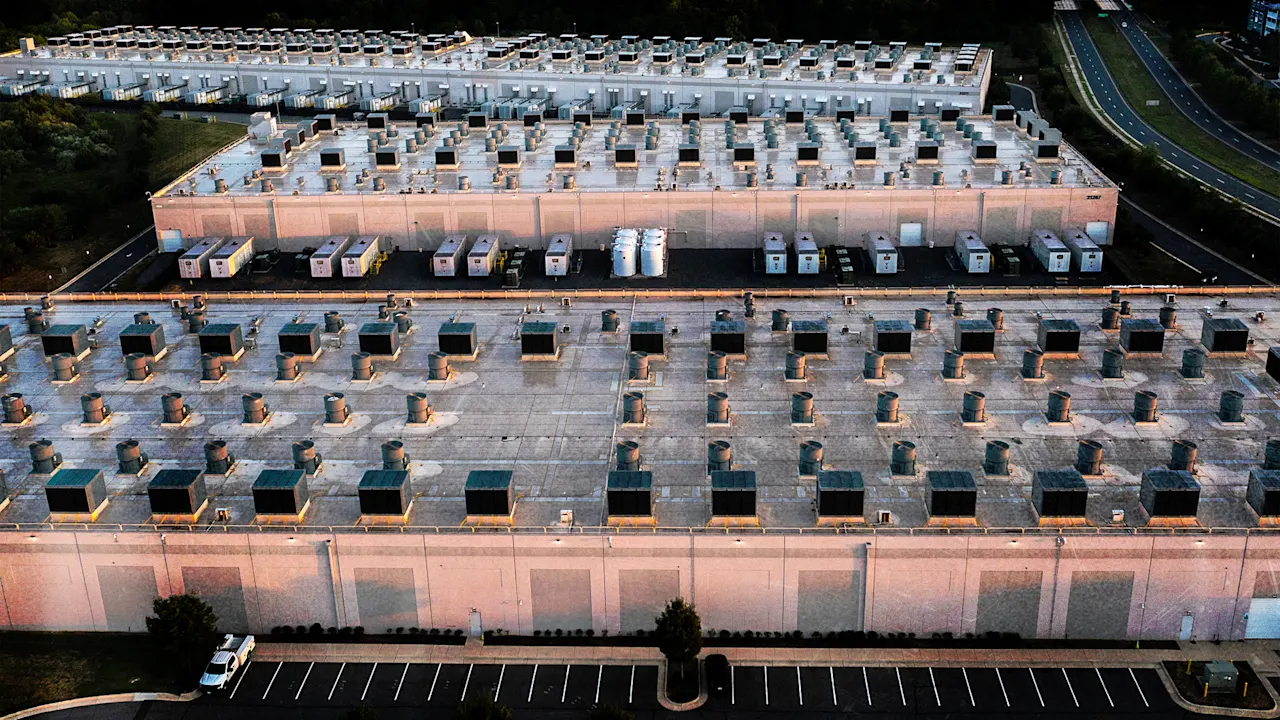
Yet another sector finding itself in the firing line—literally—is data centers. A number of them in the region have been hit by enemy strikes during the two-week war, causing damage and outages.
Data centers are an important part of modern economies, enabling the delivery of digital services that keep countries going. Therefore, it’s little surprise that they’ve been targeted by both sides of the war as an attempt to try and seed chaos and force a capitulation.
Data centers are also deeply exposed to wider disruption in the region because they sit at the end of long, fragile supply chains.
Many of the chips, memory modules, networking switches, and cooling systems they rely on depend on materials that transit through Middle Eastern choke points or are produced in nearby states—from helium and other specialty gases used in semiconductor manufacturing to metals and finished components moving between Asia, Europe, and North America.
The near‑halt in shipping through the Strait of Hormuz has pushed up transport costs, squeezed air‑freight capacity, and driven insurers to hike war‑risk premiums, making it more expensive and slower to move everything from server racks to backup generators and fuel.
At the same time, the strait is a critical artery for oil and liquefied natural gas (LNG), so any prolonged disruption feeds directly into higher global energy prices—raising the cost of the vast amounts of electricity and cooling that hyperscale data centers consume, and making new projects harder to finance.
That’s less of a problem for the United States, which has its own energy supplies, is the world’s largest LNG exporter, and is insulated from Gulf disruptions by its own abundant domestic production.
Data centers already face threats
Beyond the immediate impact, there’s a corollary risk to the conflict for data centers beyond the Middle East.
Abe Silverman, an assistant research scholar at Johns Hopkins University’s Ralph O’Connor Sustainable Energy Institute, says the Middle East conflict isn’t primarily a direct supply-chain story for data centers.
“The biggest threat to data centers isn’t actually oil traffic or disruption to global supply chains,” he says. “The biggest threat to data centers today is the perception that they are raising costs of electricity for everyday consumers.”
Currently, marine traffic through the Strait of Hormuz has practically stopped, including shipments of LNG from the region. If that ongoing disruption continues and pushes up natural gas and electricity prices, consumers may blame data centers for worsening already painful power bills, Silverman believes.
While those physical and economic pressures will take months to fully work through supply chains and power markets, the more immediate consequence may be political: As energy prices rise, regulators and communities could increasingly scrutinize whether new data center campuses are worth the extra strain on already expensive electricity bills.
“We would not anticipate a material shift in companies’ plans and a further expansion in U.S. data centers, but it is a consideration for those focused on Europe and the Middle East,” says Julien Dumoulin-Smith, managing director and senior equity analyst at Jefferies, a global investment bank.
There’s also the financing of these megaprojects, particularly closer to the center of the conflict—and whether it’s possible for them to be safely insured to be built.
Some $2.5 billion of deals to build data centers in the Middle East were brokered last year, according to S&P Global Market Intelligence. If the safety of that infrastructure, and the return on investment, can’t be guaranteed as tension in the region continues to ratchet up, it becomes a much harder choice to invest there.
That could cause some projects to fall by the wayside—or worse, to shift investment in them to states hostile to the west.
“The impact will be that they’ll be rebuilt fairly quickly, and if the Americans—and Europeans—aren’t quick off the mark, they’ll be rebuilt with Chinese investment,” says Lynette Nusbacher, a former Canadian and British army intelligence officer.
But beyond that, each new attack sends a message, reckons Nusbacher. “Data centers are an important part of the post-Petroleum future of the Gulf monarchies,” she says. “Attacking a data center isn’t symbolic, but it’s a way to show that the U.S. can’t guarantee any kind of security for their future.”