Close Menu
    Facebook X (Twitter) Instagram
    TRENDING :
    • The case for common sense at work
    • Is Iran Winning & Can Midterms Be A Clean Democratic Sweep?
    • Want to improve your performance? Focus on this
    • Taiwan Is Preparing For The Drone War
    • How marketing and HR can work together to increase sales
    • The Jobs Report Does Not Tell The Whole Story
    • ChatGPT Sites makes building a website feel like making a Google Doc
    • Indonesia: The Sleeping Giant Is Waking Up
    Compatriot Chronicle
    • Home
    • US Politics
    • World Politics
    • Economy
    • Business
    • Headline News
    Compatriot Chronicle
    Home»Business»The world’s largest ‘biological datacenter’ could help make animal testing obsolete
    Business

    The world’s largest ‘biological datacenter’ could help make animal testing obsolete

    August 13, 20264 Mins Read
    Share Facebook Twitter Pinterest LinkedIn Tumblr Telegram Email Copy Link
    Follow Us
    Google News Flipboard
    Share
    Facebook Twitter LinkedIn Pinterest Email


    There’s a big flaw in the way that drug companies develop and test medicines today: What works in a mouse often doesn’t work in a human.

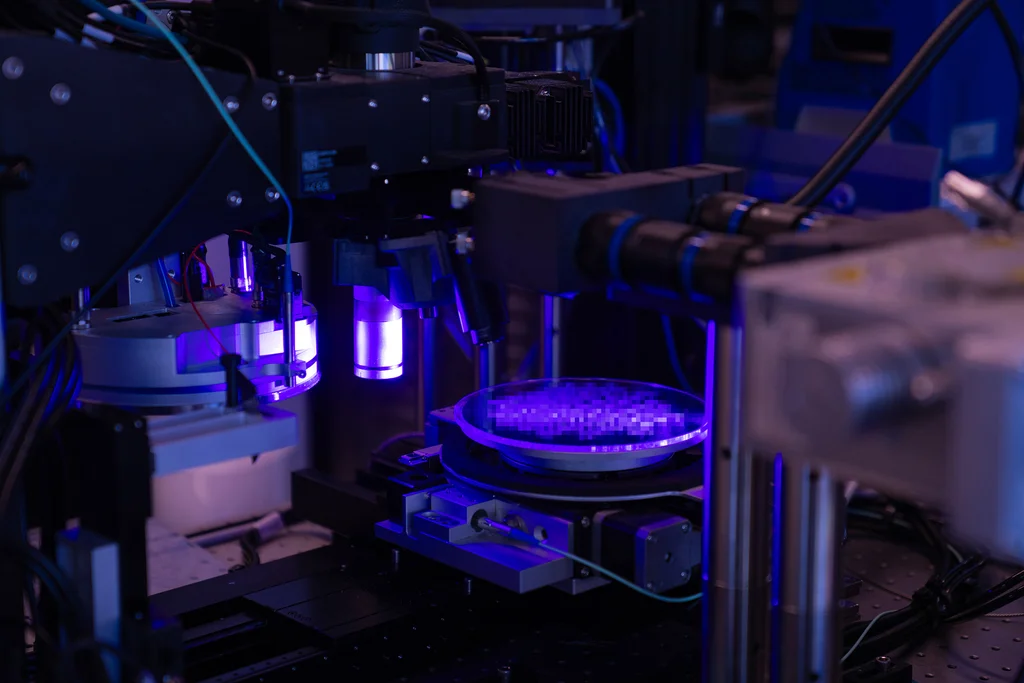
    For decades, the industry has relied on animal testing. But in a laboratory south of San Francisco, a startup called Vivodyne is scaling up a different approach. Inside wardrobe-size mini labs, robots grow human tissue and run thousands of AI-designed experiments that could better predict how well a new drug will work—and whether it will be safe.

    [Image: Vivodyne]

    Right now, around 90% of clinical trials fail despite the fact that a drug has already successfully gone through animal testing. “You have these clinical trials where there’s hundreds of millions of dollars at stake, and decades of people’s careers just spent hoping this thing works,” says Andrei Georgescu, Vivodyne’s CEO. “And then it fails because of some ambiguity that you could not have checked.”

    The company’s system, which now includes a dozen robotic labs called “hives,” can run controlled trials on more than 3 million human tissues each year. That’s twice the capacity of all the clinical trials in the U.S. combined.

    The process starts with cells from humans, often taken from a blood draw. In its labs, the cells grow on “biological chips” and self-assemble into living structures with blood vessels and immune cells that reproduce some of the functions of the original organ, whether that’s a liver or a kidney. (The tissues don’t look like full-size organs, but like large biopsies, with hundreds of thousands of cells.)

    [Image: Vivodyne]

    The automated system can deliver drugs to the tissues, dose with cell therapies, knock out genes, and run complex tests and analysis. AI can design experiments and then use the results to continually design new experiments and improve.

    “We can dose with tens and tens of thousands of therapeutic compounds to understand what they would do in that particular tissue type within a person, and we can repeat this across many types of tissue,” Georgescu says. “We can look at diseased tissue and see if it becomes healthy. We can look at healthy tissue and see if there are side effects from these drugs.” At a more fundamental level, it’s possible to begin to understand the human body in a way that wasn’t possible before, because experiments in humans have inherently been limited.

    Other startups also use human tissues for testing, but Vivodyne’s platform can be up to 1,000 times larger, making it possible to capture more of the complexity of human biology. In addition, the company can run a massive number of experiments in parallel and feed the data back into AI to repeatedly design new experiments.

    Already, the company is working with many of the largest drug companies. Though Georgescu couldn’t share specific details, he says that the technology has already stopped the development of some drugs that would have been unsafe. Vivodyne has also helped pharmaceutical companies select targets for new drugs and optimize delivery vehicles.

    A clinical trial might test one drug in thousands of people. Vivodyne can test thousands of different drugs across human tissues at once. And while people in a drug trial only have occasional visits to a clinic to track results, the system can continually test how human tissue responds.

    The process is also faster than running animal tests. If a drug company is trying to discover a new target for a disease, for example, it might use genetically modified mice. But just waiting to get the modified mice can take a year and a half, and then there’s the actual testing. “By that time, we’ve done 25 cycles of our own tests,” Georgescu says.

    For nearly a century, U.S. law required animal testing before human clinical trials in drug development; that changed in 2022 with the FDA Modernization Act. In the short term, Georgescu says, animal testing will continue in parallel. But it likely won’t be long before it’s a thing of the past. “The failure rate is so high from animals, I think any alternative is going to very quickly dominate,” he says.


    Source link

    Share. Facebook Twitter Pinterest LinkedIn Tumblr Email

    Related Posts

    The case for common sense at work

    September 7, 2026

    Want to improve your performance? Focus on this

    September 7, 2026

    How marketing and HR can work together to increase sales

    September 7, 2026
    Top News

    Amazon has a gas discount most Prime members don’t even know exists

    By Staff WriterApril 10, 2026

    Amazon Prime members in the US can regularly save on gas, but many might not…

    The leadership skills you learn from raising kids

    November 17, 2025

    Navigating World Cup stadiums is going to be a logistical nightmare. Here’s how Uber wants to help

    May 30, 2026

    11 ways to make your time feel less rushed during a busy week

    June 6, 2026
    Top Trending

    The case for common sense at work

    By Staff WriterSeptember 7, 2026

    “Why isn’t common sense more common at work?” I’ve heard some version…

    Is Iran Winning & Can Midterms Be A Clean Democratic Sweep?

    By Staff WriterSeptember 7, 2026

    Some people have complained that I said that Iran was winning and…

    Want to improve your performance? Focus on this

    By Staff WriterSeptember 7, 2026

    There was a time where being a high performer meant putting every…

    Categories
    • Business
    • Economy
    • Headline News
    • Top News
    • US Politics
    • World Politics
    About us

    The Populist Bulletin serves as a beacon for the populist movement, which champions the interests of ordinary citizens over the agendas of the powerful and entrenched elitists. Rooted in the belief that the voices of everyday workers, families, and communities are often drowned out by powerful people and institutions, it delivers straightforward, unfiltered, compelling, relatable stories that resonate with the values of the American public.

    The Populist Bulletin was founded with a fervent commitment to inform, inspire, empower and spark meaningful conversations about the economy, business, politics, inequality, government accountability and overreach, globalization, and the preservation of American cultural heritage.

    The site offers a dynamic mix of investigative journalism, opinion editorials, and viral content that amplify populist sentiments and deliver stories that echo the concerns of everyday Americans while boldly challenging mainstream narratives that serve the privileged few.

    Top Picks

    The case for common sense at work

    September 7, 2026

    Is Iran Winning & Can Midterms Be A Clean Democratic Sweep?

    September 7, 2026

    Want to improve your performance? Focus on this

    September 7, 2026
    Categories
    • Business
    • Economy
    • Headline News
    • Top News
    • US Politics
    • World Politics
    Copyright © 2025 Populist Bulletin. All Rights Reserved.

    Type above and press Enter to search. Press Esc to cancel.