Close Menu
    Facebook X (Twitter) Instagram
    TRENDING :
    • The key to a more productive life is to pace yourself
    • In a tough job market, don’t make AI your only career coach
    • Why you should be skeptical about financial advice from chatbots
    • iMessage kinda stinks now. Can new Apple CEO John Ternus fix it?
    • 6 frugal ways to beat the brutal heat
    • This airport wants to separate wealthy travelers from everyone else
    • How Maison de Sabré built a cult business of bag charms from scraps
    • Housing market shift explained—and where it’s happening the quickest
    Compatriot Chronicle
    • Home
    • US Politics
    • World Politics
    • Economy
    • Business
    • Headline News
    Compatriot Chronicle
    Home»Business»Trump’s Labor Department says Trump’s mass deportations pose ‘immediate dangers’ to our food supply
    Business

    Trump’s Labor Department says Trump’s mass deportations pose ‘immediate dangers’ to our food supply

    October 8, 20253 Mins Read
    Share Facebook Twitter Pinterest LinkedIn Tumblr Telegram Email Copy Link
    Follow Us
    Google News Flipboard
    Share
    Facebook Twitter LinkedIn Pinterest Email

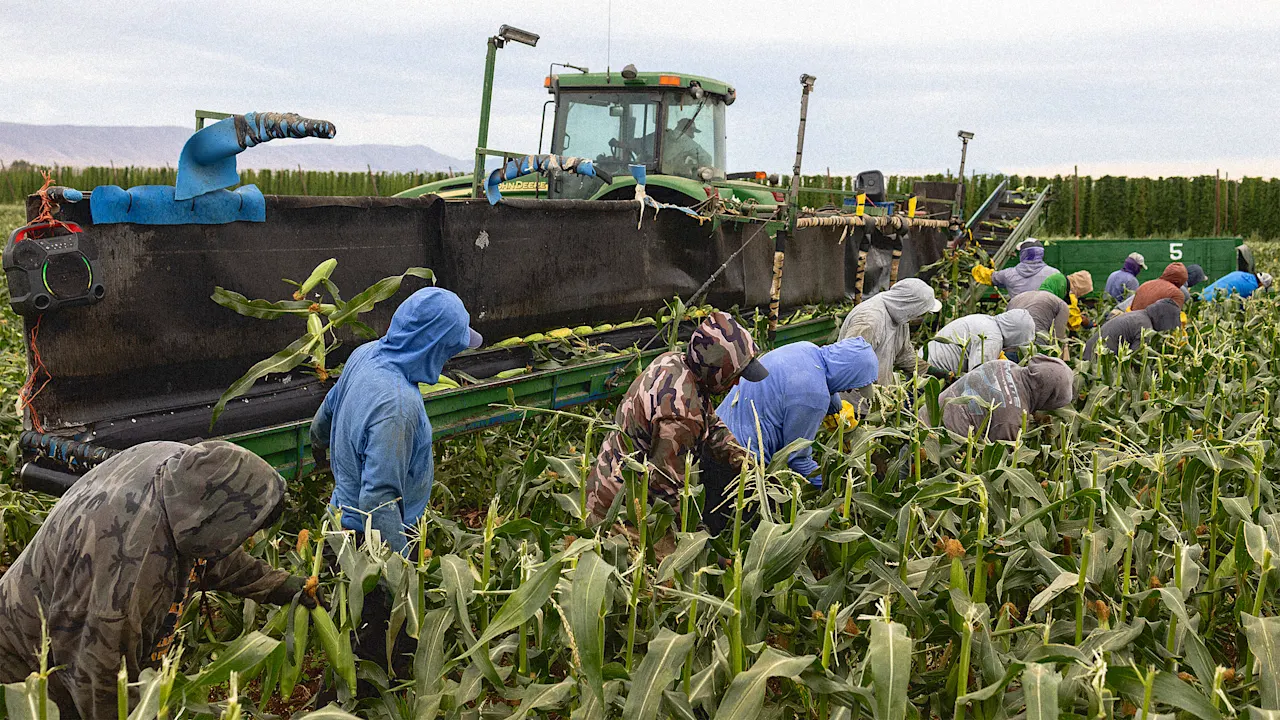
    About 40% of farmworkers in the U.S. are undocumented immigrants, and they’ve become a focus of the Trump administration’s aggressive immigration crackdown. Terrorized farmworkers have been forced into hiding, and farms have been left empty because of a dearth of workers.

    Experts have long warned that Trump’s promise of mass deportations would threaten industries that rely on undocumented workers—like agriculture—and that it could lead to mass disruptions in our food system.

    Now the Trump administration’s Labor Department seems to be admitting that itself. 

    In a document explaining the administration’s new rule cutting farmworker wages, the Department of Labor writes that the labor shortage, in part due to “increased [immigration] enforcement,” presents “a sufficient risk of supply shock-induced food shortages . . . There is ample data showing immediate dangers to the American food supply.”

    “The near total cessation of the inflow of illegal aliens combined with the lack of an available legal workforce, results in significant disruptions to production costs and threatening the stability of domestic food production and prices for U.S consumers,” per the document.

    Trump’s One Big Beautiful Bill, which includes additional funding for Immigration and Customs Enforcement (ICE), means that threat will grow, it adds.

    ‘A win for corporate greed’

    The Trump administration is using this risk to justify cuts to farmworker wages—and says more foreign workers are needed to alleviate the threat.

    Because of this crisis, employers will need to rely even more on the H-2A visa program, which allows farms to bring on temporary foreign workers when there’s a shortage of U.S. workers. (Under this visa, workers also lack basic labor protections and have reported issues with worker safety; they also do not have bargaining rights.)

    And the Department of Labor does not believe American workers “will make themselves readily available in sufficient numbers to replace the departing illegal aliens.”

    In theory, a worker shortage should lead to higher wages. But the visa program comes with high costs that have become “burdensome,” per the DOL, and so additional labor costs, it says, “threatens the viability of farming operations.”

    The department’s new rule says the program needs reform, and that guest farm worker wages need to be cut to avoid agriculture disruptions.

    Under H2-A rules, the Department of Labor must advertise agricultural jobs, but it says this hasn’t led to more applications from domestic workers. The American Prospect, which reported on the DOL document, says that’s not entirely accurate.

    “Workers who apply often do not receive jobs, and nobody is really checking to see if applications are coming in,” it writes. “The system isn’t set up to prove that there’s a labor shortage of U.S. workers,” Daniel Costa, an attorney with the Economic Policy Institute who tracks the H-2A program, told the outlet.

    The move could reduce wages for all farm workers, no matter their legal status. The United Farm Workers, which represents nearly 7,000 agricultural workers, condemns the wage cuts, which it says would mean a loss of $2.46 billion annually in farmworker wages. 

    “Farm workers should be paid more, not less. This regulation is a win for corporate greed; a money grab for big agribusiness that transfers millions of dollars through wage cuts and housing deductions from workers to employers,” Erica Lomeli Corcoran, UFW Foundation chief executive officer, said in a statement. “The farm workers who feed us every day deserve so much more and we remain committed to ensuring that their labor and dignity is respected.”


    Source link

    Share. Facebook Twitter Pinterest LinkedIn Tumblr Email

    Related Posts

    The key to a more productive life is to pace yourself

    July 11, 2026

    In a tough job market, don’t make AI your only career coach

    July 11, 2026

    Why you should be skeptical about financial advice from chatbots

    July 11, 2026
    Top News

    Layoffs across sectors are raising worker anxiety. These companies have recently cut jobs

    By Staff WriterNovember 21, 2025

    It’s a tough time to be looking for a job. Amid wider economic uncertainty, some analysts…

    August CPI – USA | Armstrong Economics

    September 12, 2025

    Why you should kill the standing one-on-one meeting

    October 25, 2025

    Nvidia is reskinning games with AI. Gamers are angry about it, and wrong

    March 18, 2026
    Top Trending

    The key to a more productive life is to pace yourself

    By Staff WriterJuly 11, 2026

    Below, Elizabeth Svoboda shares five key insights from her new book, The Art…

    In a tough job market, don’t make AI your only career coach

    By Staff WriterJuly 11, 2026

    If you’re like most people, you’re using artificial intelligence in a variety…

    Why you should be skeptical about financial advice from chatbots

    By Staff WriterJuly 11, 2026

    Consider the following scenario. Suzy is 63, recently retired, and trying to…

    Categories
    • Business
    • Economy
    • Headline News
    • Top News
    • US Politics
    • World Politics
    About us

    The Populist Bulletin serves as a beacon for the populist movement, which champions the interests of ordinary citizens over the agendas of the powerful and entrenched elitists. Rooted in the belief that the voices of everyday workers, families, and communities are often drowned out by powerful people and institutions, it delivers straightforward, unfiltered, compelling, relatable stories that resonate with the values of the American public.

    The Populist Bulletin was founded with a fervent commitment to inform, inspire, empower and spark meaningful conversations about the economy, business, politics, inequality, government accountability and overreach, globalization, and the preservation of American cultural heritage.

    The site offers a dynamic mix of investigative journalism, opinion editorials, and viral content that amplify populist sentiments and deliver stories that echo the concerns of everyday Americans while boldly challenging mainstream narratives that serve the privileged few.

    Top Picks

    The key to a more productive life is to pace yourself

    July 11, 2026

    In a tough job market, don’t make AI your only career coach

    July 11, 2026

    Why you should be skeptical about financial advice from chatbots

    July 11, 2026
    Categories
    • Business
    • Economy
    • Headline News
    • Top News
    • US Politics
    • World Politics
    Copyright © 2025 Populist Bulletin. All Rights Reserved.

    Type above and press Enter to search. Press Esc to cancel.