Close Menu
    Facebook X (Twitter) Instagram
    TRENDING :
    • The government wants to rein in powerful AI, but there are downsides
    • This long-forgotten signage from Argentina is World Cup design at its best
    • Zillow downgrades its home price forecast. Here’s its outlook for 400-plus housing markets
    • Try these 3 Google Flights hacks to get the best deals on summer airfare
    • Why your next Xbox, iPad, or laptop may suddenly cost hundreds more
    • Why mid-career women are leaving corporate America for entrepreneurship
    • A conflict-free meeting isn’t a win
    • Apple just closed its first unionized store. What does that mean for its workers?
    Compatriot Chronicle
    • Home
    • US Politics
    • World Politics
    • Economy
    • Business
    • Headline News
    Compatriot Chronicle
    Home»Business»This long-forgotten signage from Argentina is World Cup design at its best
    Business

    This long-forgotten signage from Argentina is World Cup design at its best

    June 27, 20263 Mins Read
    Share Facebook Twitter Pinterest LinkedIn Tumblr Telegram Email Copy Link
    Follow Us
    Google News Flipboard
    Share
    Facebook Twitter LinkedIn Pinterest Email


    When designers for the 1978 World Cup in Argentina designed a signage and wayfinding system for the tournament, they needed something that would be easy to read and scale. Their forgotten work was ingenious and economical—and it’s finally getting its due.

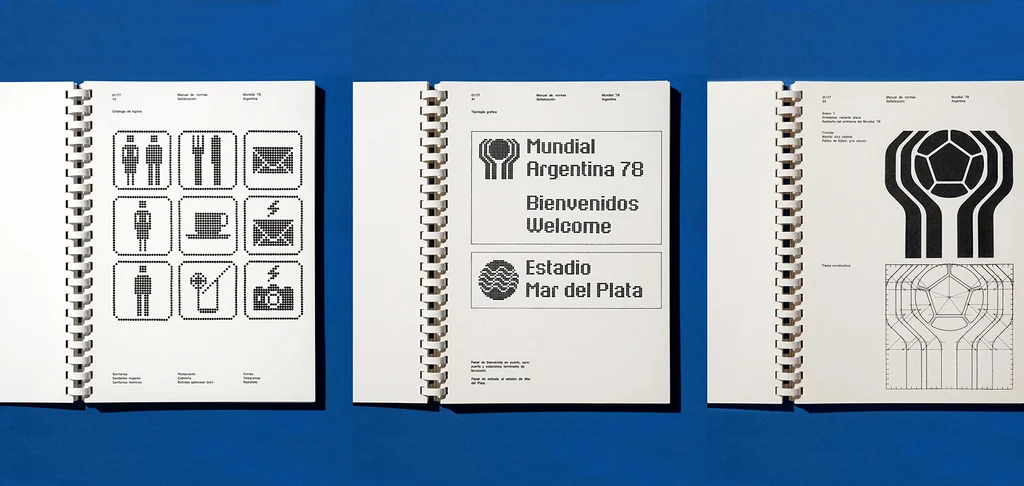
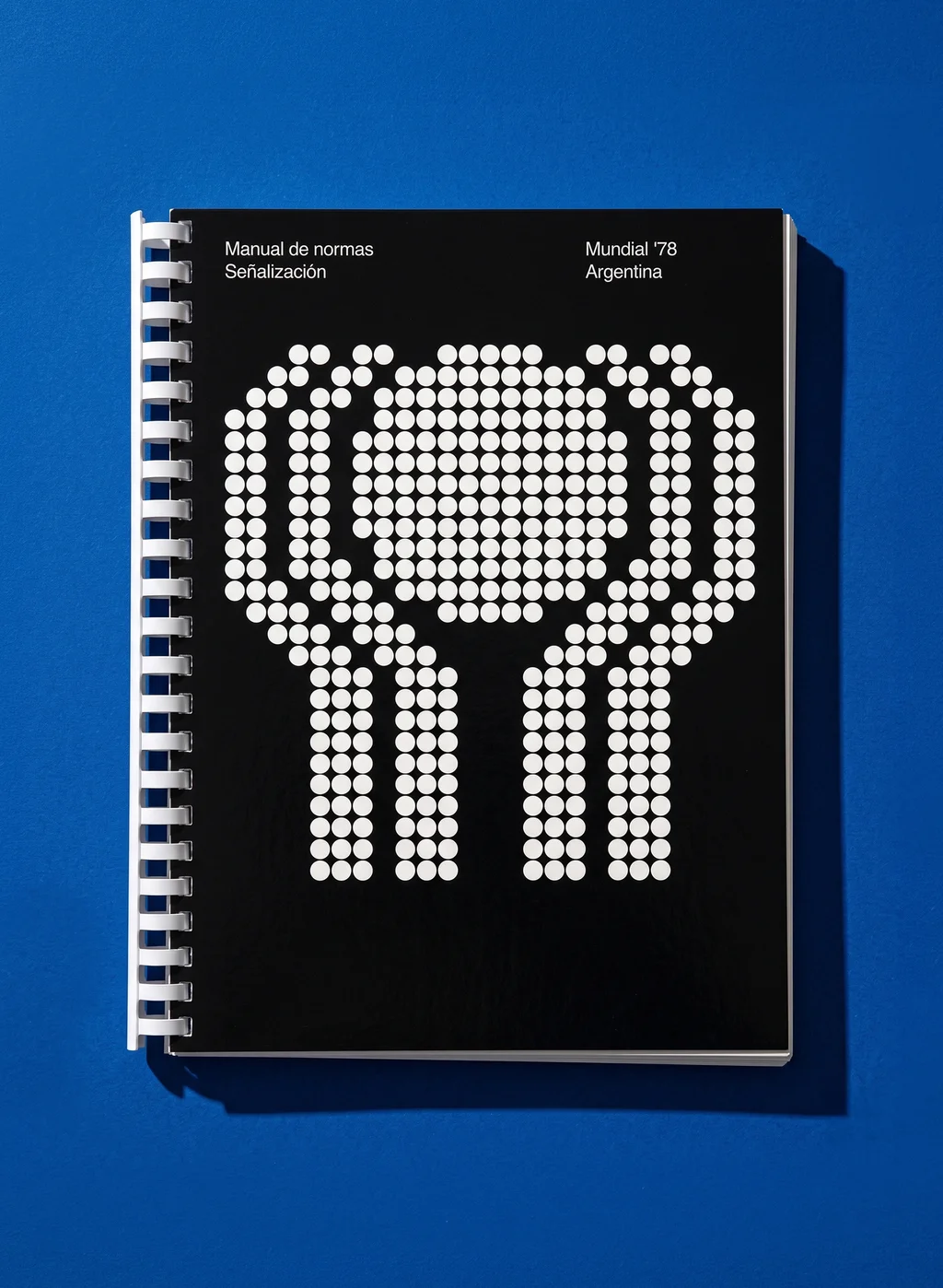
    A new book takes a look back at Argentina’s World Cup signage system through the instruction manual that put it all together. Manual of Standards: Signage, FIFA World Cup ’78 Argentina faithfully reproduces that original standards manual, and it allows for a close look at a fascinating rendition of pre-digital wayfinding. The system took a grid-based approach, but was also completely modular: made from buttons affixed in patterns on a perforated panel to make shapes, symbols, and letters.

    [Photo: Flecha Books]

    And yet, despite being among the largest sporting events in South America in the 20th century, the 1978 World Cup design system has been largely forgotten. That might have something to do with the military dictatorship that ruled the country up until 1983, and a collective desire to leave it in the past—a kind of anti-nostalgia.

    Now, publisher Flecha Books is hoping to draw attention back to the designers’ work. The book, printed to the same standards as the original, is available for preorder until July 19 for $55.
    [Photo: Flecha Books]

    “In the last century, almost every sports event has been revisited from a design point of view, especially the Olympics, but also a few World Cups,” graphic designer and Flecha Books cofounder Francisco Roca tells Fast Company. “This was one of the largest sports events in South America at the time and also the first Argentinian systematic design solution or work for a large event, so it’s kind of special.”

    Though unique, this wasn’t the first World Cup brand or wayfinding system. For that year’s tournament, though, organizers needed a standardized signage system that could be deployed across six venues that would be cheap to produce in large volumes. The solution was the system outlined in the standards manual and called Puntograma, Spanish for “dot-a-gram” or “point-a-gram,” a comprehensive grid-based system that workers on-site at stadiums could assemble themselves.

    [Photo: Flecha Books]

    Puntograma used a modular grid on dark green perforated steel panels that were manually assembled with individual white polypropylene buttons inserted into the perforations to make a cohesive shape or image, like a Lite-Brite toy. There were also red buttons reserved for warnings.

    The system was designed by designers Carlos Méndez Mosquera and Gus Bonsiepe at the Argentine studio MM/B. The firm also handled the rest of the 1978 World Cup’s industrial design, including seating and venue equipment. That industrial design mindset found its way into their modular, scalable signage.

    [Photo: Flecha Books]

    The comprehensive graphic system for the 1978 World Cup used a typeface that took its proportions from the sans serif Univers, set at 80% height, which Roca says they’re working to recreate as a font.

    It also included arrows; pictograms for restrooms, restaurants, cafés, and other amenities; and logos for each stadium. For the venue in Mar del Plata on the coast, for example, the logo featured waves; for Córdoba near the Sierras Chicas mountain range, it showed a mountain; and for Mendoza in Argentina’s wine country, it used grapes.

    “Design-wise, it was a really clever and ingenious and different and approachable solution,” Roca says. And now it’s getting a much-deserved closer look.


    Source link

    Share. Facebook Twitter Pinterest LinkedIn Tumblr Email

    Related Posts

    The government wants to rein in powerful AI, but there are downsides

    June 27, 2026

    Zillow downgrades its home price forecast. Here’s its outlook for 400-plus housing markets

    June 27, 2026

    Try these 3 Google Flights hacks to get the best deals on summer airfare

    June 27, 2026
    Top News

    The case only Netflix can make for buying Warner Brothers Discovery

    By Staff WriterDecember 12, 2025

    The battle for Warner Brothers Discovery got hotter this week as Paramount launched a hostile…

    Costco CEO Ron Vachris: ‘I don’t see AI making choices’ for the retailer

    May 29, 2026

    ZunZeno – How The US Govt Used Social Media To Spur Social Unrest In Cuba

    October 9, 2025

    Cracker Barrel’s new dining rule is not actually new, it says

    February 3, 2026
    Top Trending

    The government wants to rein in powerful AI, but there are downsides

    By Staff WriterJune 27, 2026

    The government is stepping up its push to rein in powerful AI…

    This long-forgotten signage from Argentina is World Cup design at its best

    By Staff WriterJune 27, 2026

    When designers for the 1978 World Cup in Argentina designed a signage…

    Zillow downgrades its home price forecast. Here’s its outlook for 400-plus housing markets

    By Staff WriterJune 27, 2026

    Want more housing market stories from Lance Lambert’s ResiClub in your inbox?…

    Categories
    • Business
    • Economy
    • Headline News
    • Top News
    • US Politics
    • World Politics
    About us

    The Populist Bulletin serves as a beacon for the populist movement, which champions the interests of ordinary citizens over the agendas of the powerful and entrenched elitists. Rooted in the belief that the voices of everyday workers, families, and communities are often drowned out by powerful people and institutions, it delivers straightforward, unfiltered, compelling, relatable stories that resonate with the values of the American public.

    The Populist Bulletin was founded with a fervent commitment to inform, inspire, empower and spark meaningful conversations about the economy, business, politics, inequality, government accountability and overreach, globalization, and the preservation of American cultural heritage.

    The site offers a dynamic mix of investigative journalism, opinion editorials, and viral content that amplify populist sentiments and deliver stories that echo the concerns of everyday Americans while boldly challenging mainstream narratives that serve the privileged few.

    Top Picks

    The government wants to rein in powerful AI, but there are downsides

    June 27, 2026

    This long-forgotten signage from Argentina is World Cup design at its best

    June 27, 2026

    Zillow downgrades its home price forecast. Here’s its outlook for 400-plus housing markets

    June 27, 2026
    Categories
    • Business
    • Economy
    • Headline News
    • Top News
    • US Politics
    • World Politics
    Copyright © 2025 Populist Bulletin. All Rights Reserved.

    Type above and press Enter to search. Press Esc to cancel.