
Key Takeaways
- Henry co-founded Stord when he was an 18-year-old college student at Georgia Tech.
- He dropped out at 19 to focus on the company, which hit a $3 billion valuation earlier this year.
- Stord delivered to nearly 20% of U.S. households in 2025 alone and is on track for $1 billion in annual revenue.
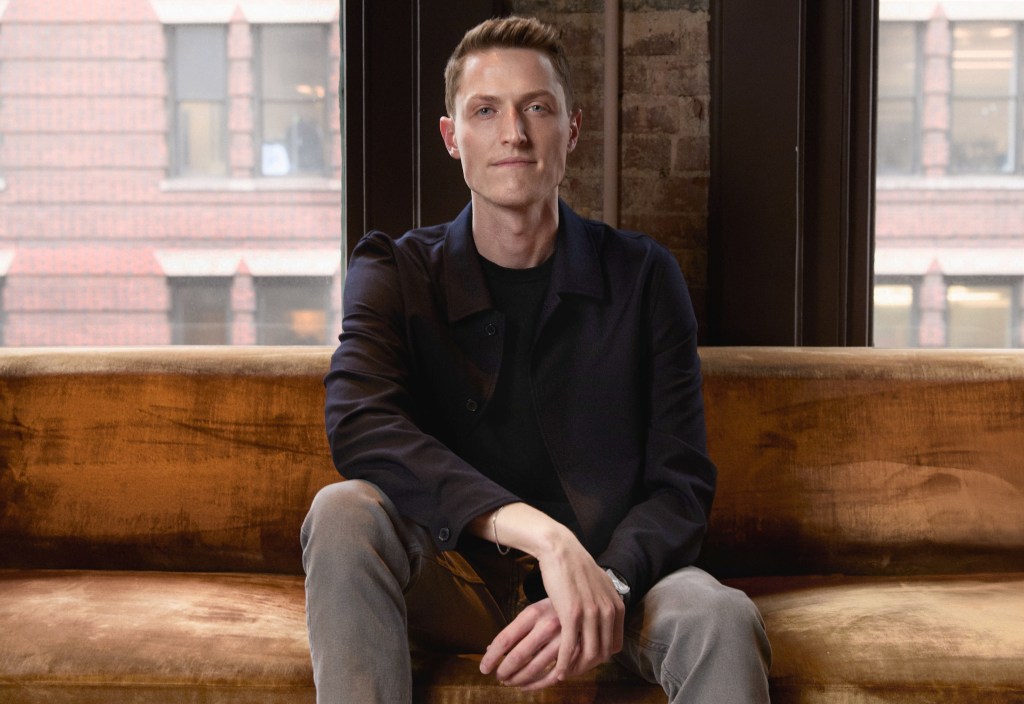
This first-person, as-told-to essay is based on a conversation with Sean Henry, CEO and co-founder of Stord, a commerce enablement platform providing independent brands with the operational intelligence they need to compete with Amazon. Henry started Stord with co-founder and CTO Jacob Boudreau in 2015 while they were students at Georgia Tech.
The company recently closed a $250 million Series F round, valuing Stord at $3 billion (doubled in less than 12 months). Currently, Stord manages nearly $15 billion in annual GMV for brands like AG1, True Classic, Native and Seed Health, and delivered to nearly 20% of U.S. households last year alone. The piece has been edited for length and clarity.
When I was about 8 years old, I started selling products on eBay. I still have the same eBay account: “Member since 2003” at the very top. I literally sold my Christmas presents and was stuck with this problem of asking my parents, “Hey, can you drive me to UPS?” “Can you give me cash if you can figure out how to get this money off eBay into your own bank account?”
Later, I expanded to selling on Amazon. Eventually, I posted signs around our neighborhood saying we buy junk, phones and computers. Then I resold those items.
Amazon Prime changes the ecommerce landscape
I saw a shift within ecommerce over the course of my life. When it was still new, consumers were impressed that they could buy something online and didn’t expect to buy everything online.
Fast forward the next 10, 20 years, and because of Amazon Prime, Google and all these different companies, now consumers believe they can get anything online. Every SKU is available, and if they don’t like one brand, there are plenty of other options. Now consumers expect the product and leave reviews about the shipping experience. They’re judging that connection from the online purchase to the offline transaction.
When I was in high school, the summer before I started at Georgia Tech, I worked at an automotive manufacturer, which I’d previously bought parts from to resell. I wanted to meet the CEO and figure out how he built the business. So going into that first year of college, I still knew I wanted to be an entrepreneur.
Realizing that everyone wants their online orders faster
I chose Georgia Tech because I was on a full-ride scholarship. I wanted to be an entrepreneur and keep my costs low. Plus, all my business resources and contacts were in Atlanta. ATDC, the Atlanta Tech Development Center, which is like a state-sponsored office space where they host classes that I could go to for free, was also tied to Georgia Tech. So I could learn about raising money, customer discovery, hiring and more.
After spending my whole life selling products online, I had this realization: Everyone is going to want stuff faster, cheaper and online forever. If you ask any consumer in the world, “Hey, if every place you shop gave the same experience as Amazon, would that be better off for you?” They’re all going to say yes. It’s almost too big and too hairy and too obvious a problem to tackle. But I wanted to do that.
When you’re focused on a big audacious problem, the hardest thing to do is figure out your wedge into the value chain. Where do you start in a way that’s strategic enough to provide enough value to get your first customer, but then still have enough legs to get you where you want to go long term, not take you in the wrong direction? Depending on that wedge of value, you could end up going a lot of different directions.
A typical brand has a couple facilities: Amazon has hundreds
We realized that if you step back from what makes Prime incredible, it’s all about the warehouses and fulfillment centers. It’s all about where those are compared to consumers. Normally a brand has one or two facilities, whereas Amazon has hundreds, and they’re everywhere.
Then there’s the real-time consideration when you’re checking out online and saying, “I’m ordering this,” and learning when you can expect to receive the product. Typically, the technology is so fragmented that it’s not until potentially 12 hours later that the brand is even deciding which piece of inventory to send or which fulfillment center it should ship from to you.
I was 18 the day I registered for Stord LLC. I put $5,000 to $10,000 of savings in the business to get us going. That’s not enough to open a warehouse. So we decided to call existing warehouses and say, “Hey, if I bring you volume of 10 or 100 or 500 customers one day, but you’re just dealing with me, and I build a network of dozens of you regionally placed across the U.S., bringing you revenue and the tech to enable you, will you take volume on our behalf and partner with us?” And they were all like, “Absolutely. It sounds too good to be true.”
Dropping out of college at 19 to go all-in on the business
Early on, I was trying to convince people to work for a 19-year-old who was still in classes on the side. Talent, capital and time as a young founder and student were the hardest things. It was hard to convince real employees to work for me and very hard to get investors. At one of the first firms we pitched, an angel investor said, “Well, if I give you $200,000, I don’t know why the company’s worth any more than $200,000.” Eventually, I had to make the hard decision to drop out of college. I became a Thiel Fellow and went all-in on Stord.
The hardest thing we ever had to do was build a software and an operations culture in one. To hire product managers and engineers, industrial engineers and associates in fulfillment centers, and get them to work together well. Because they’re typically very different cultures, businesses, backgrounds and corporate environments.
Harnessing AI to address issues in the warehouse
One of the great opportunities in the next decade or two is how do you have not just engineers be faster with AI, but literally every person in the workforce to be faster and more effective? It’s the same thing we’ve been trying to solve in the warehouse for a long time. You’re not trying to automate to have no people in a warehouse. You’re trying to say, “How do I use automation and software to make quality of life 10 times better for that employee, and also faster and more efficient for myself at the same time?”
Today, Stord is a comprehensive platform where we span physical infrastructure, software, robotics and AI, and we help brands tackle this Prime-like delivery question, from physical shipping through checkout technology, consumer-facing tracking, returns and more. We have so many different capabilities and kinds of businesses embedded in this big solution we built for brands that we couldn’t be the Amazon for everybody else from day one. Frankly, a lot of the agentic robotics, applied AI and more that drive our network today weren’t even available back then when we started.
Stord will see nearly $1 billion in annual revenue this year
Now, we power deliveries to over a fourth of U.S. households, about $17 billion of commerce. We’ll do almost $1 billion of revenue this year as a business. We’ve been chasing this level of Amazon Prime speed and cost, and we’re increasingly close. The average business out there delivers in four to seven days for $12 to $15. Amazon’s delivering in a day to a day and a half for $4 to $5. Then you have Stord delivering in maybe two to three days for $5 to $6. We’re using our position of scale and technology to keep compounding this level of speed and cost to truly compete.
We’re also investing a ton in Stord Labs, our physical intelligence lab here in Atlanta where we train AI and robotics on our live orders across all of our data and almost 100 facilities. That becomes our proprietary training dataset, along with video from our facilities. Then we partner with leading robotic and frontier model companies to both train their models and their robots on demand planning.
If you step back, our highest costs and/or the biggest drivers of our speed and our service to consumers are decisions, labor and deliveries. Now AI is driving decisions. Labor is going from robotics that have been really problematic in fulfillment centers, oftentimes because of the remapping cost — meaning, the second a robot sees a SKU it’s not familiar with or a slight variance, you often get the whole system down — to agentic robotics that can solve deviations from the happy path themselves.
So far, we’ve really changed the lives of our brands. We’ve made it faster for them and cheaper for them. Next, we’re really going to change the lives of the consumers.
Key Takeaways
- Henry co-founded Stord when he was an 18-year-old college student at Georgia Tech.
- He dropped out at 19 to focus on the company, which hit a $3 billion valuation earlier this year.
- Stord delivered to nearly 20% of U.S. households in 2025 alone and is on track for $1 billion in annual revenue.
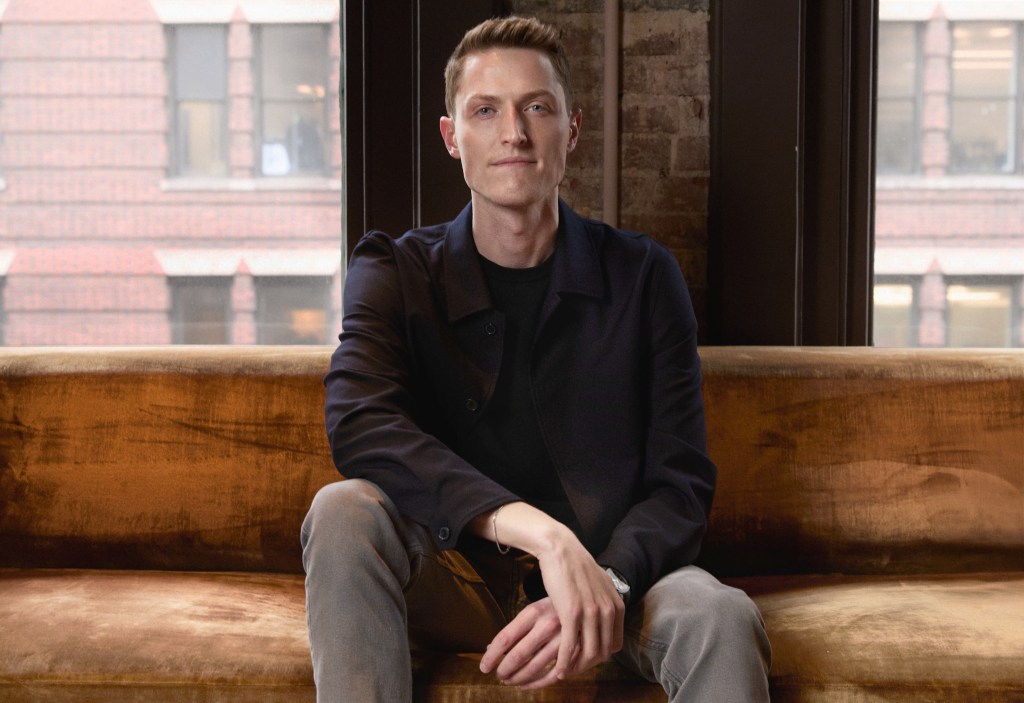
This first-person, as-told-to essay is based on a conversation with Sean Henry, CEO and co-founder of Stord, a commerce enablement platform providing independent brands with the operational intelligence they need to compete with Amazon. Henry started Stord with co-founder and CTO Jacob Boudreau in 2015 while they were students at Georgia Tech.
The company recently closed a $250 million Series F round, valuing Stord at $3 billion (doubled in less than 12 months). Currently, Stord manages nearly $15 billion in annual GMV for brands like AG1, True Classic, Native and Seed Health, and delivered to nearly 20% of U.S. households last year alone. The piece has been edited for length and clarity.
When I was about 8 years old, I started selling products on eBay. I still have the same eBay account: “Member since 2003” at the very top. I literally sold my Christmas presents and was stuck with this problem of asking my parents, “Hey, can you drive me to UPS?” “Can you give me cash if you can figure out how to get this money off eBay into your own bank account?”